

Does Sex Work Make you Dead inside?
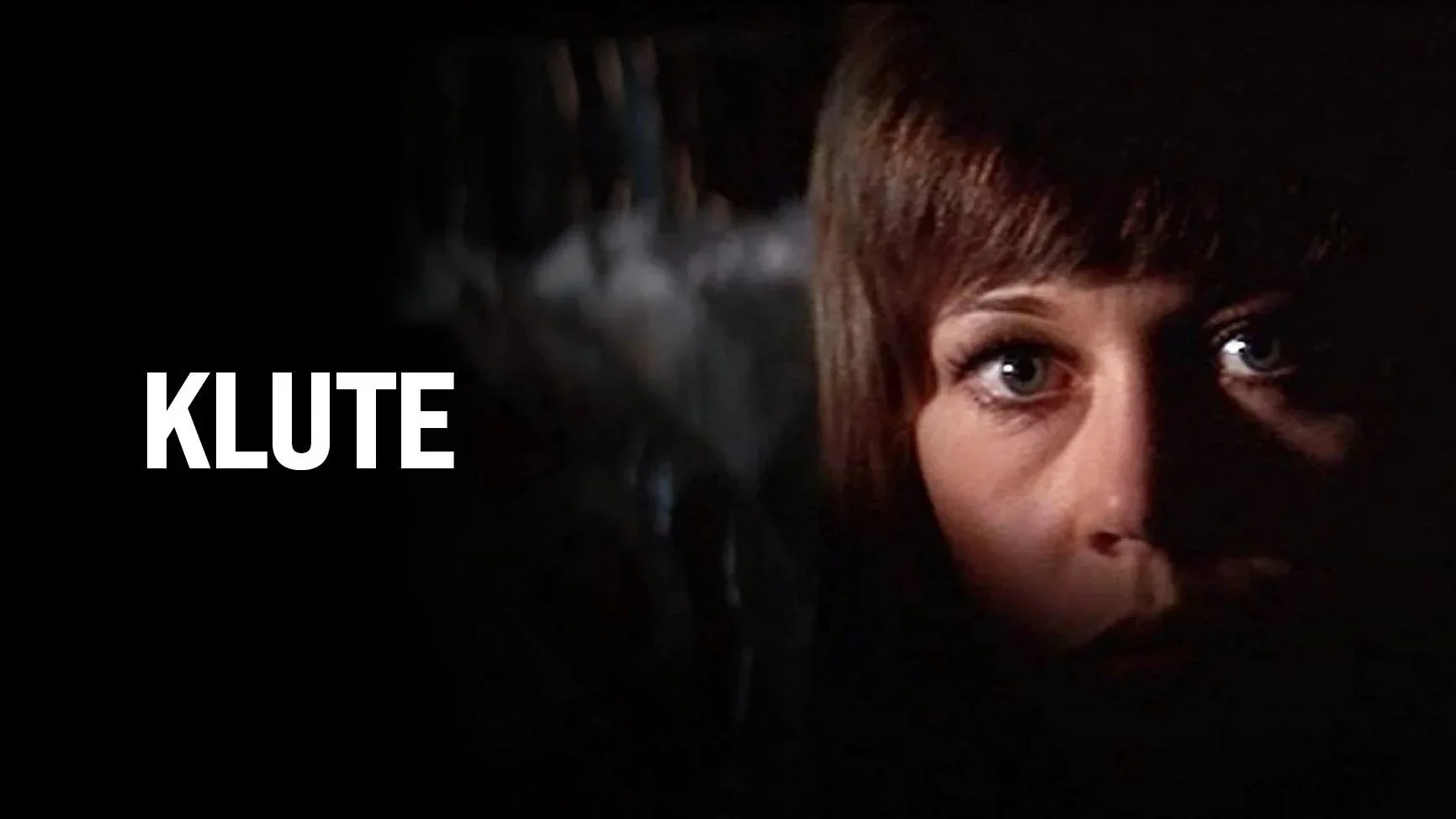
There is a scene in Klute — Alan Pakula's 1971 thriller, the film that won Jane Fonda her first Academy Award — where her character, Bree Daniels, a high-end Manhattan call girl, is mid-session with a client. She glances at her watch. Not because she is worried about the time. Because she is elsewhere entirely. She is already gone, checking out of her own body with the calm efficiency of someone who has learned, through long practice, how to not be present.
The film is not really a detective story. It's a character study — and Bree is its soul. What Pakula and Fonda were probing, in a film praised for its psychological realism, was a question that researchers, sex workers, and therapists have been circling ever since: what happens to a person's interior life when intimacy becomes a product? When the thing you sell is closeness — performed, replicated, delivered on demand — does the capacity for the real version begin to erode?
The answer, based on the available evidence, is: probably. But the mechanism is more complicated, and more human, than the blunt phrase "dead inside" allows.
The Work of Not Feeling
The first thing many sex workers learn, consciously or not, is how to split. Many adopt a clinical approach, deliberately avoiding all sexual desire and pleasure while at work, in order to protect a private sexuality they reserve for personal relationships. One worker, interviewed in research published by Vice, described the feeling plainly: "When you are working you are not thinking about what's good for you…I'm a little bit detached from that person emotionally." This detachment is not weakness. It is professional survival. Like assembly-line workers who come home cut off and dehumanized, sex workers often describe shutting off their feelings as the primary psychological mechanism that makes the work possible. The shutdown is rational. The problem is that rationality, practiced long enough, becomes reflex — and reflex has a way of following you home.
Over half of indoor sex workers in a Melbourne study reported that they found it either quite or very difficult to mentally separate their work life from their personal life. The wall they built to keep the two worlds apart turned out not to be a wall at all — more like a membrane, and a permeable one. Many used physical rituals to reinforce the boundary: using condoms with clients but not with romantic partners, for instance, as a way of marking the distinction between transactional and intimate sex. The absence of a condom became a symbol — shorthand for: this one is real.
What Bleeds Through
The trouble with compartmentalization is that it is not a sealed container. In the same Melbourne study, 78% of women reported that sex work affected their personal romantic relationships in predominantly negative ways, centering on issues of lying, trust, guilt, and jealousy. Seventy-seven percent of single women in the study chose to remain single specifically because of the nature of their work.
Think about that figure. Not unable to find a partner. Choosing not to — because the friction between the two lives had become too costly to manage.
This is the part that tends to get flattened in popular discussion, where sex work is either romanticized or condemned, and rarely examined with much granularity. The actual psychological literature describes something more textured: not numbness exactly, but a kind of structural interference. One study found that the emotional and psychological consequences of selling sex constitute a hazard equal to that of physical violence — a comparison that, if you sit with it, is striking. We understand instinctively why violence leaves marks. We are less practiced at understanding why repeated emotional performance does.
The research on depression rates among sex workers makes the point statistically. Among the general population, depression affects roughly 3.8% of people. Among sex workers, studies have found rates ranging from 49% to 88%. That is not a rounding error. That is a different order of magnitude entirely.
The Bartender Problem
Here is an analogy that doesn't involve a neon sign or a research paper: imagine someone who works long shifts in a bar, pours drinks all night, laughs at customers' jokes, performs warmth and ease for eight hours, and comes home to find that they cannot make themselves feel warmth and ease for the people who actually matter to them. The performance has consumed the resource. The tap runs dry.
This is sometimes called "emotional labor," a concept introduced by sociologist Arlie Hochschild in her 1983 study of flight attendants — workers trained to manage their own feelings as part of the job. Hochschild found that the sustained suppression and performance of emotion, repeated over time, could lead workers to feel estranged from their own emotional responses: unsure what they actually felt, as distinct from what they were supposed to feel.
Sex work involves emotional labor at perhaps its most intensive. Some workers describe their performance of sexuality as inherently alienating, even degrading — not because of any particular client, but because of the structural requirement of performing desire without experiencing it, day after day.
The Part That Complicates It

And yet. The picture is not uniform, and it would be dishonest to present it as such.
Other sex workers describe their work as a genuinely intimate and sensual experience. One participant described the work as "not just about getting off…it's really about intimacy and sensuality." Some report improved sexual self-confidence. Some describe the work as a source of genuine human connection, even warmth.
Research along the Mexico-U.S. border found that sex workers and their intimate partners actively separated the meaning of their primary relationships from the work itself — relying on each other for emotional and material support in ways that felt distinct and real. The split was not always an erosion. Sometimes it was a deliberate, even loving, negotiation.
What the research suggests is that outcomes vary significantly based on conditions: whether the work is freely chosen or coerced, whether it takes place indoors or on the street, whether violence is part of the landscape, and how long someone stays in the industry. Studies have found that rates of depression and PTSD are particularly high among women who experience captivity, coercive control, and physical or sexual assault — which is to say, the emotional damage is not evenly distributed. It concentrates where force does, not only physical: psychological, social, financial, etc.
The Terms of the Deal
What the research actually describes, when you read it without an agenda, is less a fixed psychological fate and more an ongoing negotiation — one that each worker conducts on her own terms, within constraints she did not always choose.
Sex work sits in a strange and contested space between explicit market transaction and genuine human relationship. A client pays for time, for performance, for a version of intimacy. But the worker is not a vending machine. She is making constant, real-time decisions: how much of herself to bring into the room, which clients to take, how to manage the emotional texture of an encounter, what to protect and what to offer. The transaction sets the frame; she fills it.
Many workers describe this navigation not as victimhood but as skilled labor — a form of social and emotional intelligence that is rarely credited as such. They read people quickly. They manage the emotional temperature of an interaction. They make someone feel seen and desired while simultaneously keeping their own interior life intact. That is not nothing. It is, in fact, a recognizable form of expertise, exercised under conditions that most people could not sustain.
What erodes this capacity is not the transaction itself, necessarily, but the loss of agency within it. Workers who report the most severe psychological consequences are those who had the least control over who they saw, when, under what conditions, and on what terms. The ones who describe the work as manageable — even meaningful — are almost universally those who retained some ability to set those terms themselves. The psychology follows the power, not the profession.
The Lens Problem
It is worth pausing here to examine who has most influentially shaped how we think about sex work and its psychological costs — because the framings we inherit matter, and not all framings are equally earned.
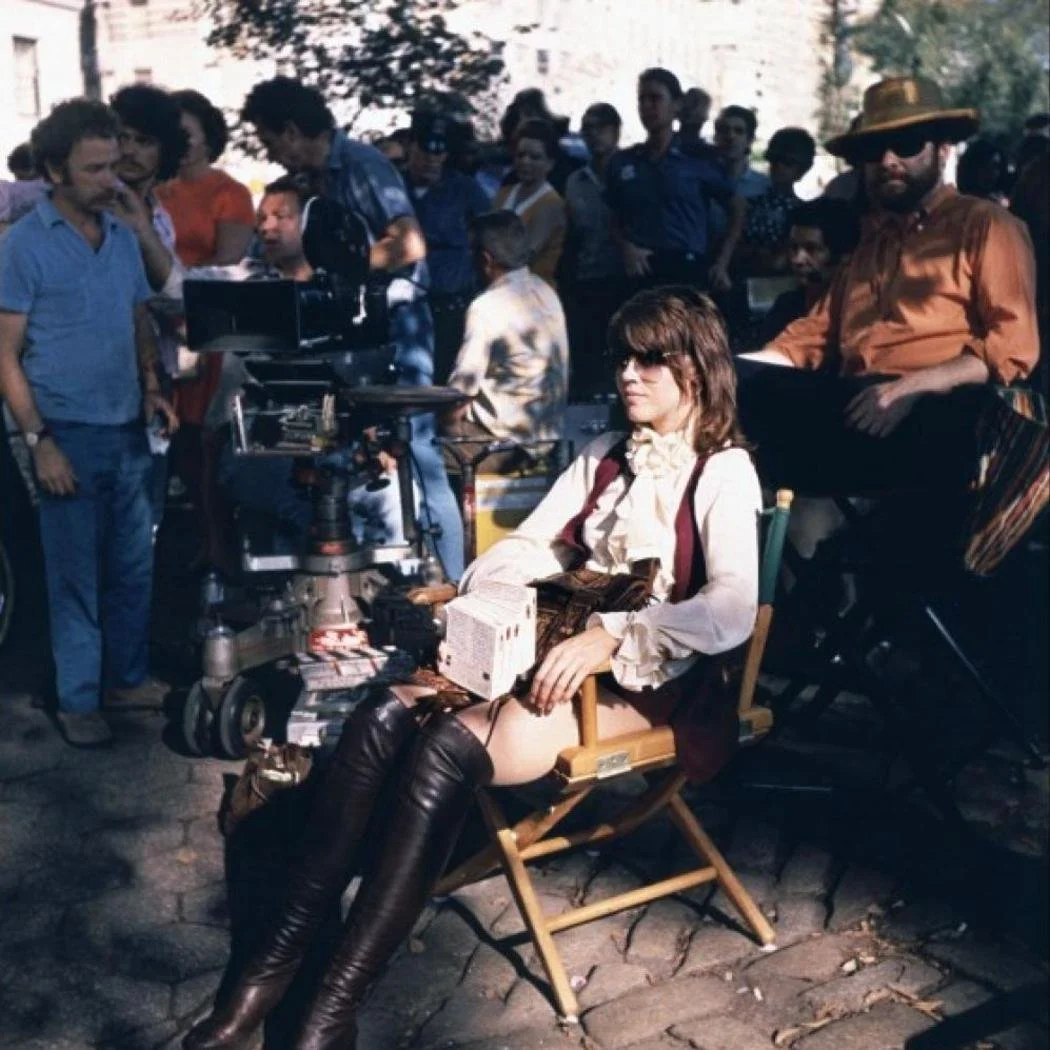
Jane Fonda has been evoked throughout this essay because Klute remains, fifty years on, the cultural touchstone for conversations about the inner life of a sex worker. Fonda's performance is extraordinary. The film is genuinely good. But Fonda herself is worth looking at clearly, because the authority she brought to the role was, in an important sense, borrowed.
Fonda grew up in Hollywood aristocracy — the daughter of Henry Fonda, raised with access, connections, and a financial floor that meant she would never face the kind of desperate calculus that sends most people into survival-mode decisions. She is still alive, still politically active at 87, still using the platforms her fame affords her to advocate on issues she cares about. She has had the freedom, her entire life, to make choices based on values rather than necessity. That is not a criticism — it is a description of genuine privilege, and privilege shapes what you can see and what you cannot.
To prepare for Klute, Fonda drew on her memories of call girls she had known in France, all of whom, she recalled, had been sexually abused as children. This is not field research. It is secondhand impression, filtered through the sensibility of a woman for whom the economic pressure that shapes most workers' experience was simply not present. The result is a portrait of a sex worker that is psychologically acute in some ways and, in others, tells us more about how a privileged observer imagines the damage than about the damage itself.
This matters because Bree Daniels — the fictional character Fonda embodied — has functioned as a stand-in for reality in these conversations ever since. She is the image people reach for when they want to discuss what the work does to a person. But Bree is a construction, assembled by a director and an actress who, for all their talent and research, were working from the outside. The workers who might have told a different story — or a more complicated one, or a contradicting one — did not get their names in the credits.
The psychological literature is not perfect either. But it at least attempts, however imperfectly, to let workers speak for themselves. When it does, the picture that emerges is considerably more varied than the one Bree Daniels offers from her therapist's couch.
What Bree Knew
Back to Klute. What makes Fonda's performance so durable, fifty years later, is not that Bree is dead inside. It is that she is clearly, visibly alive — and terrified of it. When she and Klute sleep together, her reaction is more horror than pride, scared that her entire life might be upended by feelings she no longer knows how to navigate. The film's central tension is not the mystery plot. It is the question of whether a person who has professionally dismantled her own emotional responses can reassemble them — and whether she even wants to.That's the thread the simple framing misses. The question is not just does sex work make you numb? The question is: numb compared to what? For some people, the management of feeling that the job demands is a continuation of damage that predates the industry. For others, the damage is inflicted by the industry itself. For others still — fewer, and under better conditions — the reckoning never fully arrives.What the research tells us, and what Bree Daniels tells us from a therapist's couch in 1971, is that the human capacity for intimacy is not a switch that can be flipped off for business hours and flipped back on at the end of the shift. It is a practice, like any other — and practices, repeated often enough in one direction, tend to leave a mark.The workers who navigate this most successfully are not the ones who feel nothing. They are the ones who retain enough control over the terms of the deal to decide, each time, how much of themselves to spend — and what to keep.
Sources:
Jane Fonda on KLUTE
https://www.cinematicflashback.com/blog/klute-1971-jane-fonda-paranoia-and-the-light-in-the-shadows/
https://www.vice.com/en/article/sex-work-pleasure-intimacy-study/
https://pmc.ncbi.nlm.nih.gov/articles/PMC4627728/
https://www.researchgate.net/publication/346075747_The_Impact_of_Sex_Work_on_Psychological_Wellbeing