

Militarizing Women's Lives: What the "Comfort Women" System Reveals About War, Capital, and Control A System, Not an Aberration
Militarizing Women's Lives: What the "Comfort Women" System Reveals About War, Capital, and Control
A System, Not an Aberration
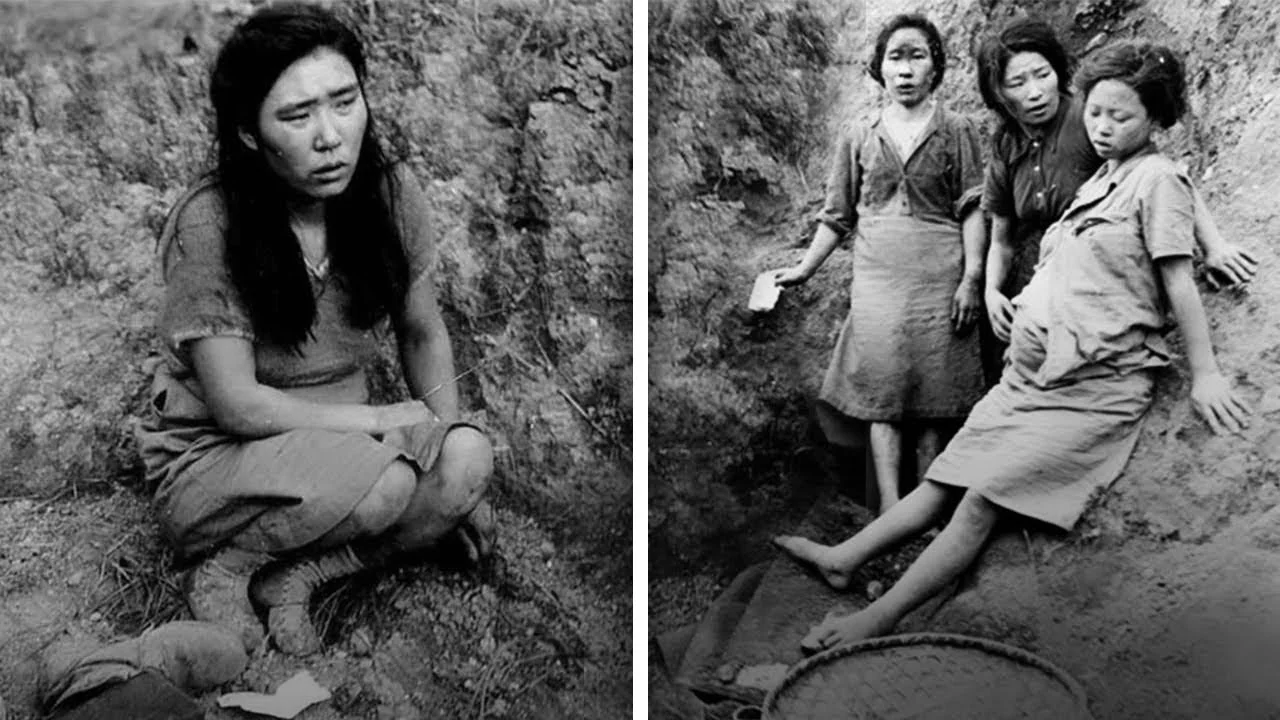
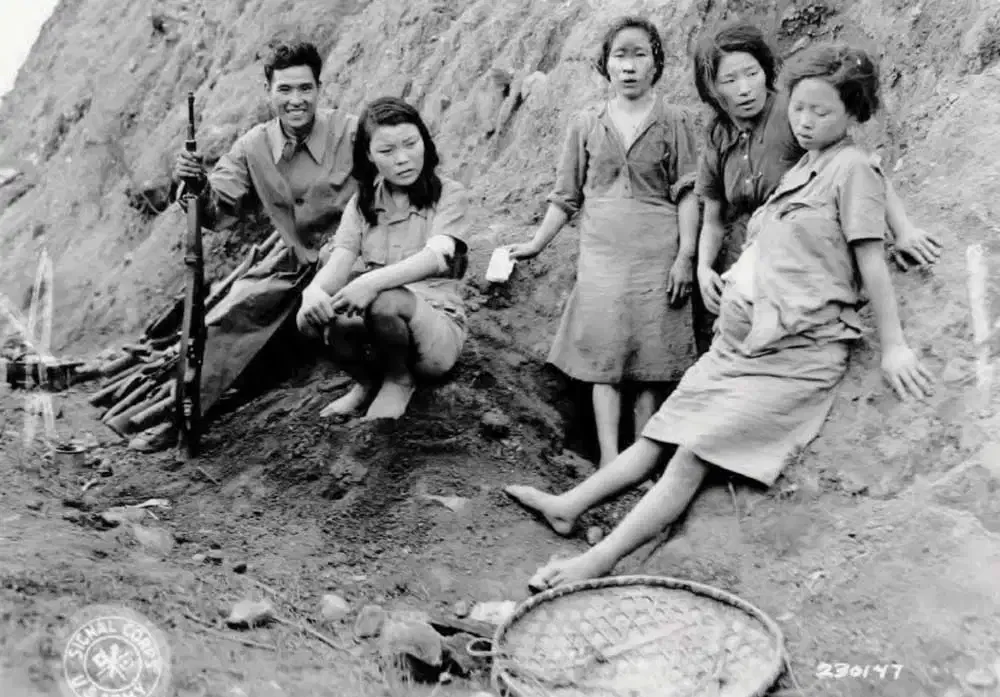
When people talk about the militarization of everyday life, they usually mean checkpoints, surveillance, conscription, or the normalization of weapons in civilian space. Less often discussed is how thoroughly modern militaries have organized women's bodies as logistics — as a category of supply to be procured, managed, rationed, and disposed of alongside fuel, ammunition, and rations. The clearest and best-documented historical case of this is the system of military sexual slavery run by Imperial Japan before and during World War II, euphemistically called the "comfort women" system (jugun ianfu in Japanese). It is widely described by historians as the largest case of state-organized human trafficking and sexual slavery in modern history, and tracing how it actually worked — who built it, who profited from it, who it victimized, and how it has been remembered and re-remembered ever since — tells you a great deal about the relationship between militarism, capital, and the control of women's lives more broadly.
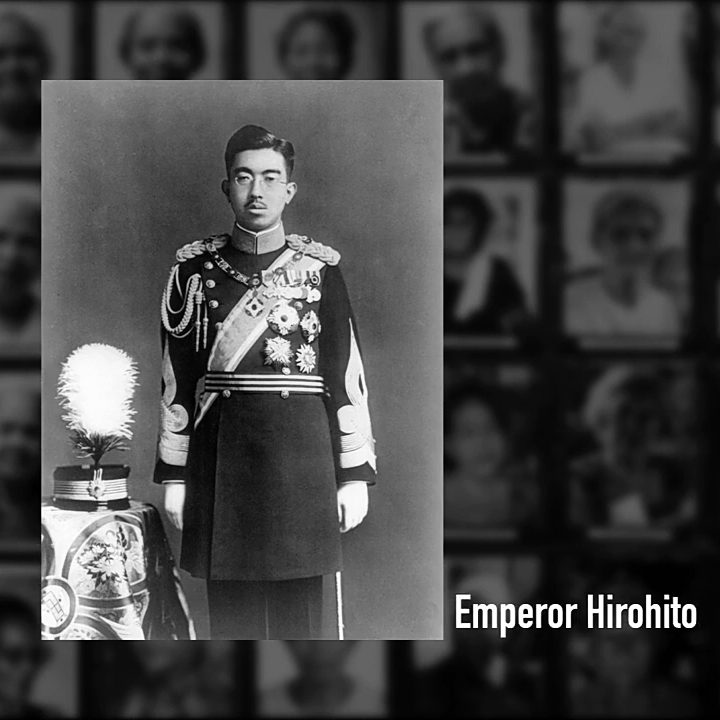
It's worth being precise about who was responsible, because the popular shorthand ("an emperor, a military guy, decided to run a brothel system") flattens a more bureaucratic and more disturbing reality. Emperor Hirohito reigned over Japan throughout this period, and the Imperial Japanese Army and Navy acted formally in his name and under his constitutional authority as supreme commander of the armed forces — a 2000 unofficial "People's Tribunal" convened by Japanese and international feminist and human-rights organizations later found him morally and politically responsible, although it had no binding legal authority and Japan's government has never accepted that finding. But the comfort station system itself did not spring from a single decision at the top. It grew incrementally out of decisions made within the Imperial Japanese Army's command structure and colonial bureaucracy, beginning around 1932 in Shanghai, in the aftermath of the January 28 Incident, when Japanese naval officers first arranged for licensed brothels to serve troops stationed in the city. The system expanded dramatically after full-scale war broke out with China in July 1937, particularly after the Nanjing Massacre later that same year, when mass rape of Chinese civilians by Japanese soldiers became so extensive and so internationally notorious that military planners explicitly cited it as a problem to be managed going forward.
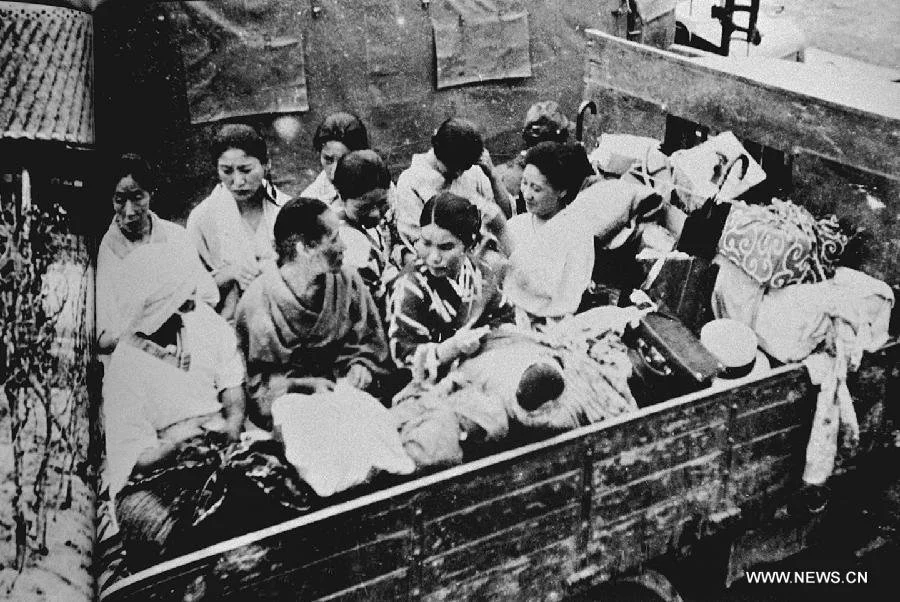
The army's own internal justification for expanding the comfort station network was strikingly bureaucratic and unapologetic. Commanders argued, in documents that survive in Japanese military archives, that supplying soldiers with regulated, military-run brothels would reduce the incidence of mass rape against civilian populations in occupied territory (which threatened to provoke resistance and international condemnation), curb the spread of venereal disease compared to uncontrolled contact with local sex workers (which threatened troop readiness), and limit unsupervised contact between soldiers and local populations more broadly (which was treated as an operational security concern). Local commanders like Yasuji Okamura, credited by some historians as an early architect of the comfort station concept, described the system explicitly in these logistical terms. Whatever the stated rationale, the practical result was a system in which sexual access to women's bodies was treated as a matter of troop morale and discipline to be planned, budgeted, and administered — not fundamentally different in the military's own paperwork from the planning that went into food supply or medical units.
From Recruitment to Trafficking: How the Supply Chain Actually Worked
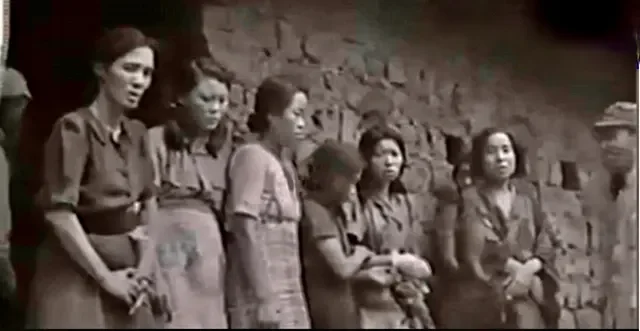
The supply side of this system tells you almost everything about how it functioned, and it changed dramatically over the system's thirteen-year existence. In the earliest phase, through the mid-1930s, brokers working with or for the military recruited women primarily from Japan's existing licensed prostitution industry — women already working in regulated brothels in Japan, who were in many cases themselves indentured through debt bondage to civilian brothel owners and had little independent ability to refuse reassignment. As demand grew, recruitment widened to impoverished families in Korea, which Japan had annexed as a colony in 1910 and administered with a degree of bureaucratic control that made systematic recruitment far easier than in territories Japan merely occupied militarily. Recruiters — sometimes Japanese, often Korean collaborators working as intermediaries, a fact that complicates later nationalist narratives on both sides — used deception as a primary tool: newspaper advertisements and door-to-door recruiters in rural Korean villages promised factory work, nursing positions, restaurant jobs, or clerical work, sometimes with cash advances paid directly to destitute families. Many women and girls discovered the actual nature of the work only after being transported, often by ship, to comfort stations in China, Manchuria, or further afield, by which point they had no resources, no language ability in the local area, and no way home.
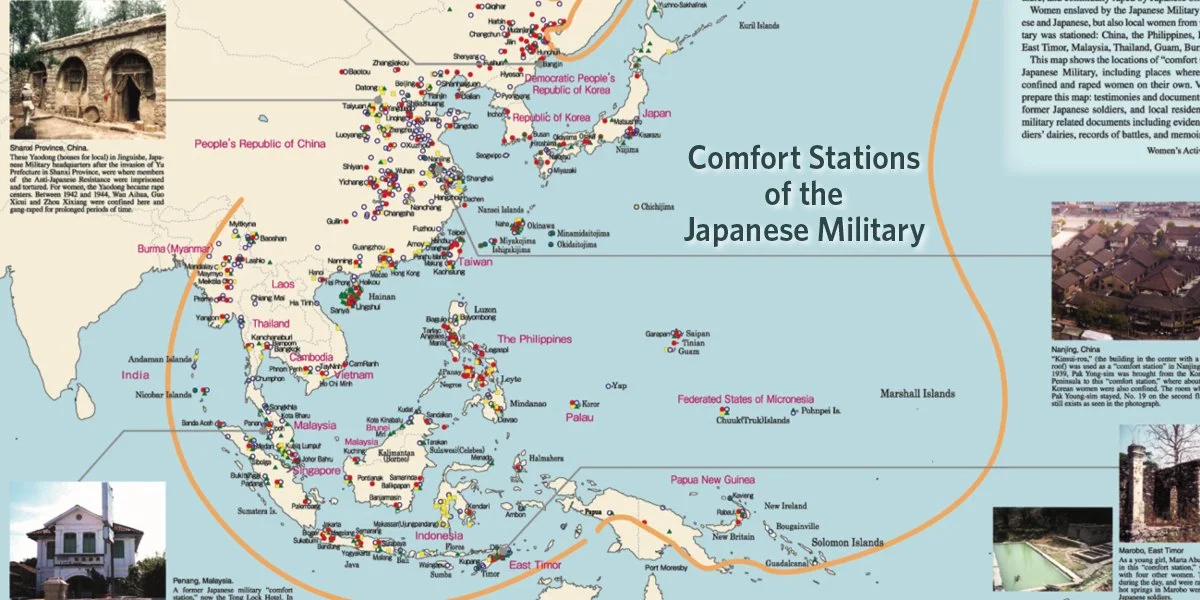
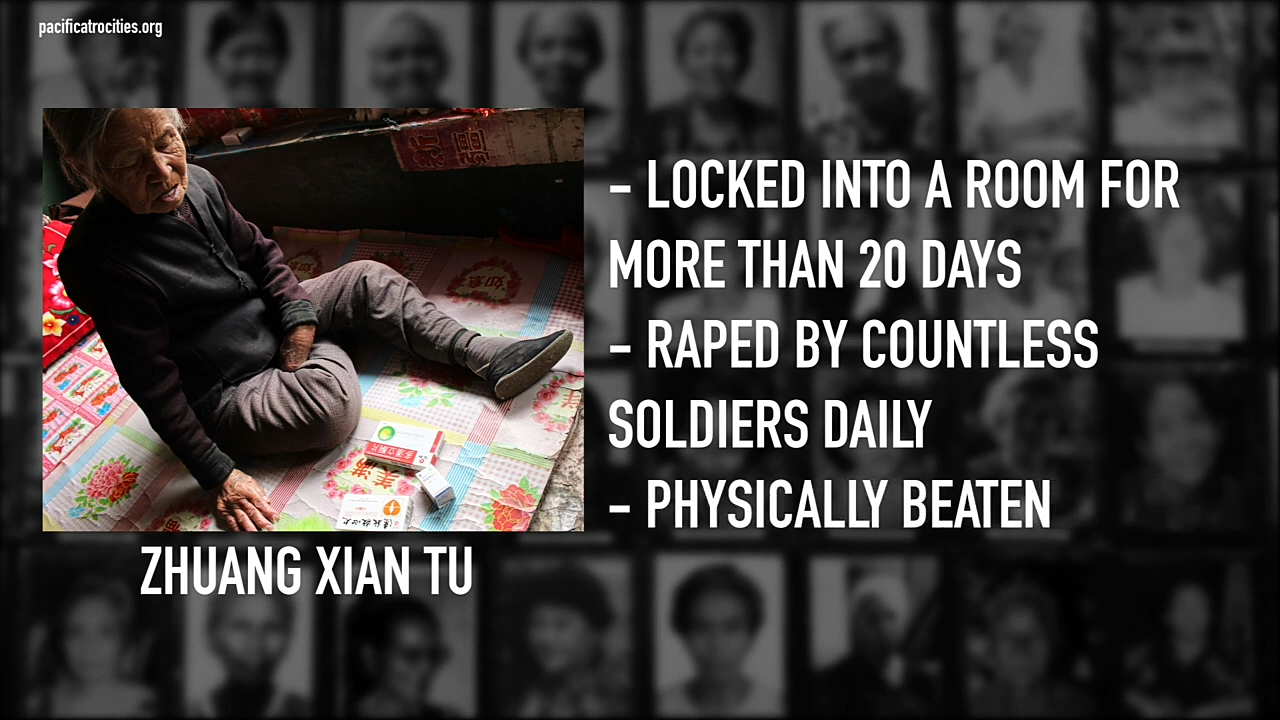
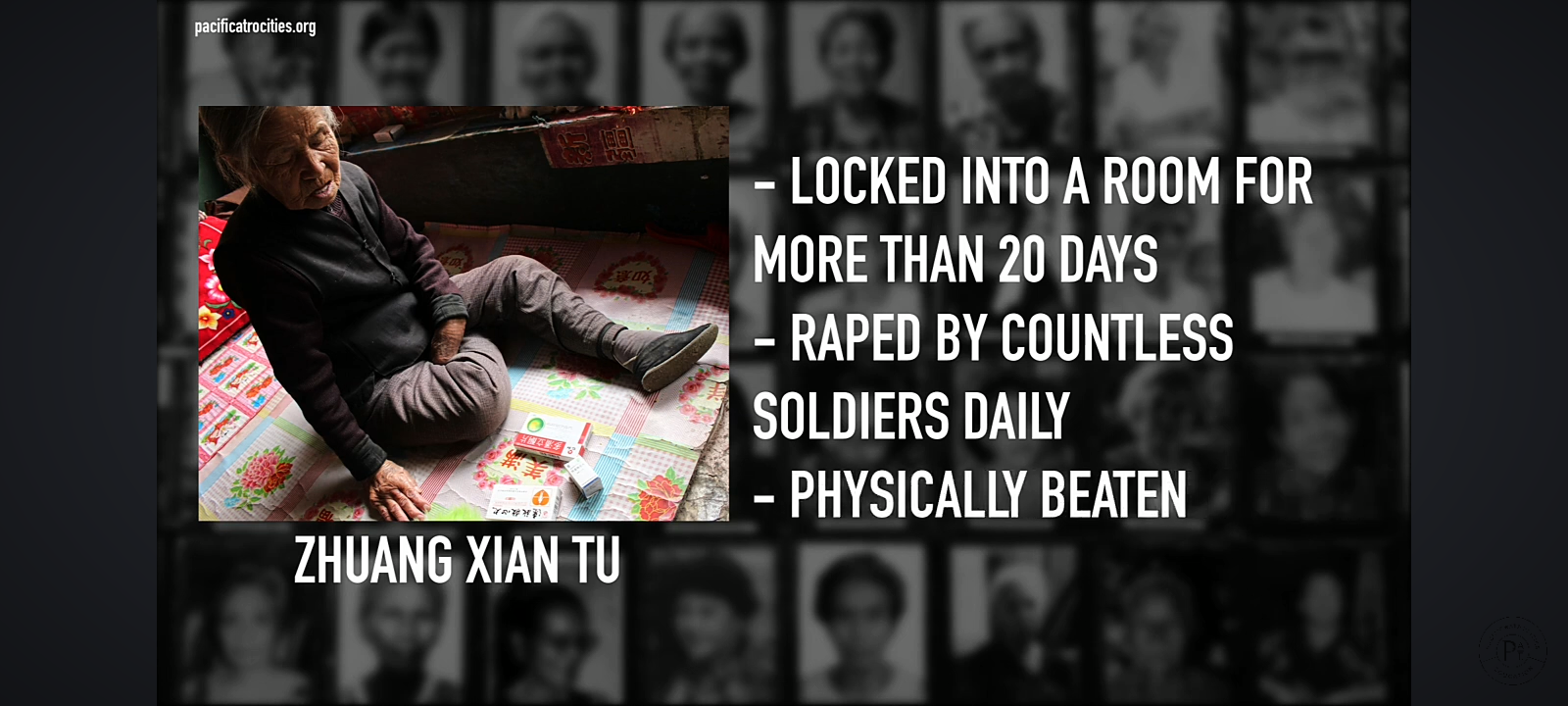
As Japan's military expanded explosively across China, Southeast Asia, and the Pacific after 1937 — and especially after the outbreak of the wider Pacific War in December 1941 — demand for women in the comfort station network vastly outstripped what even large-scale fraudulent recruitment could supply. The system shifted decisively toward outright abduction, debt bondage, and direct military coercion in occupied territories: Korea, China, the Philippines, Indonesia (then the Dutch East Indies), Taiwan, Burma, Malaya, and elsewhere. Methods varied by territory and by period but routinely included round-ups of women from rural villages under threat of force, the use of local police and administrative apparatus to compile lists of eligible women, and, in occupied internment camps holding European colonial populations, the direct selection of women by Japanese officers from prisoner lineups. Some girls taken into the system were as young as twelve or thirteen. Once inside a comfort station, women typically could not leave: many accounts describe locked or guarded facilities, a quota system requiring service to a fixed (and often very large) number of soldiers per day, beatings and torture for resistance, and a near-total absence of any institutional recourse, since the comfort stations were themselves run or licensed by the same military that controlled the surrounding territory.
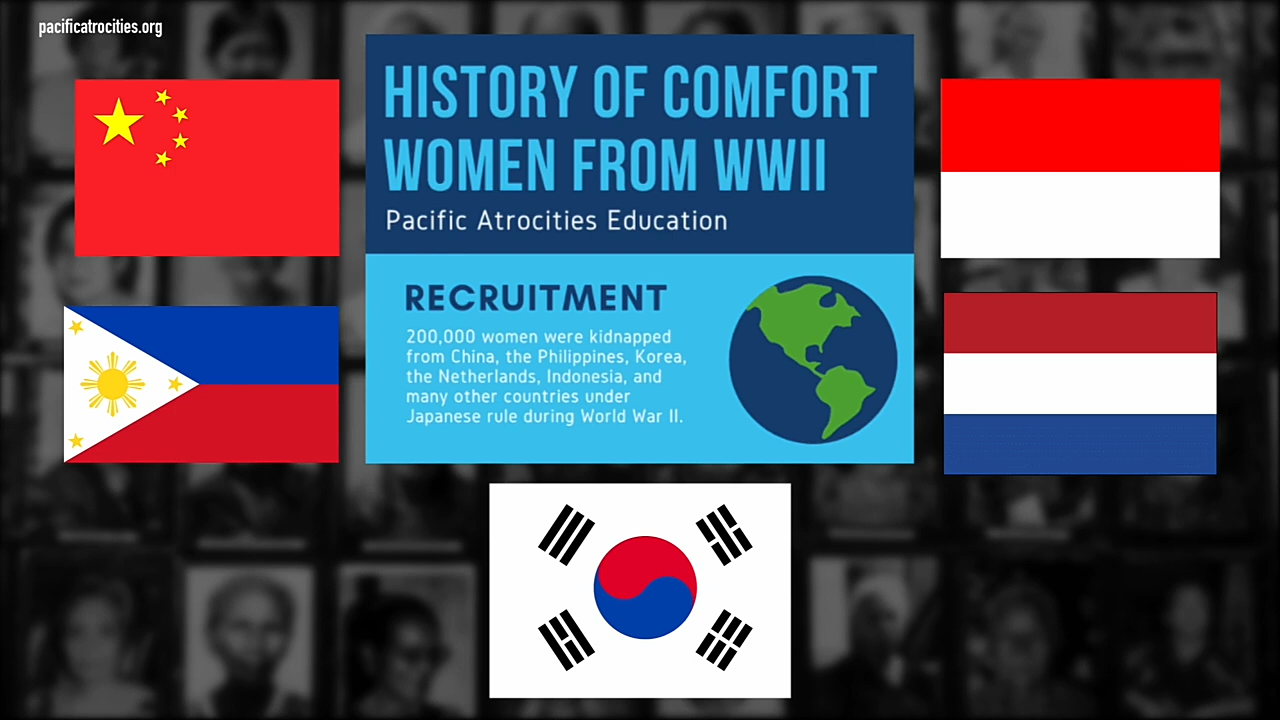

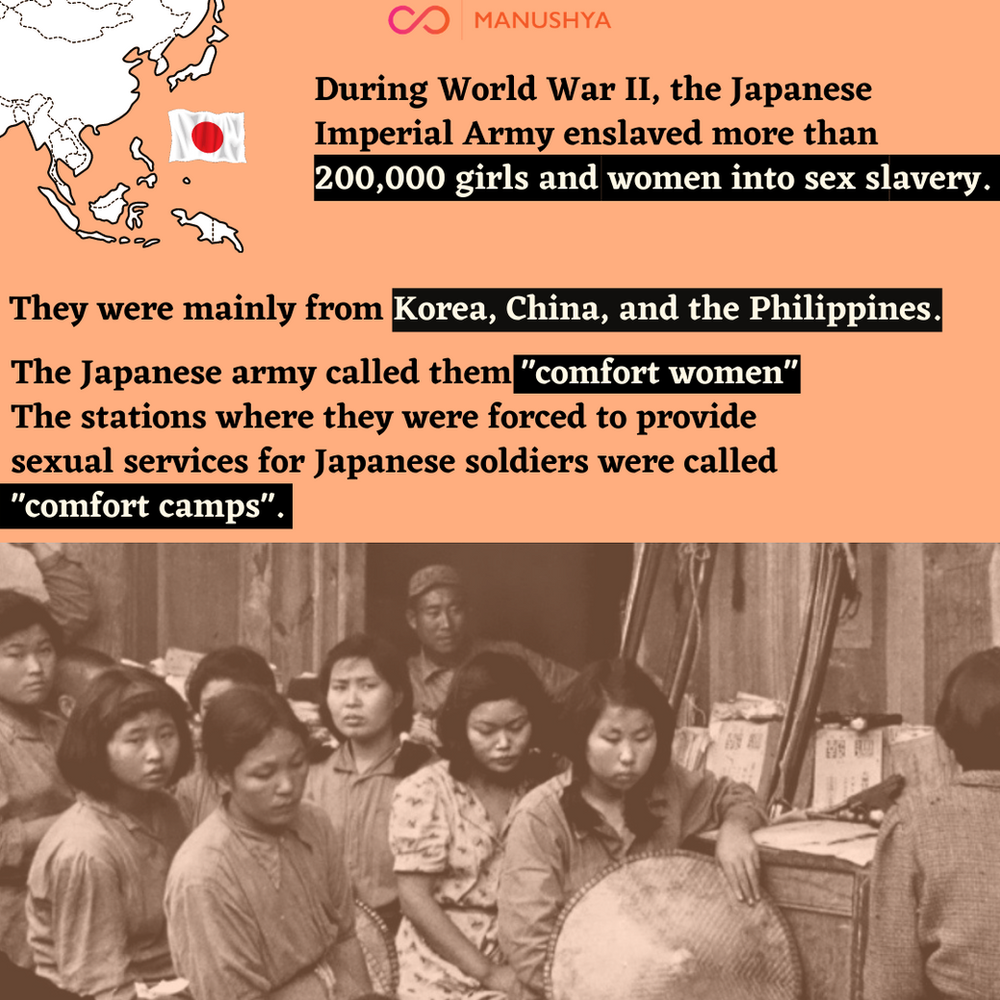
Historians dispute the total number of women involved, and that dispute is itself a direct consequence of the system's design: at the end of the war, Japanese military and government officials deliberately destroyed large quantities of relevant documentation, anticipating Allied war crimes investigations. Estimates in serious historical scholarship range from a low of around 20,000 up to roughly 400,000–410,000. A commonly cited middle estimate — associated with the work of historian Yoshiaki Yoshimi, the Chuo University scholar who in 1992 first located Japanese Defense Agency documents directly implicating the military in establishing and managing the comfort station system, ending decades of official denial — places the number between 50,000 and 200,000. The figure of "200,000" that appears most often in journalism and on memorial monuments derives from this range and from early Korean-language research in the 1970s; it should be read as a widely used estimate rather than a precisely documented count. What is not seriously disputed by mainstream historians, in Japan or elsewhere, is that the overwhelming majority of women in the system were Korean, that the system was operated and licensed by the Japanese military across every territory it occupied, and that abduction and coercion — not voluntary recruitment — became the dominant method of supply as the war went on.
Survivors: Breaking Decades of Silence
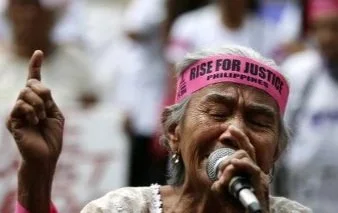
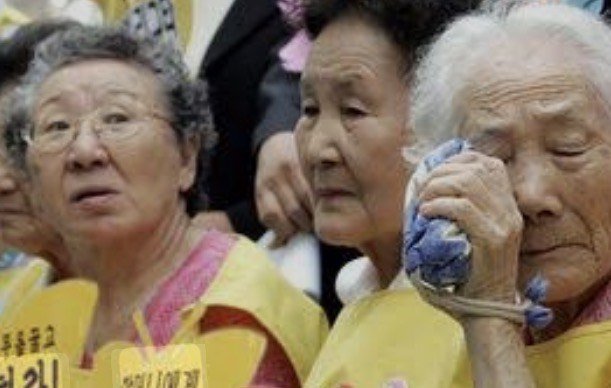
For nearly fifty years after the war, almost no survivor spoke publicly about what had happened to her. The reasons were not mysterious: deep social stigma attached to sexual violence in Korean, Chinese, Filipino, Indonesian, and Japanese society alike meant that survivors who spoke out risked being treated as the disgraced party rather than the victim, many had been explicitly threatened by Japanese officers that they or their families would be killed if they revealed what had occurred, and the broader political climate of the Cold War in East Asia — in which Japan, South Korea, and the United States were allied against communism — gave governments on all sides limited incentive to revisit the issue.
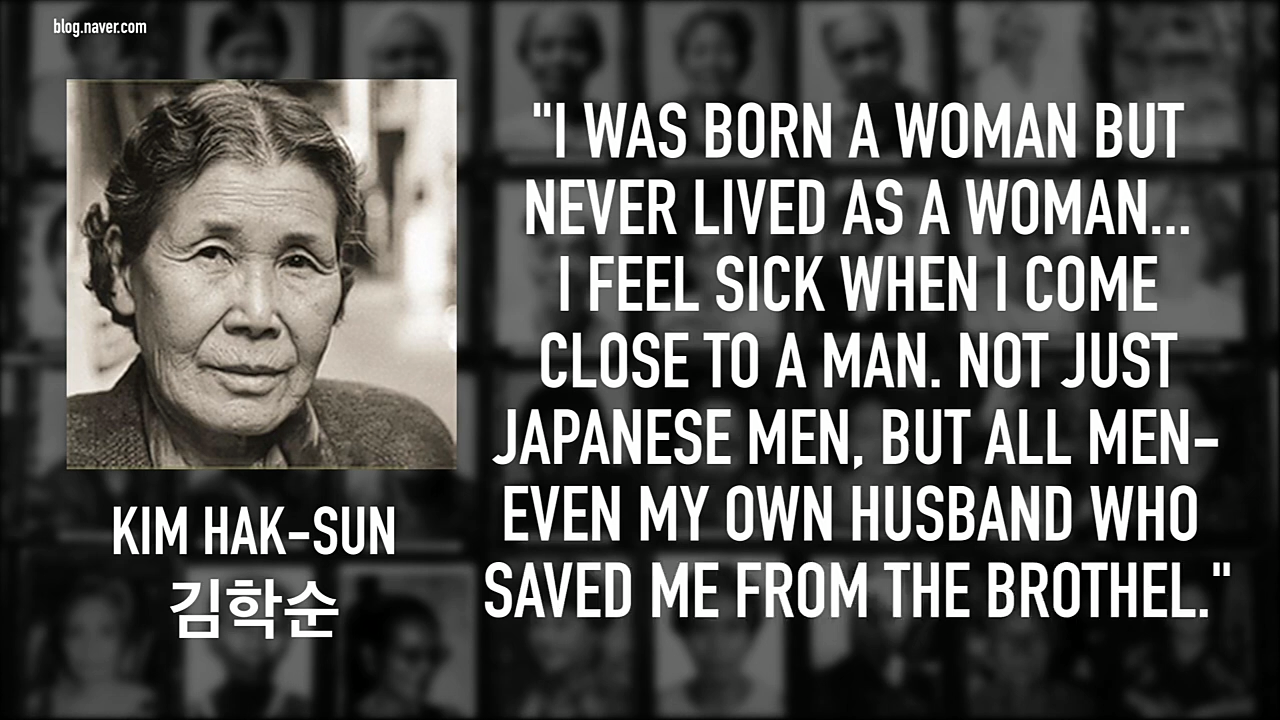
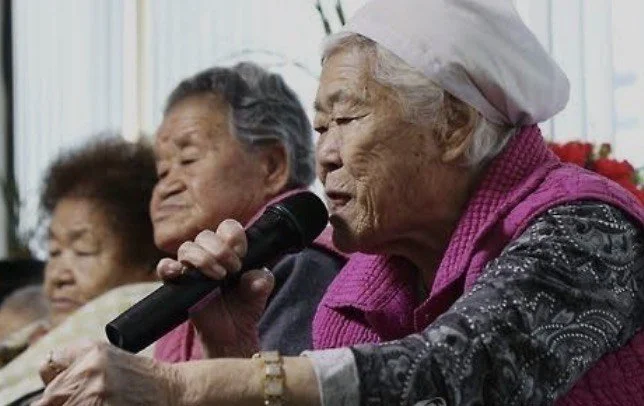
That silence broke in 1991, when a South Korean woman named Kim Hak-soon became the first survivor to publicly identify herself and testify about her experience, filing a lawsuit against the Japanese government alongside two other women. Her testimony, amplified by Japanese investigative reporting in the Asahi Shimbun newspaper through 1991 and 1992 and by Yoshimi's documentary discovery in early 1992, triggered a wave of testimony from other survivors across the region and is now widely treated by historians as the beginning of the modern comfort women movement. Weekly protests — the "Wednesday Demonstrations" — began outside the Japanese Embassy in Seoul in January 1992 and have continued for more than three decades, making them among the longest-running protest movements in the world.
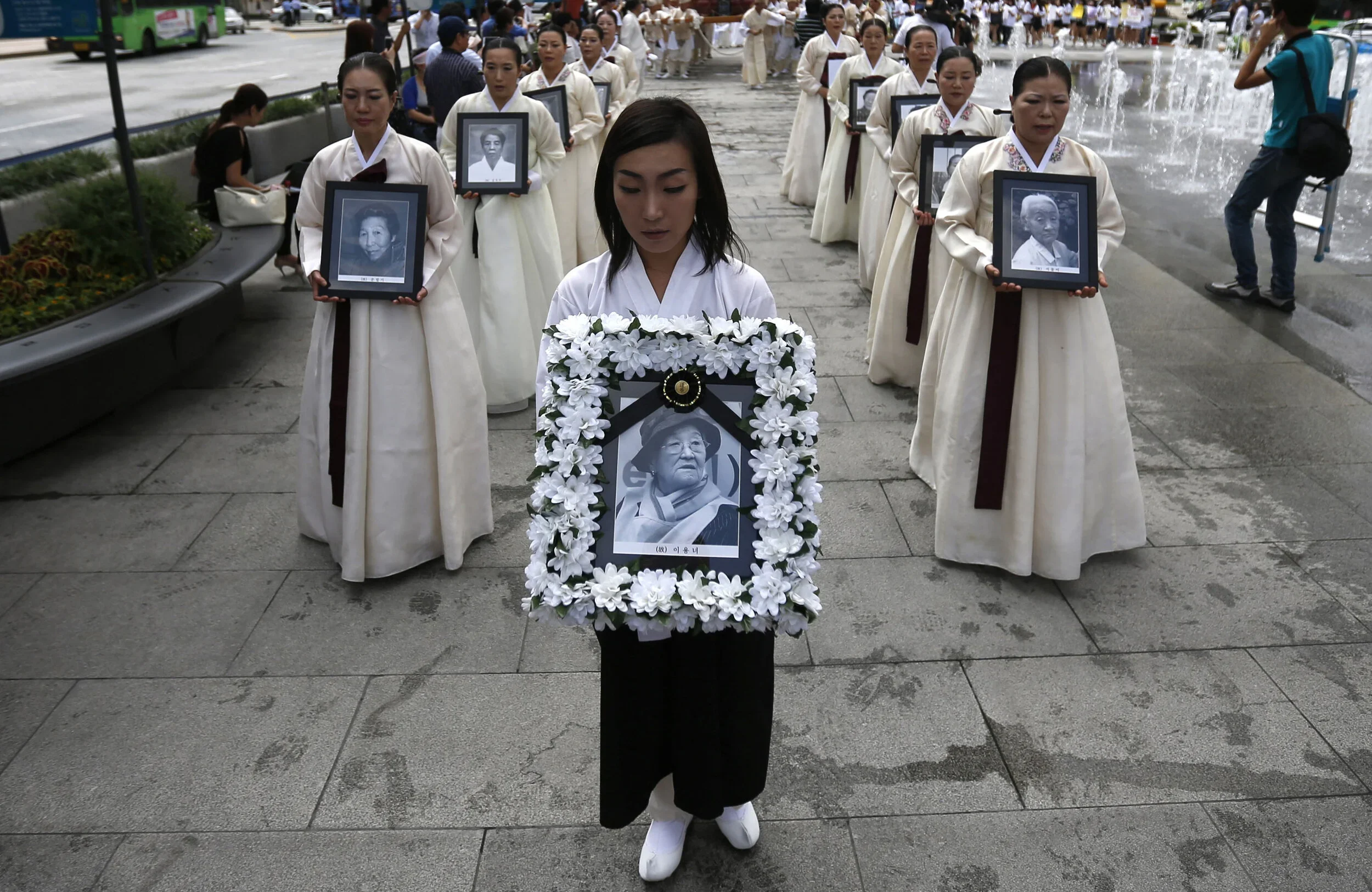
The testimony of survivors outside Korea is part of the same history and complicates any framing of this as a purely Korea-Japan dispute. Jan Ruff-O'Herne, a Dutch woman born in the Dutch East Indies (now Indonesia), was interned with her family in a Japanese prison camp on Java after the 1942 invasion. In February 1944, when she was twenty-one, Japanese officers lined up the camp's young women for inspection and selected ten, including Ruff-O'Herne, who were taken to a requisitioned colonial house in Semarang that the Japanese called "The House of the Seven Seas." There, she and six other women were photographed, displayed to soldiers for selection, given Japanese flower names, and systematically beaten and raped for three months before being returned to the internment camp under threat that she and her family would be killed if she spoke about it. She kept her silence for fifty years — marrying, raising a family in Australia, suffering miscarriages she attributed to the injuries inflicted on her — until 1992, when she saw Kim Hak-soon's testimony on television and decided that the Korean survivors needed the support of a European voice. She testified publicly in Tokyo that December, published a memoir titled Fifty Years of Silence in 1994, and gave testimony before the U.S. House of Representatives in 2007 alongside two Korean survivors, Lee Yong-soo and Kim Koon-ja, describing torture, electric shocks, and repeated rape by dozens of soldiers a day. She died in 2019 at ninety-six, having never received what she considered an adequate apology from the Japanese government, and having explicitly rejected Asian Women's Fund compensation as insufficient.
The Dutch case also produced something almost unique in the legal history of this system: actual war crimes convictions, secured not by an international tribunal but by the Netherlands acting on its own. After the war, the Dutch government convened the Batavia (now Jakarta) Temporary Court Martial to try Japanese officers and civilian collaborators for crimes committed in the Dutch East Indies. Among the hundreds of cases it heard between 1946 and 1949 was the so-called Semarang case, involving the forced prostitution of thirty-five Dutch women — including Ruff-O'Herne's group — at several comfort stations on Java. In February 1948, the tribunal convicted twelve Japanese military and civilian defendants in connection with this case; one army officer was sentenced to death, and the others received prison terms. It remains the only instance in which individual Japanese soldiers, rather than only civilian brothel operators, were criminally convicted specifically for forced prostitution under the laws of war — a legal landmark that nonetheless applied to only thirty-five of an estimated tens or hundreds of thousands of victims, almost all of them the European wives and daughters of a colonial power with the institutional standing to convene its own war crimes court. No equivalent tribunal was ever convened on behalf of the much larger number of Korean, Chinese, Filipino, or Indonesian victims, a disparity that later became a point of bitter contention among survivor advocacy groups.
The Part Most People Don't Know: Japan Built the Same System for American Troops
Here is where the story gets genuinely strange, and where I think the most interesting and underdiscussed thread lies. In August 1945 — before Japan had even formally surrendered, and while its leaders were still negotiating the terms of capitulation in Manila — Japanese officials anticipated that incoming American occupation troops might commit the same kind of mass sexual violence against Japanese women that Japanese soldiers had inflicted on civilian populations across Asia. At a cabinet meeting on August 21, Deputy Prime Minister Fumimaro Konoe raised this fear directly with Prime Minister Higashikuni and proposed establishing a "comfort women system" within Japan itself to, in the language used internally, create what one police department's official history later called a "breakwater" of "experienced women" to protect "regular women and girls" of the middle and upper classes from the anticipated violence of the occupying army. The cabinet approved the idea, though by the time it did, the bureaucratic machinery was already moving: the Home Ministry had sent a directive to prefectural governors and police chiefs on August 18 — three days after the surrender broadcast — ordering them to prepare "comfort facilities" in any area where occupation troops would be stationed.
Within days, a new organization called the Recreation and Amusement Association (RAA) was established with direct government financing, explicitly modeled on, and using the identical bureaucratic vocabulary of, the wartime military comfort station system. The RAA was capitalized through unsecured loans arranged by Hayato Ikeda — then a director in the Ministry of Finance's Tax Bureau, who would go on to become prime minister of Japan in the 1960s — totaling roughly 33 million yen from the state-affiliated Japan Industrial Development Bank, with additional government reserve funding bringing total initial capitalization to perhaps 100 million yen. Local police departments and Tokyo businessmen jointly ran the network on the ground. The intended labor force was women already working in Japan's licensed sex trade, but the country's prostitution industry had been disrupted by wartime crackdowns and the evacuation of cities under Allied bombing, so there were nowhere near enough such women available. Recruitment broadened almost immediately to newspaper advertisements that obscured the nature of the work — soliciting, for example, "Women of the New Japan" for vaguely described office or hospitality positions — drawing in destitute, often newly widowed or orphaned young women in a famine-threatened postwar economy who discovered the real nature of the job only on arrival. One nineteen-year-old recruit, Natsue Takita, answered an advertisement seeking an office worker, was told on arrival that comfort-station work was the only position available, and was persuaded to accept it; according to a postwar memoir by an RAA public relations official, she killed herself by jumping in front of a train days after the brothel opened.
The first RAA brothel, the Komachien in Ōmori, opened for business on August 28, 1945 — the very same day an advance wave of American occupation troops landed at Atsugi airfield south of Tokyo. The timing was not coincidental; the brothel had been rushed into operation specifically to be ready for arriving troops, and by nightfall American soldiers had already found it. By December 1945 the RAA operated thirty-four facilities, sixteen of them designated comfort stations, and at its peak the organization employed somewhere between 50,000 and 70,000 women — a scale that, within a single American-occupied country in a few months, rivaled the entire wartime comfort station network built up over thirteen years across the whole of occupied Asia. By the end of 1945, roughly 350,000 to 430,000 American troops were stationed throughout Japan, and contemporary accounts describe RAA brothels as "elbow to elbow" with customers within days of opening.
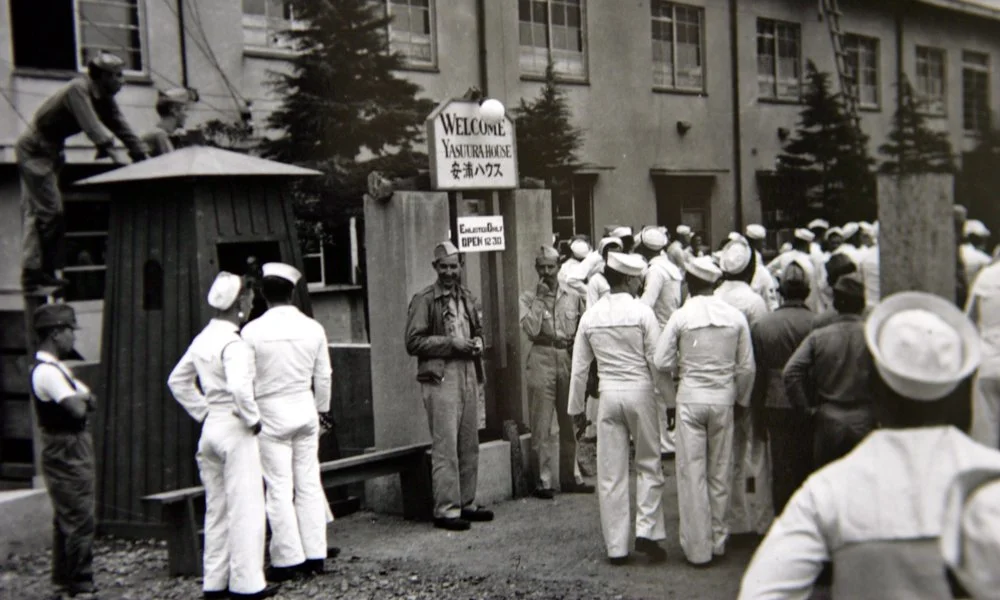
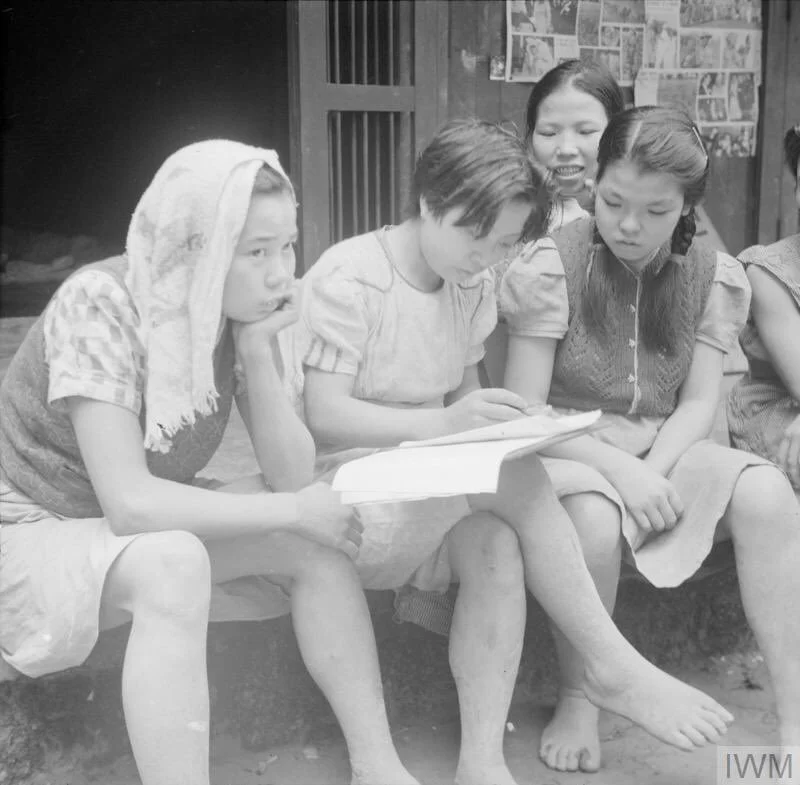
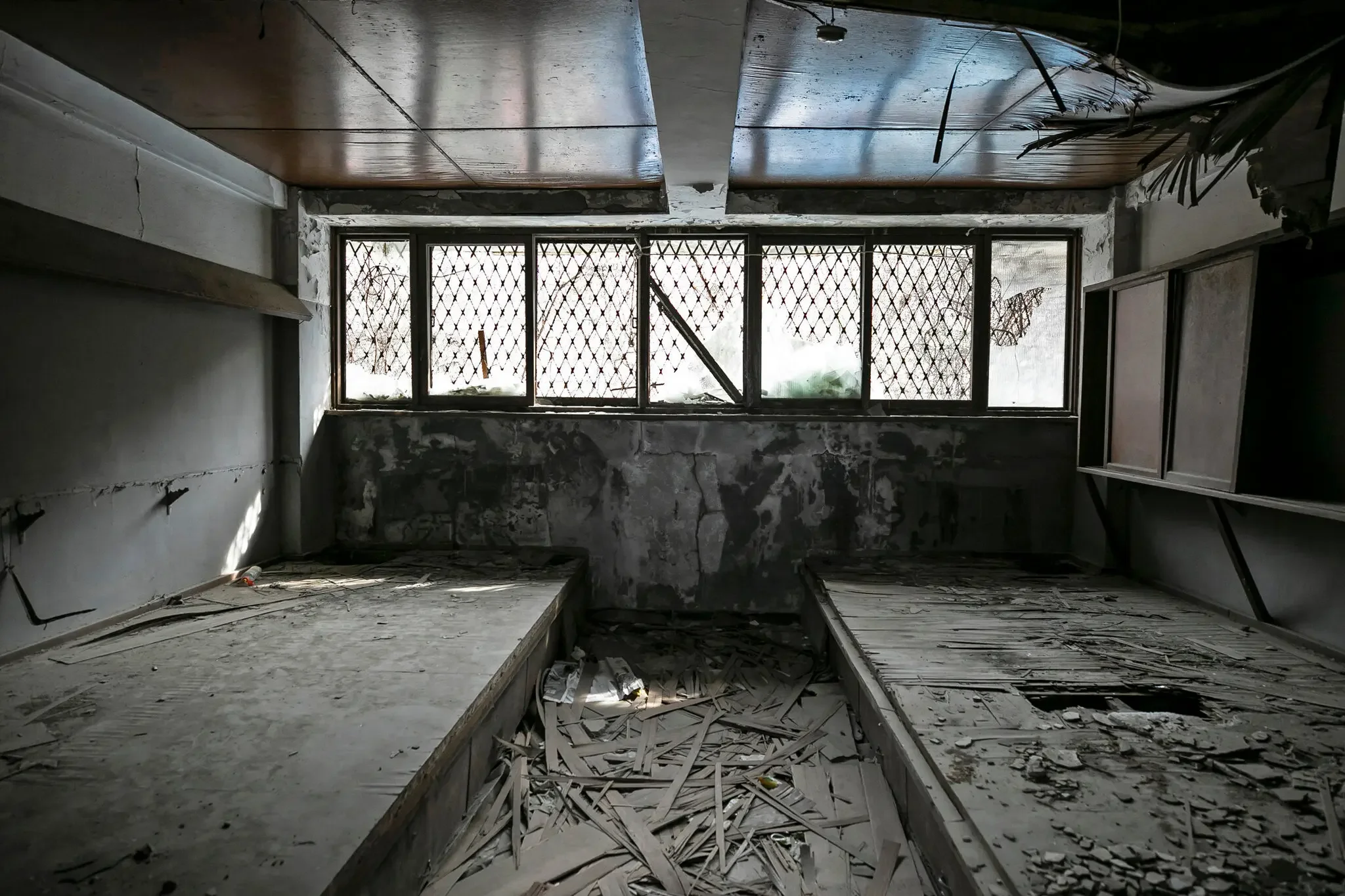
American occupation authorities were not passive bystanders to this arrangement. Some local American commanders directly requested that Japanese prefectural governors establish brothels for their troops, in at least one documented case offering U.S. military police assistance to help organize them. American medical officers set up prophylactic stations inside red-light districts and larger brothels, distributing tens of thousands of condoms a week in an explicit effort to manage — rather than prevent — mass patronage by occupying soldiers. A December 6, 1945, internal memorandum from Lieutenant Colonel Hugh McDonald, a senior officer in the occupation's Public Health and Welfare Division, shows that American officials were directly aware the system relied on coercion: he wrote that women were typically pressed into the work by the desperate financial straits of their families, and that practices resembling enslavement, while less common than during the war, still persisted in urban areas. Despite this awareness, the arrangement continued for roughly seven months, undone in the end not primarily by moral objection but by a public health crisis: by early 1946, close to a quarter of all U.S. occupation troops in Japan were infected with a sexually transmitted disease, with infection rates in some units approaching fifty percent. Military chaplains' complaints about the moral conduct of American troops, combined with mounting concern among occupation health officials that news of the arrangement would embarrass the war effort back home, finally pushed General Douglas MacArthur to issue an order on January 21, 1946, declaring licensed brothels incompatible with "the ideals of democracy" and placing them off-limits to American personnel; the RAA's comfort stations closed shortly afterward. Some historians, notably John Dower, have noted the grim postscript: incidents of rape and sexual assault by American occupation troops appear to have risen substantially — by some calculations roughly eightfold — after the RAA brothel system was shut down, suggesting that whatever else it was, the system had been functioning as its planners intended, displacing sexual violence from Japanese civilian women onto a captive, organized population of brothel workers instead.
This episode complicates any narrative that treats the comfort women system purely as a unique atrocity born of a uniquely militarist Japanese culture. It is that — the wartime system was vastly larger, vastly more brutal, and operated against colonized and conquered populations with none of even the RAA's nominal contractual veneer. But the RAA also demonstrates that the underlying institutional logic — that an occupying military's anticipated sexual violence is a problem to be "solved" through organized, state-facilitated access to a separate population of women's bodies — was not exclusive to the Imperial Japanese Army, and was not even rejected by the next occupying power when the apparatus was handed to it nearly intact. The United States inherited a functioning brothel system built specifically for it, used it for the better part of a year with documented awareness of the coercion involved, and shut it down primarily over a disease outbreak rather than the practice itself. The continuity between the two systems — built using the same vocabulary, the same government financing model, and in some cases the same buildings, within weeks of each other — says something about militarism as an institution that transcends any single national case.
Capitalism, Militarism, and the Brothel as Institution
It's worth separating two things that often get collapsed together: sex work as such, and the specific institutional form these wartime systems took. A brothel is not inherently an instrument of atrocity. Sex work organized on a cooperative basis — with workers controlling their own conditions, setting their own rates, retaining the ability to refuse a client or leave the trade altogether, and collectively bargaining with whatever institution they work through — is a fundamentally different arrangement from a brothel that exists to extract sexual labor from women who cannot leave, are not paid a survivable wage (or are paid nothing, with earnings withheld against fabricated "debts"), and exist within a chain of command answerable not to themselves but to a military or state apparatus with the power to imprison, beat, or kill them. The difference is not aesthetic. It is the difference between a market, however imperfect, and a supply chain. This is loosely a brothel, but more in line with a sex slave system.
The comfort women system and the RAA were unambiguously the latter. Consider how the financing actually worked: brothel operators and recruiters profited directly from fees charged to soldiers (fifteen yen for a brief visit at an RAA facility, according to historian John Dower's research — roughly a dollar at 1945 exchange rates, deliberately priced to be affordable to ordinary enlisted men in large volume); financiers profited from loans and capitalization, as in the case of the state-linked Japan Industrial Development Bank's 33-million-yen loan to launch the RAA; and the military and state profited in a less direct but equally real currency — troop morale, reduced rates of mass civilian rape (and the political and diplomatic costs that came with it), and lower venereal disease rates among soldiers compared to unregulated contact. Every layer of this arrangement had a financial stake in the system's continued operation and in the continued absence of any exit option for the women inside it. That alignment of profit motive and military logistics is not incidental to the story; it is close to the entire mechanism. Militaries are extraordinarily expensive, extraction-dependent institutions, and historically they have repeatedly solved logistical and morale problems by converting human beings — conscripted soldiers, colonized labor forces, occupied civilian populations, women specifically — into a managed resource, very often with private or quasi-private capital eager to finance, supply, and profit from the arrangement, exactly as a Finance Ministry official and a state-affiliated bank did for the RAA within days of Japan's surrender.
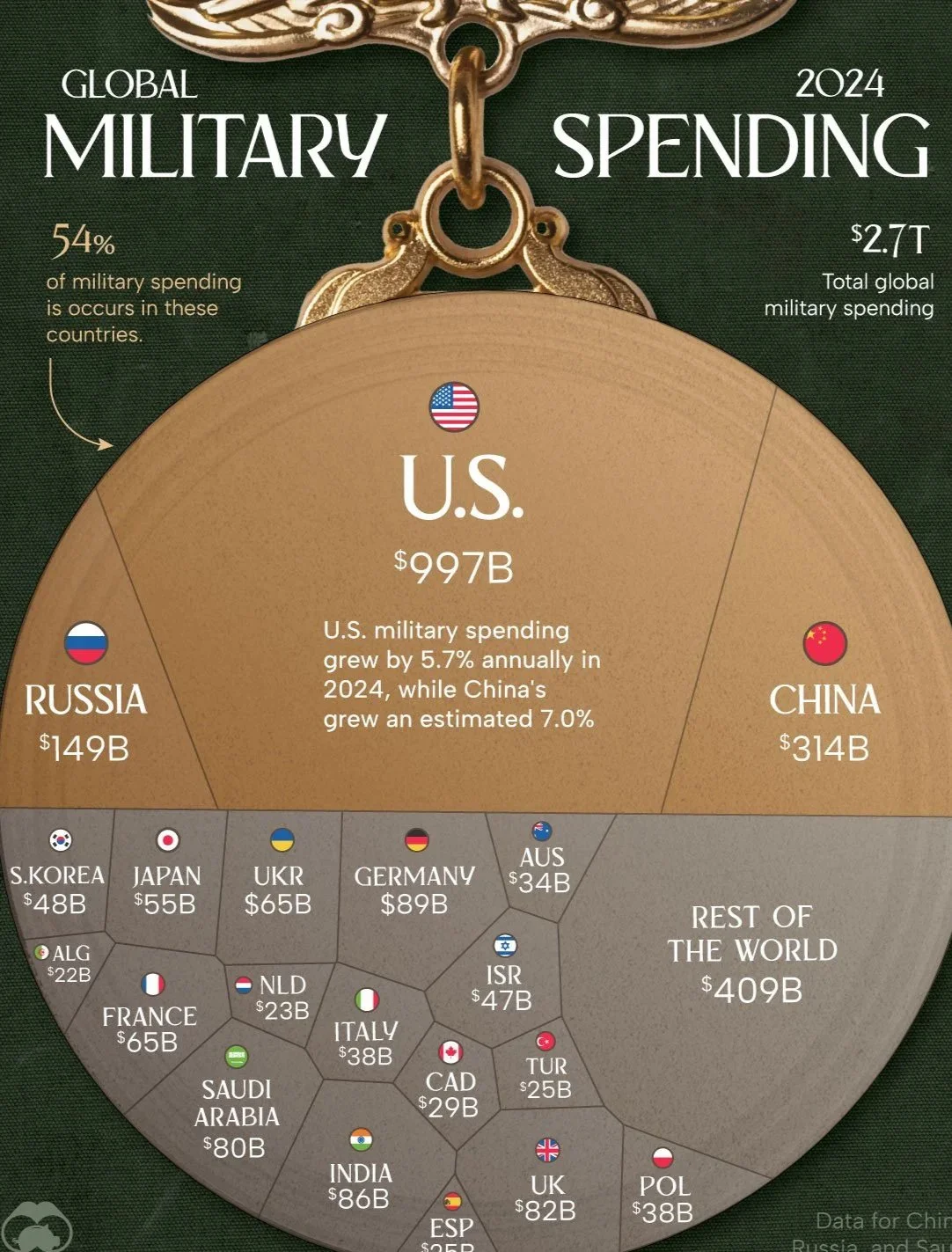
The comfort women system is an extreme version of a pattern that recurs wherever military command structures and commercial interests intersect around a captive population: when profit and chain-of-command authority both treat a group of people as a resource to be allocated rather than a population with rights, the people inside that group lose whatever leverage — to refuse, to negotiate terms, to exit — would otherwise distinguish even an exploitative labor market from outright slavery. This is the analytical line worth holding onto, because it's also what separates the wartime comfort station network and the RAA (where women could not leave, were moved involuntarily across borders, and operated under direct military or police authority) from the worker-controlled cooperative sex work model that exists, in various legal forms, in parts of the world today — a model in which the same underlying commercial activity exists without the coercive command structure layered on top of it, and where, not coincidentally, advocates argue outcomes for the people doing the work look entirely different.
Reparations, and the Politics of Forgetting
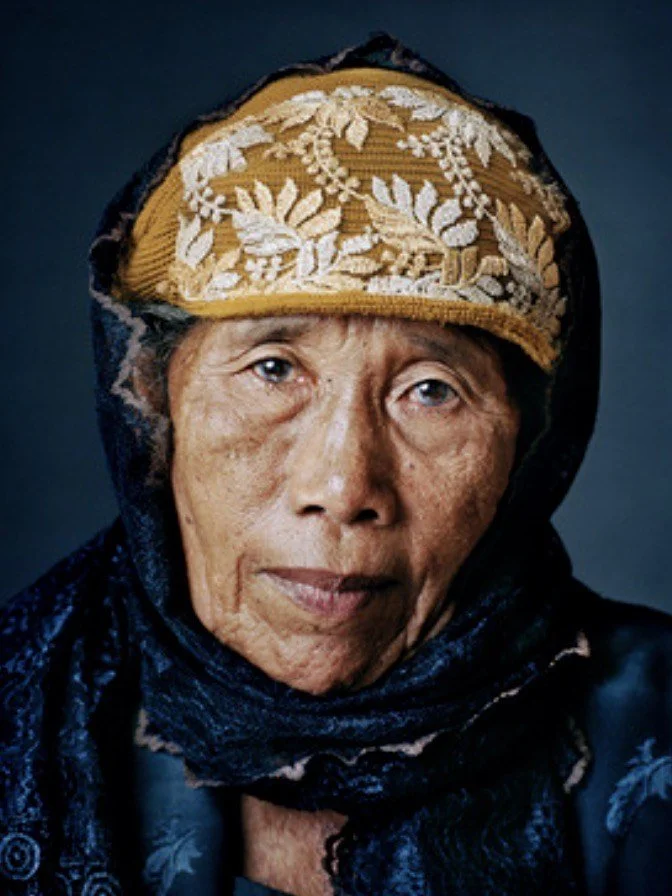
Survivors did eventually receive some compensation from Japan, though "reparations" overstates how formal, complete, or legally final any of it has actually been. The starting legal complication is the 1965 Treaty on Basic Relations between Japan and South Korea, normalizing diplomatic relations after Japan's decades-long colonization of Korea; Japan has long argued, and Japanese courts have generally upheld, that this treaty and the accompanying claims settlement agreement legally extinguished individual Korean claims against the Japanese state, including those of comfort women, in exchange for a lump-sum payment to the South Korean government. Survivors and their advocates have consistently rejected this position, arguing that a treaty negotiated between two governments in the 1960s — when the comfort women system was not yet publicly acknowledged and victims were not consulted — cannot extinguish an individual's right to seek redress for a crime against humanity, a position that has found some support in later Japanese and South Korean court rulings (a 1998 Yamaguchi District Court decision awarded compensation to South Korean survivors, for instance, though it was overturned on appeal in 2001 and the reversal upheld by Japan's Supreme Court in 2003).
Against that legal backdrop, Japan in 1995 helped establish the Asian Women's Fund, a quasi-governmental body that was funded partly by private donations from the Japanese public (roughly 600 million yen) and partly by Japanese government money (a total of about 4.8 billion yen across all of the Fund's activities), explicitly structured to avoid the appearance of direct state reparations. The Fund provided "atonement money" of 2 million yen per survivor, funded specifically from private donations, to 285 former comfort women — 211 in the Philippines, 61 in South Korea, and 13 in Taiwan — along with separate medical and welfare support, and a later, larger compensation tier (3 million yen per person in South Korea and Taiwan, 1.2 million yen in the Philippines, for a combined total of roughly 5 million yen per Korean and Taiwanese recipient and 3.2 million yen per Filipina recipient) funded by the Japanese government directly. Each recipient received a signed letter of apology and remorse from the sitting Japanese prime minister — Ryutaro Hashimoto, Keizo Obuchi, Yoshiro Mori, and Junichiro Koizumi all signed such letters during the Fund's operation. The Fund also extended support for elderly former comfort women in Indonesia and the Netherlands, including a formal compensation tier for the thirty-five Dutch survivors of the Semarang case discussed above, of whom seventy-nine Dutch women ultimately accepted some form of Fund assistance.
Many survivors and advocacy groups rejected this arrangement on principle, regardless of the money involved, specifically because it routed compensation through a nominally private fund rather than constituting direct, unambiguous state reparations — a structure they argued was designed precisely to let the Japanese government avoid formally and legally accepting state responsibility for the crime. Jan Ruff-O'Herne was among those who refused the compensation outright on these grounds, calling it an insult to be offered money without the corresponding unequivocal admission of legal responsibility she wanted.
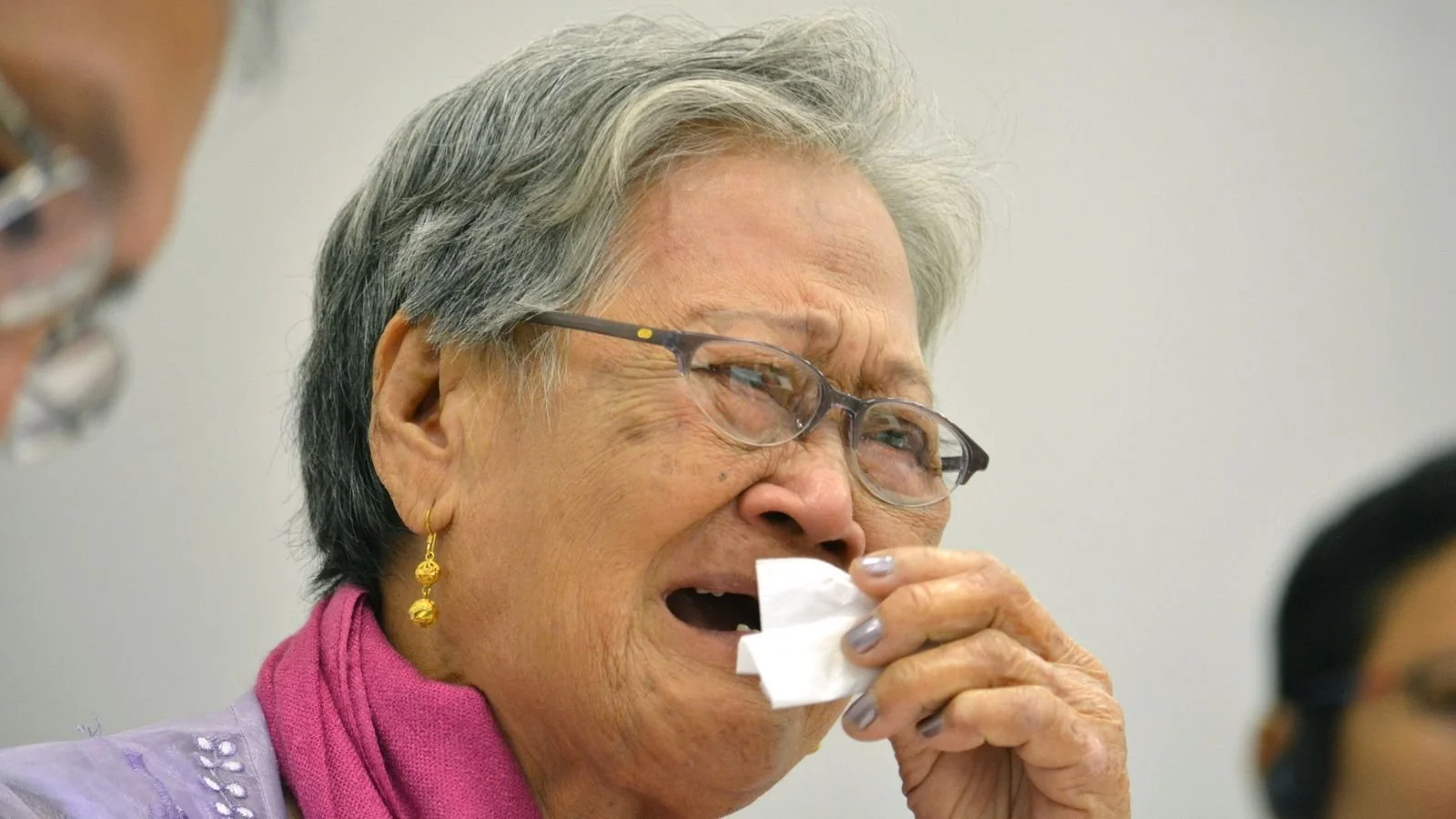
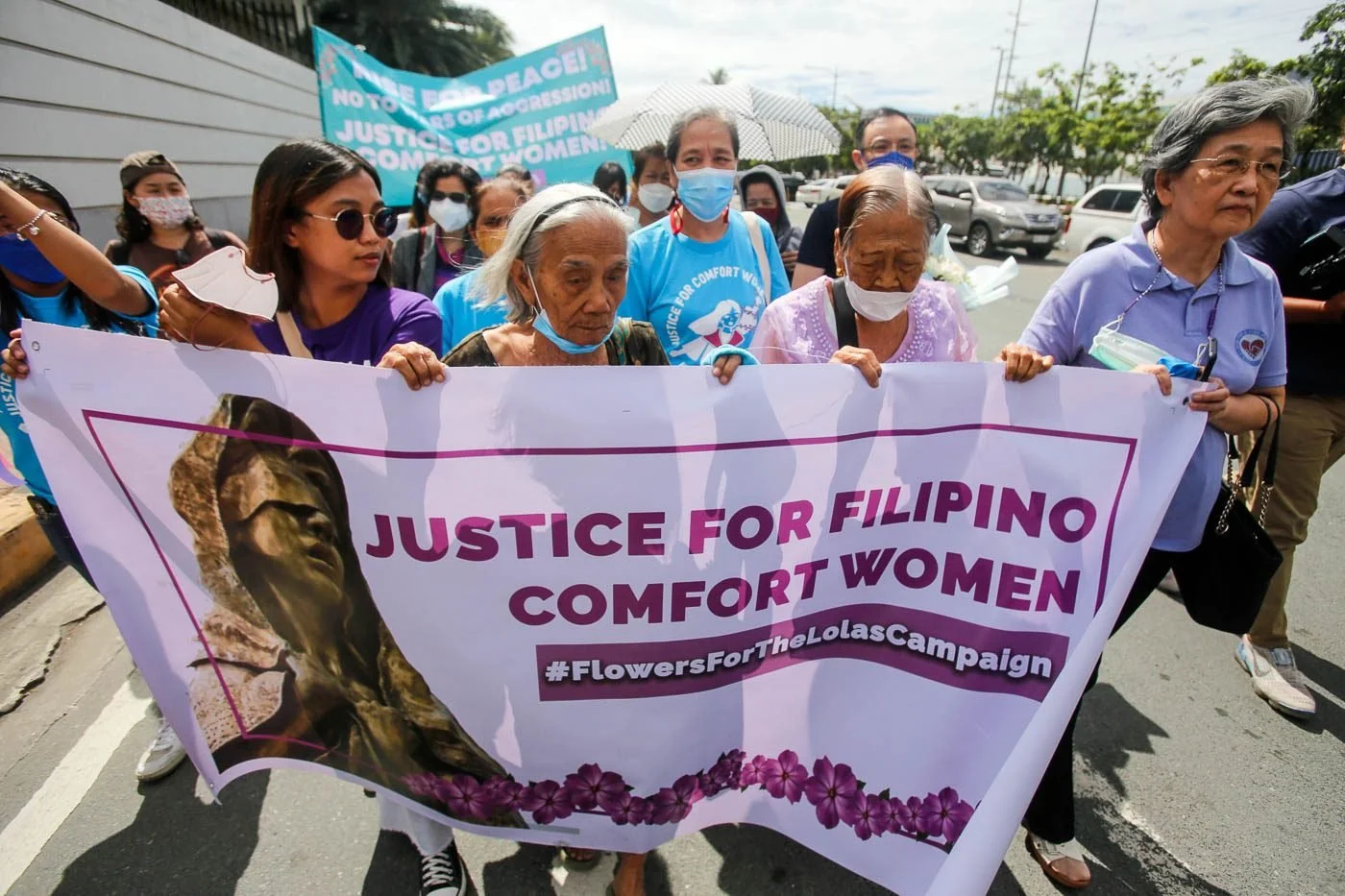
In December 2015, Japan and South Korea announced a fresh bilateral agreement, negotiated under pressure from the Obama administration as part of a broader effort to repair strained trilateral relations among Japan, South Korea, and the United States, intended to resolve the comfort women issue "finally and irreversibly." Foreign Minister Fumio Kishida read a statement on behalf of Prime Minister Shinzo Abe expressing renewed "sincere apologies and remorse," and Japan contributed 1 billion yen (about $8.3 million) to a newly created Reconciliation and Healing Foundation in South Korea, which went on to pay roughly 10 million yen each to thirty-four of the forty-seven survivors then still living. The text of the agreement itself was never published in full; the foreign ministers simply read prepared statements at a joint press conference, and the two governments confirmed the deal by a same-day phone call between their leaders. The agreement was negotiated entirely between the two governments, without consulting any surviving victims or the advocacy organizations — like the Korean Council for Women Drafted for Military Sexual Slavery by Japan — that had represented them for more than two decades, a procedural fact that UN human rights experts later cited explicitly in criticizing the deal as falling short of survivors' right to be consulted in matters of transitional justice.
The agreement collapsed within a few years of its signing. South Korea's government, under a new administration, convened a task force that concluded in early 2018 that the 2015 deal failed to properly reflect the wishes and dignity of survivors, and South Korea's Ministry of Gender Equality and Family moved to dissolve the Reconciliation and Healing Foundation later that year, redirecting Japan's 1 billion yen contribution to a separate domestic fund rather than returning it. Meanwhile, Japanese officials repeatedly undercut the spirit of the apology almost as soon as it was issued: just weeks after the 2015 agreement, Prime Minister Abe told Japan's National Diet that no documentary evidence had been found proving comfort women were forcibly taken — a statement that directly contradicted the premise of "sincere apologies" he had just authorized his foreign minister to deliver, and that fit a longer pattern; Abe had spent much of his earlier political career arguing for revisions to Japanese history textbooks regarding the comfort women issue, only reversing that stance publicly in 2013 under diplomatic pressure, before reverting to coercion-denial rhetoric again in private and semi-private settings even while signing the 2015 deal in public.

The Recurring Pattern of Rewriting the Record
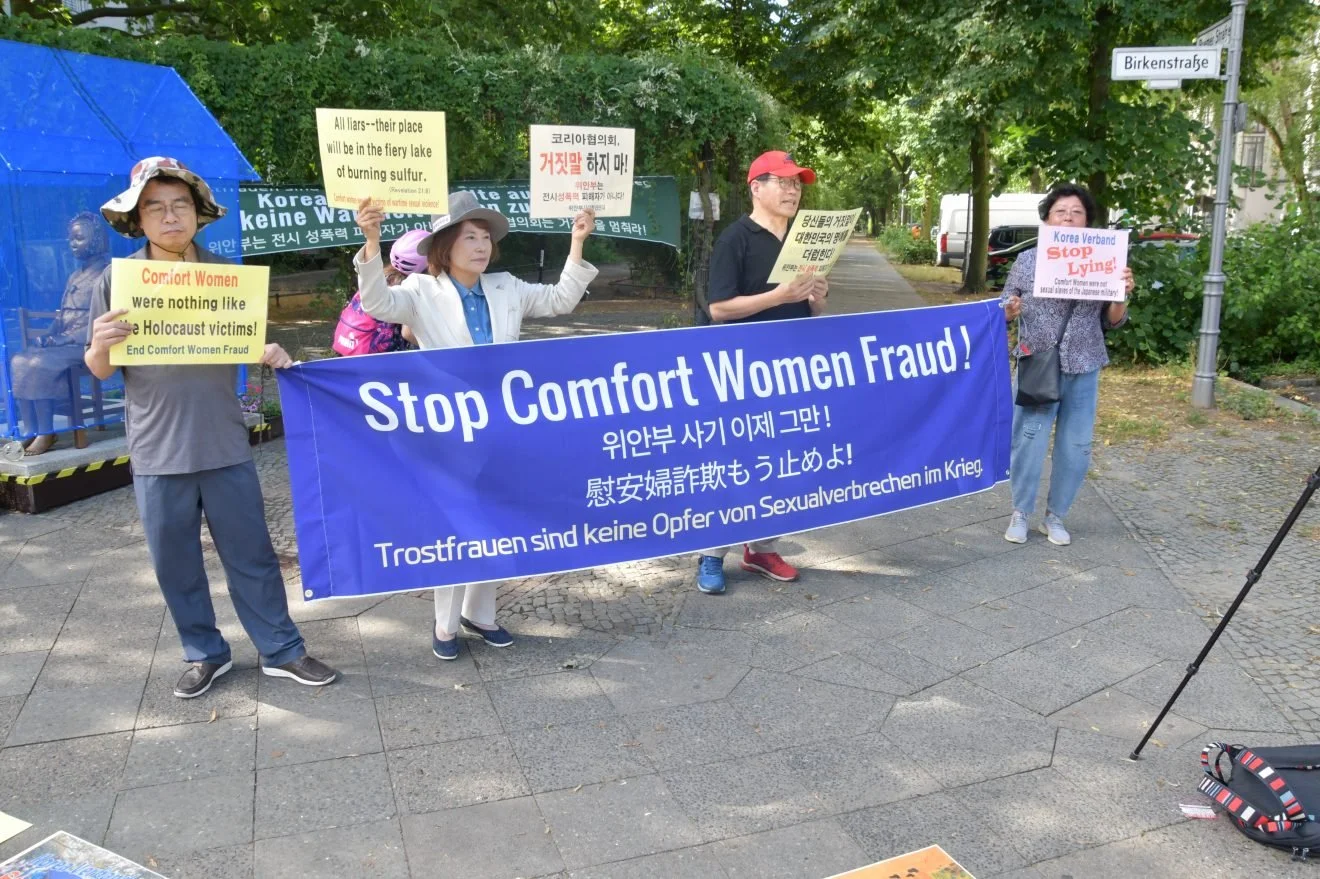
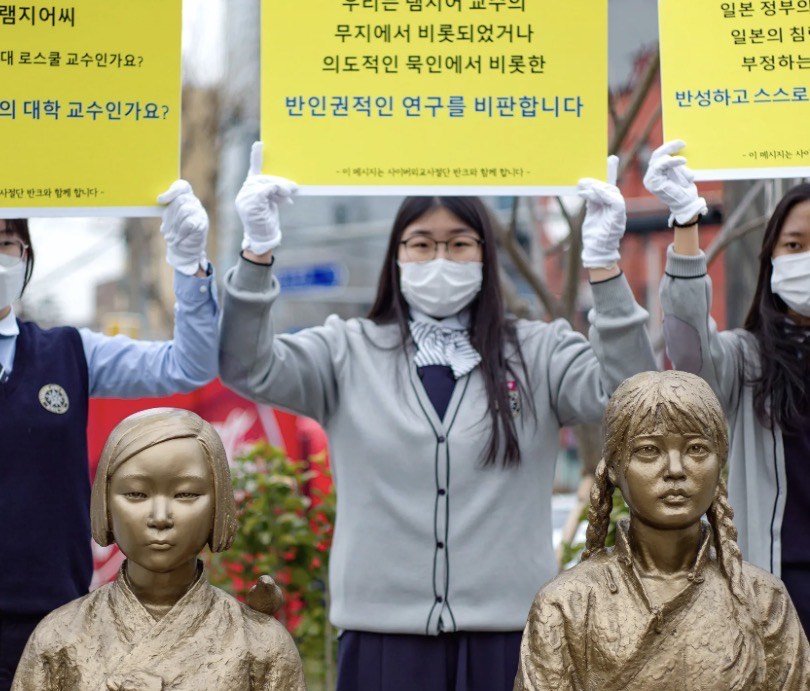
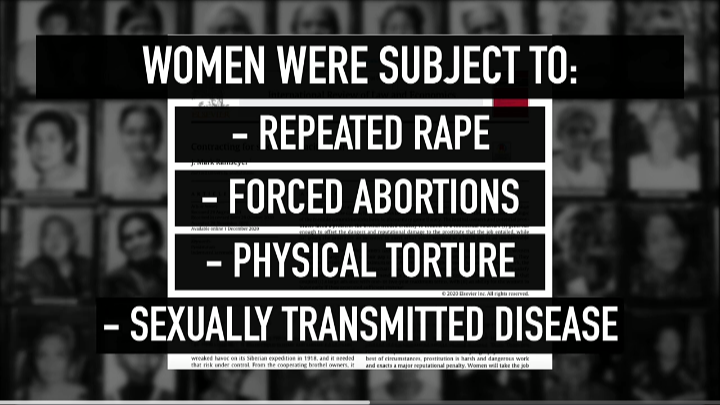
That last pattern — apologizing and disputing in the same breath, or offering money while disputing the underlying facts that would justify it — fits into something larger, and it found its most internationally visible recent expression in 2021, when a Harvard Law School professor named J. Mark Ramseyer published an academic paper titled "Contracting for Sex in the Pacific War" in the International Review of Law and Economics. Using a game-theoretic economic framework rather than primary historical documentation, Ramseyer argued that comfort women were not coerced victims at all but willing parties to voluntary, negotiated commercial contracts, modeled on Japan's pre-existing licensed prostitution system, in which women accepted large upfront payments in exchange for fixed one- or two-year terms of service. He has separately described the consensus historical account of comfort women as sex slaves as "pure fiction."
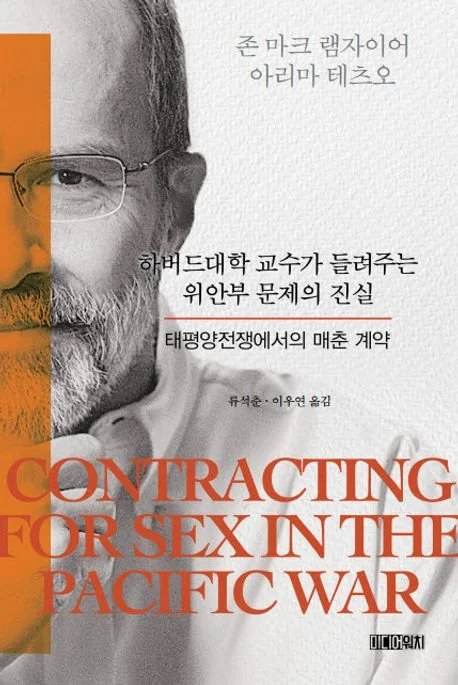
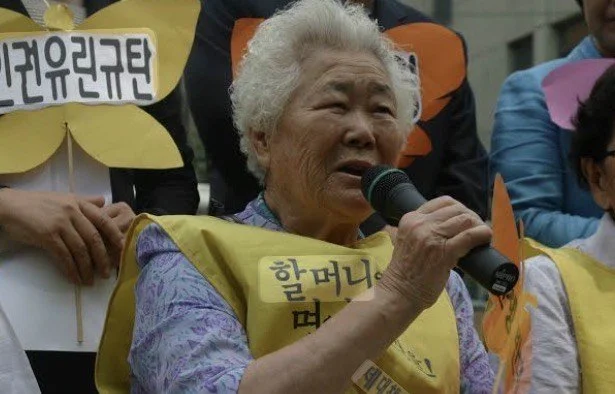
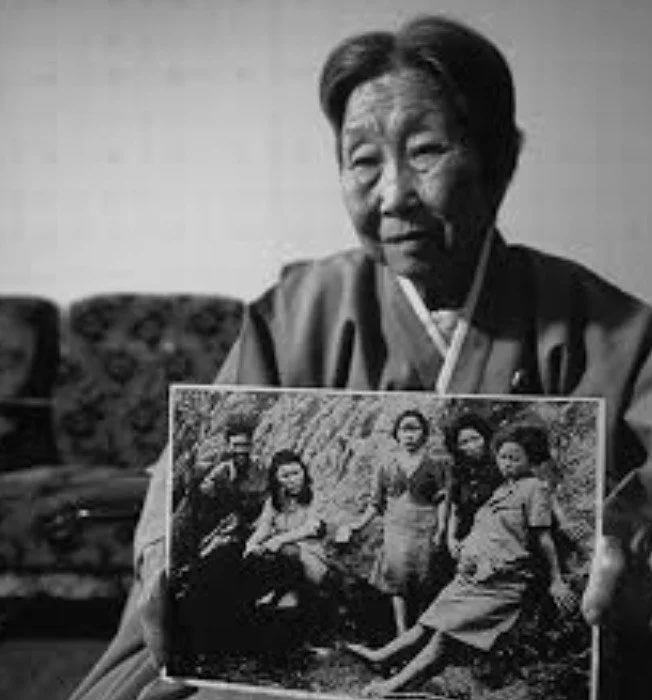
The paper triggered an immediate and sustained international backlash once its abstract circulated in a Japanese nationalist newspaper in January 2021. Historians — including Ramseyer's own Harvard colleagues, Andrew Gordon and Carter Eckert, who published a detailed joint rebuttal — pointed out that he cited no actual contracts signed by Korean women, the largest group of victims, relying instead on contracts involving Japanese women in the separate, pre-existing licensed prostitution system and asking readers to extrapolate. They and other critics also noted that his own description of the arrangement — women bound to fulfill an "obligation" involving sex with large numbers of soldiers over a fixed term, with no real ability to breach the contract or walk away — is simply a description of indentured servitude or slavery using the vocabulary of consensual commerce; Harvard law professor Jeannie Suk Gersen wrote publicly that no legal system would recognize or justly enforce a contract of this nature, and that the absence of any real possibility of exit is "the definition of slavery." More than 10,000 signatures across multiple open letters and petitions from historians, economists, and legal scholars called on the journal to investigate, correct, or retract the piece; the journal ultimately appended a formal "Expression of Concern" and delayed print publication while conducting a review, though as of the controversy's resolution it stopped short of full retraction — a decision one historian publicly called "rotten at the core." Ramseyer, for his part, has continued to stand by the paper, stating that it "speaks for itself."
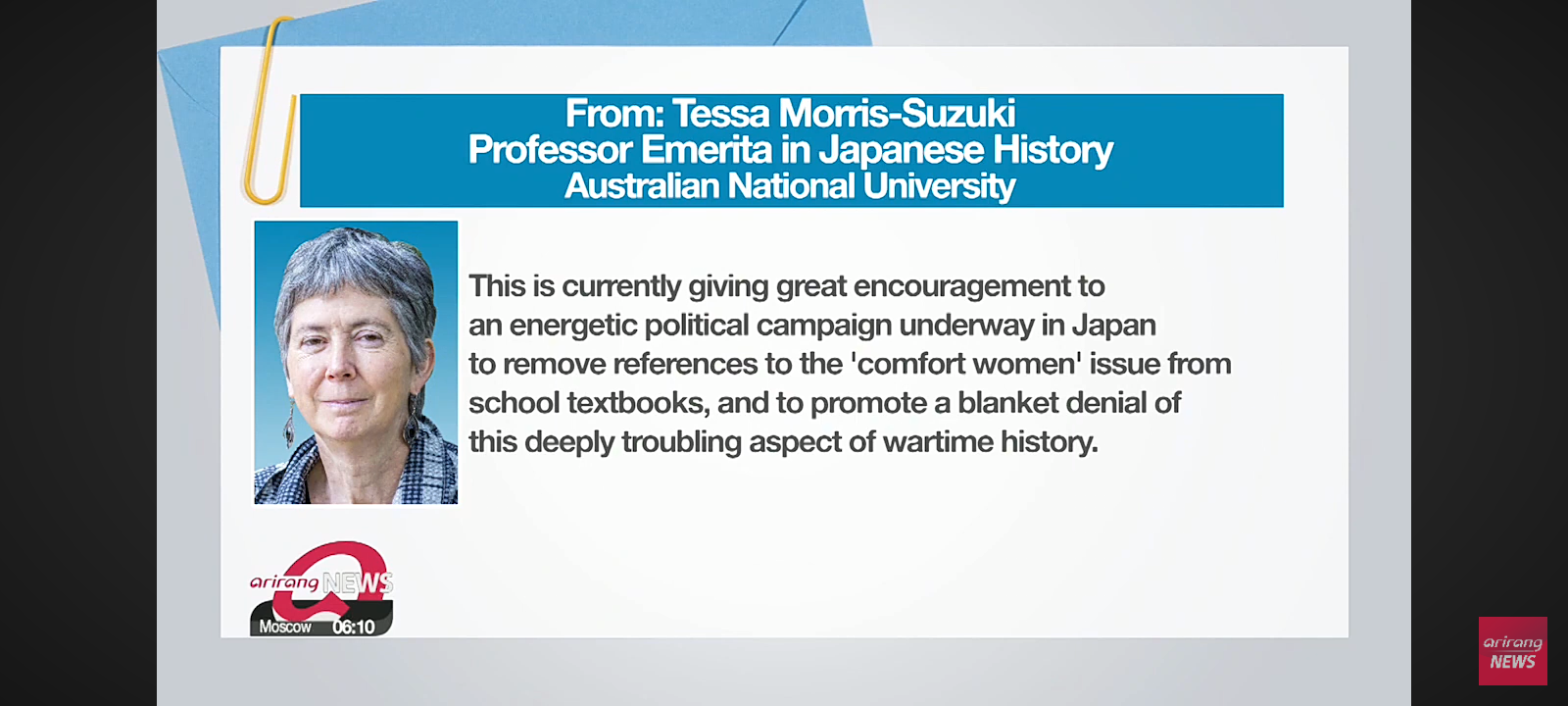
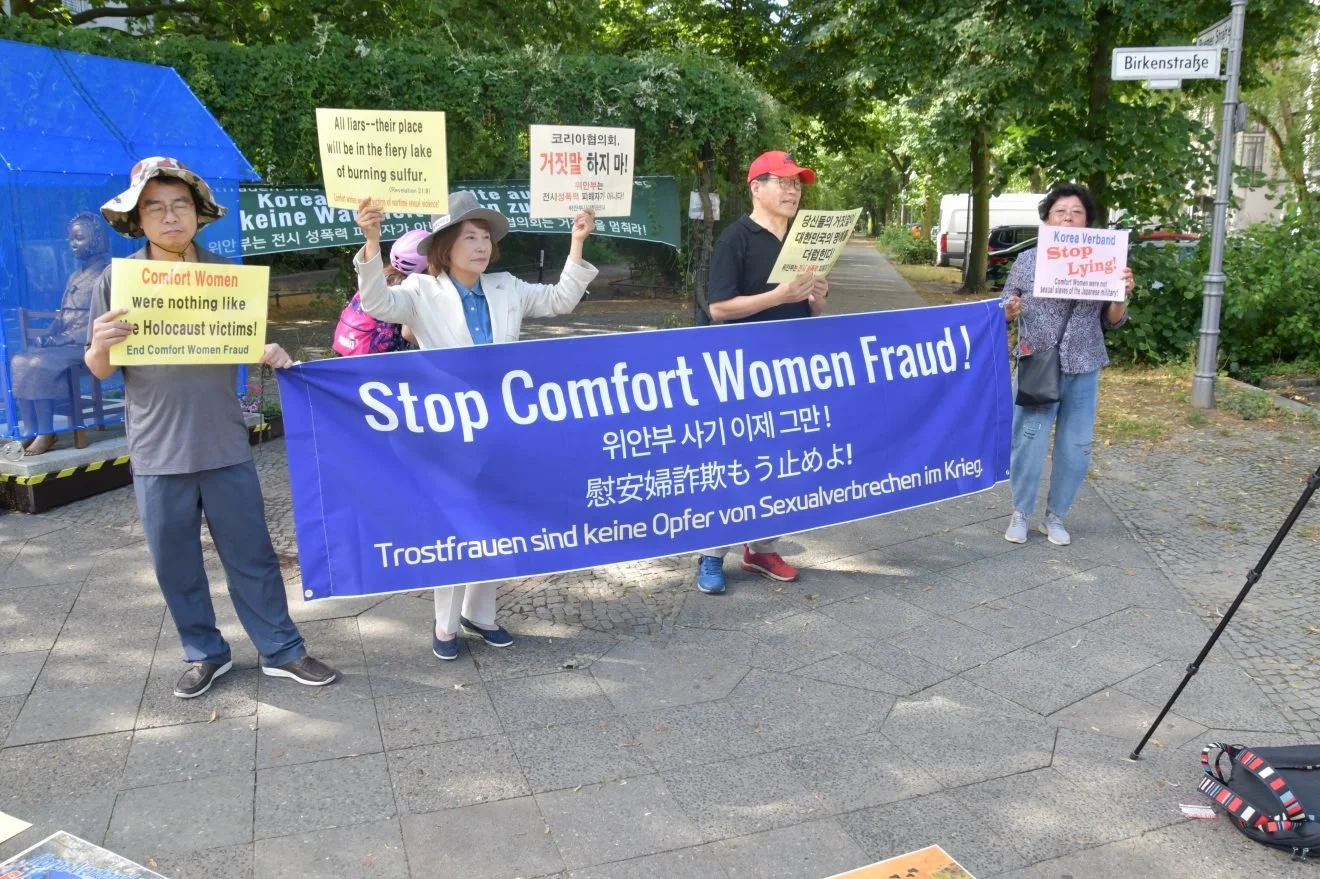
The Ramseyer episode is worth dwelling on at length not because it is unique, but because it is a clean, recent, and unusually well-documented example of a recurring move that shows up across many histories of mass exploitation, not just this one: an individual with real institutional authority and credibility — in this case, a tenured chair at one of the most prestigious universities in the world — lends that authority to a revisionist account that minimizes or denies documented coercion, very often by reframing the relationship in the vocabulary of contracts, markets, and individual choice. This reframing move is rhetorically powerful precisely because it borrows the language of legitimate commerce to describe something that was not commerce at all, and because it shifts the evidentiary burden onto survivors and historians to keep re-proving facts that were already established through decades of documentary research, court testimony, and survivor accounts. It recurs in other contexts too — in revisionist accounts of chattel slavery that emphasize the existence of wage payments or "choice" within an unfree system, for instance, or in framings of indentured colonial labor regimes that foreground contractual language while eliding the coercion that made the contracts unrefusable in practice. Recognizing the pattern matters less because every historical dispute has a single obvious right answer, and more because the burden of proof in these arguments tends to fall, conveniently and consistently, on the people with the least institutional power to contest it: survivors, decades after the fact, fighting universities, governments, and academic journals for the basic right to be believed about what was done to them.
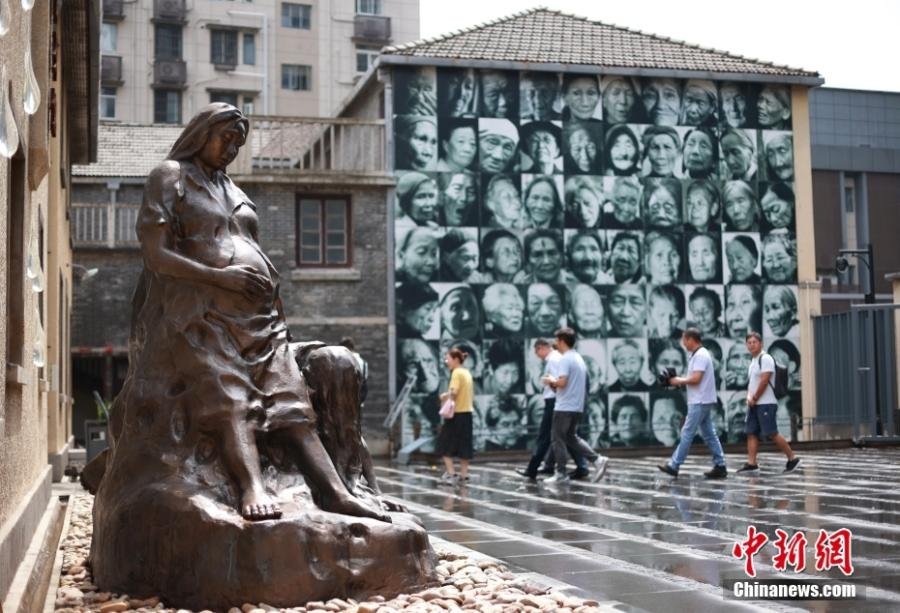
The Throughline
What connects the original comfort women system, the Recreation and Amusement Association built within days for American troops, the unresolved decades of legal and diplomatic wrangling over compensation, and the Ramseyer controversy is a single, unglamorous fact: militarism treats people as logistics, and wherever that logic operates, capital tends to show up quickly to help organize, finance, and profit from it. The brothel itself isn't the root problem — it's what happens when an institution with command authority over both the women supplying the labor and the soldiers consuming it eliminates every form of exit, voice, or bargaining power that would otherwise separate a market, however exploitative, from a supply chain in which human beings are simply inventory. That distinction is worth holding onto for two reasons: first, because it lets you assess this specific history honestly, without either minimizing what was done or collapsing every form of sex work into the same moral category as wartime sexual slavery; and second, because it equips you to notice how readily the same justifications — necessity, discipline, morale, and, increasingly, the language of "choice" and "contract" — get redeployed whenever someone with institutional standing wants to redescribe coercion as a transaction. That redeployment has happened before, in this exact case, more than once, by people with real power to shape how the history gets remembered. It will very likely happen again, here and elsewhere, and the survivors who are still alive today — fewer with each passing year — are the last people who will be able to contest it in their own voices.

"We must rapidly begin the shift from a thing-oriented society to a person-oriented society. When machines and computers, profit motives and property rights, are considered more important than people, the giant triplets of racism, extreme materialism, and militarism are incapable of being conquered." Martin Luther King
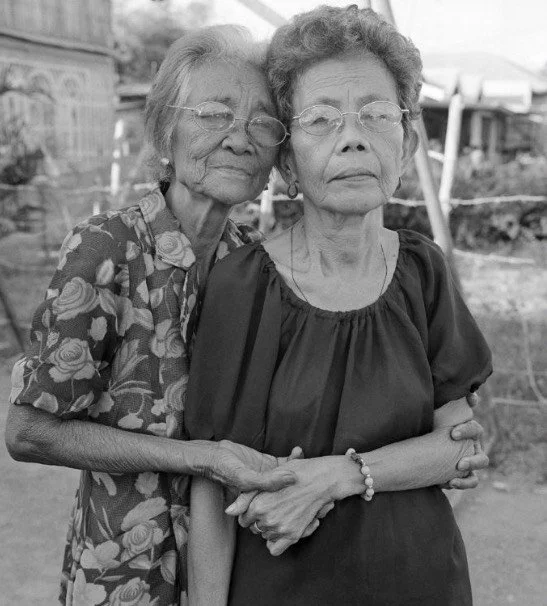
Sources
Condemning the Fallacy of Professor JM Ramseyer about Comfort Women https://youtu.be/_72k7fNuXVM?si=e1u3_1Dh7YMfdnpu
Britannica, "Comfort women" — https://www.britannica.com/topic/comfort-women
History.com, "The Brutal History of Japan's 'Comfort Women'" — https://www.history.com/articles/comfort-women-japan-military-brothels-korea
Imperial War Museums, "Japan's 'comfort station' system explained" — https://www.iwm.org.uk/history/second-world-war/japans-comfort-station-system-explained
E-International Relations, "The Origins and Implementation of the Comfort Women System" — https://www.e-ir.info/pdf/76820
E-International Relations, "Steps Toward Redress for Comfort Women" — https://www.e-ir.info/2018/12/30/steps-toward-redress-for-comfort-women/
NBC News / Associated Press, "U.S. troops used Japanese brothels after WWII" — https://www.nbcnews.com/id/wbna18355292
Seattle Times / Associated Press, "U.S. troops used Japan brothels after WWII" — https://www.seattletimes.com/nation-world/us-troops-used-japan-brothels-after-wwii/
Wikipedia, "Occupation of Japan" — https://en.wikipedia.org/wiki/Occupation_of_Japan
Washington Post, "How American occupation led to Japan's 'war on dance'" — https://www.washingtonpost.com/news/worldviews/wp/2015/06/23/how-american-occupation-led-to-japans-war-on-dance/
The Harvard Crimson, "Harvard Law Professor Ramseyer Responds to Critics, Sparking More Condemnation" — https://www.thecrimson.com/article/2022/2/16/ramseyer-response-to-criticism/
Inside Higher Ed, "Harvard law professor accused of denialism in rewriting 'comfort women' narrative" — https://www.insidehighered.com/news/2021/02/16/harvard-law-professor-accused-denialism-rewriting-comfort-women-narrative
NBC News, "Harvard professor ignites uproar for saying WWII 'comfort women' were willing sex slaves" — https://www.nbcnews.com/news/us-news/harvard-professor-ignites-uproar-saying-wwii-comfort-women-were-willing-n1260026
Al Jazeera, "'Game theory' paper reopens wounds of S Korea's 'comfort women'" — https://www.aljazeera.com/news/2021/3/5/game-theory-paper-reopens-wounds-of-s-koreas-comfort-women
The Diplomat, "Why Did the 2015 Japan-Korea 'Comfort Women' Agreement Fall Apart?" — https://thediplomat.com/2021/11/why-did-the-2015-japan-korea-comfort-women-agreement-fall-apart/
OHCHR, "Japan / S. Korea: 'The long awaited apology to comfort women victims is yet to come'" — https://www.ohchr.org/en/press-releases/2016/03/japan-s-korea-long-awaited-apology-comfort-women-victims-yet-come-un-rights
Ministry of Foreign Affairs of Japan, "Japan's Efforts on the Issue of Comfort Women" — https://www.mofa.go.jp/policy/postwar/page22e_000883.html
CNN, "South Korea, Japan reach agreement on 'comfort women'" — https://www.cnn.com/2015/12/28/asia/south-korea-japan-comfort-women/index.html
Wikipedia, "Jan Ruff-O'Herne" — https://en.wikipedia.org/wiki/Jan_Ruff-O'Herne