Clarity paired with compassion is more powerful than outrage paired with certainty

Othering
Most of us don’t wake up intending to dehumanize anyone. Othering doesn’t usually begin with hatred; it begins with discomfort. A subtle tightening in the body. A story that simplifies. A moment when complexity feels like too much.
Suddenly, someone becomes them.
Othering is the social and psychological process of turning people or groups into something fundamentally different—alien, threatening, or lesser. It creates an “us versus them” divide that places some inside the circle of belonging and pushes others outside it. Once someone is outside, exclusion feels justified. Inequality feels reasonable. Harm becomes easier to explain away.
Othering is the opposite of belonging. Belonging says you are part of the whole. Othering says, you are not like us.
Historically, this mechanism has justified colonialism, racial hierarchies, religious persecution, and genocide. But it also operates quietly in everyday life—in workplaces, families, political discourse, and even well-intentioned activism. It shows up whenever a person becomes a category instead of a human being.

How Othering Works
At its core, othering creates a binary: an in-group (“us”) and an out-group (“them”). The differences used to draw this line can be race, gender, religion, sexuality, class, nationality, ability—any marker that can be turned into a boundary.
Once that boundary exists, a hierarchy forms. The in-group gains power, legitimacy, and moral authority. The out-group is flattened, stereotyped, and blamed for its own suffering. Structural inequalities—in healthcare, employment, housing, education—are then explained as natural or deserved rather than produced.
Othering also shapes identity. Defining who they are helps clarify who we are. The “Other” becomes a psychological mirror, holding what the dominant group disowns or fears in itself. This is why othering is so sticky: it doesn’t just organize society, it stabilizes the self.
And because it often operates beneath conscious belief, arguing against it with facts alone rarely works.
Why Othering Can’t Be Solved with a Single Idea
Dissolving othering isn’t about denying difference or pretending we’re all the same. Difference is real and meaningful. The problem isn’t difference—it’s exile.
Othering lives at multiple levels: in the nervous system, in identity, in language, in relationships, and in institutions. That means it dissolves through layered practice, not a single moral insight.
The unwinding usually happens from the inside out.
1. Start with the Nervous System
Othering intensifies when the body is in threat mode. When the nervous system is dysregulated, ambiguity feels dangerous. Difference feels like attack. Nuance collapses.
This is why you can’t reason your way out of othering if your body thinks it’s under siege.
Practices that calm the nervous system—slow exhalations, orienting to safety, grounding through the senses, gentle bilateral movement like walking—create the conditions for perception to change. Regulation comes before revelation.
2. Catch the Moment of Objectification
Othering begins at a precise moment: when a person turns into a category.
Train awareness to notice when this happens—when labeling replaces curiosity, when moral superiority creeps in, when emotional flattening sets in. Instead of correcting the thought, ask: What just got simplified? What fear or unmet need is underneath this?

Curiosity interrupts objectification.
3. Reclaim Projection
Much of what we project onto “others” belongs to us in some disowned form. Vulnerability we were never allowed to express. Rage we learned to suppress. Longing we were taught to minimize.
When projection is reclaimed, the other regains dimensionality. They stop carrying what we couldn’t hold ourselves.
4. Shift from Identity to Experience
Identity language hardens boundaries. Experience language softens them.
Saying “they are selfish” freezes the other in place. Saying “I feel scared and unseen here” keeps both people human. Experience-based language allows contact without agreement. It preserves complexity instead of collapsing it into judgment.
5. Choose Contact Over Correction
Othering doesn’t dissolve through debate; it dissolves through contact. Shared tasks, storytelling, face-to-face encounters, listening for values beneath positions—these reintroduce humanity where abstraction took over.
What often backfires is moral superiority, forced empathy, or fact-bombing. People soften when they feel seen, not when they feel educated.
6. Expand the Moral Circle Deliberately
Ask yourself: Who is outside my circle of care right now? Who do I believe doesn’t deserve understanding?
Expanding the moral circle doesn’t mean excusing harm. It means holding accountability and humanity at the same time. This is a discipline, not a feeling.
7. Watch Language Closely
Language shapes perception. Shifting from nouns to verbs, absolutes to specifics, groups to individuals—these aren’t just politeness choices. They subtly restore personhood.
Humanizing language makes dehumanization harder to sustain.

8. Learn to Hold Paradox
Othering thrives on false binaries: good versus evil, victim versus perpetrator, right versus wrong. Reality is rarely that clean.
Most situations hold harm and history, responsibility and trauma, difference and shared humanity at once. Learning to tolerate paradox removes the psychological need to expel “the other.”
9. Include Structural Awareness Without Cynicism
Individual work matters—but systems matter too. Dissolving othering also means noticing who benefits from division, questioning narratives that simplify blame, and resisting emotional conscription into endless “us versus them” battles.

Clarity paired with compassion is more powerful than outrage paired with certainty.
10. The Deepest Layer: Non-Separation
At the deepest level, othering dissolves when the sense of a solid, separate self softens. Contemplative inquiry, compassion practices, embodied meditation—these don’t erase difference. They remove the sense of existential exile that makes difference feel threatening.
Conclusion
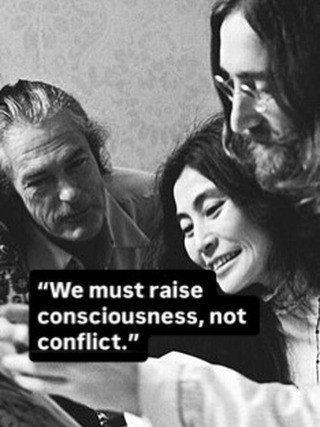
Othering dissolves when the body feels safe, complexity is allowed, projection is reclaimed, language re-humanizes, and contact replaces abstraction.
Ultimately, it fades when we stop defending identity at the cost of relationship—and remember that belonging was never meant to be scarce.