Building community with clients
Building Community with Clients
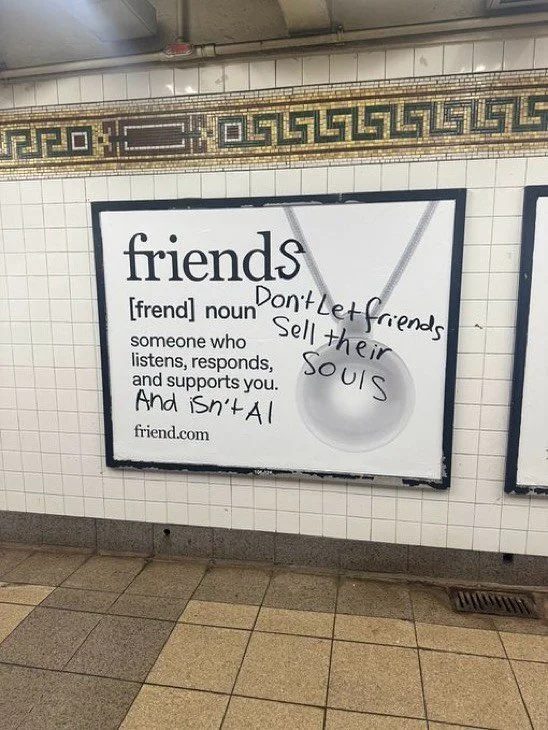
There's a growing trend of young men turning to AI girlfriends, and that scares me a little. Getting love and support from a bot? Capitalism leaves us lonely and isolated — it degrades us. We've become disconnected from our bodies.
With technology infiltrating every aspect of human relationships, how can we cope? How can men and women define our own culture and our own lives outside of the dark cultural influences of oligarchs and big tech? They would love nothing more than for us to abandon loving relationships with each other and turn to AI companions for life advice and support. So how can we counteract this trend in our own lives? I think I have a few ideas.
How about loving cooperation and community — one that is not entirely about money, but about loving exchange and healthy communication? Building community not where profit is the sole motive, but where there is a loving exchange of resources that may involve money, but not necessarily. How about technology that is heart-centered and love-centered — where people's wants and needs are unashamedly declared and exchanged, not callously pursued for profit, but with mutual respect and aid? That sounds good to me.
What I'm proposing is to build community. But first I want to define some terms more broadly. How do we get away from the Harvard Business School point of view on sex work and escape these toxic informational silos? Is it possible to use technology in sex work in a loving, cooperative fashion?
When people say "sex work is work," it always bugs me. I don't like that phrase. I don't want to be part of some complex capitalist machine. I understand the argument for workers' rights, but if you get rid of the boss, women can be empowered to build relationships with their clients on their own terms — and then you won't need an established rulebook imposed from above. That's how I see it, anyway. Call me an old-fashioned "call girl" — just a girl you can call when you feel the need. Or maybe friends with benefits. It's the capitalist distortion of all our relationships that causes the problems.

So how do I see sex work? I see it as a fun relationship that has an economic component.
These relationships vary. Some clients are like long-time friends. Some are transient — I see them once and never again. And some clients need emotional support, and the relationship evolves into something closer to that between a therapist and a patient. I have experienced each variation, played all kinds of roles, and watched these relationships take all kinds of forms.
One of my clients is my tax guy — he does my taxes. Another client wrote a couple of articles for me. Another helped me build my website — he's a web designer. I wish I had a client who was an auto mechanic! I wish I had a client who was a retirement specialist, another with an apartment for rent, and one who did massages!
The implied contract between me and the client can also take different forms. It is not always simply a cash transaction. I sometimes receive emotional support or advice from clients, because they come from all walks of life with their own experiences and backgrounds. The support is sometimes a two-way street. I give and receive advice, I give and receive support. I often feel that the connection created between me and my client shapes the type of relationship we build together — not unlike the relationships we develop in other parts of our lives, whether with family, friends, or romantic partners.
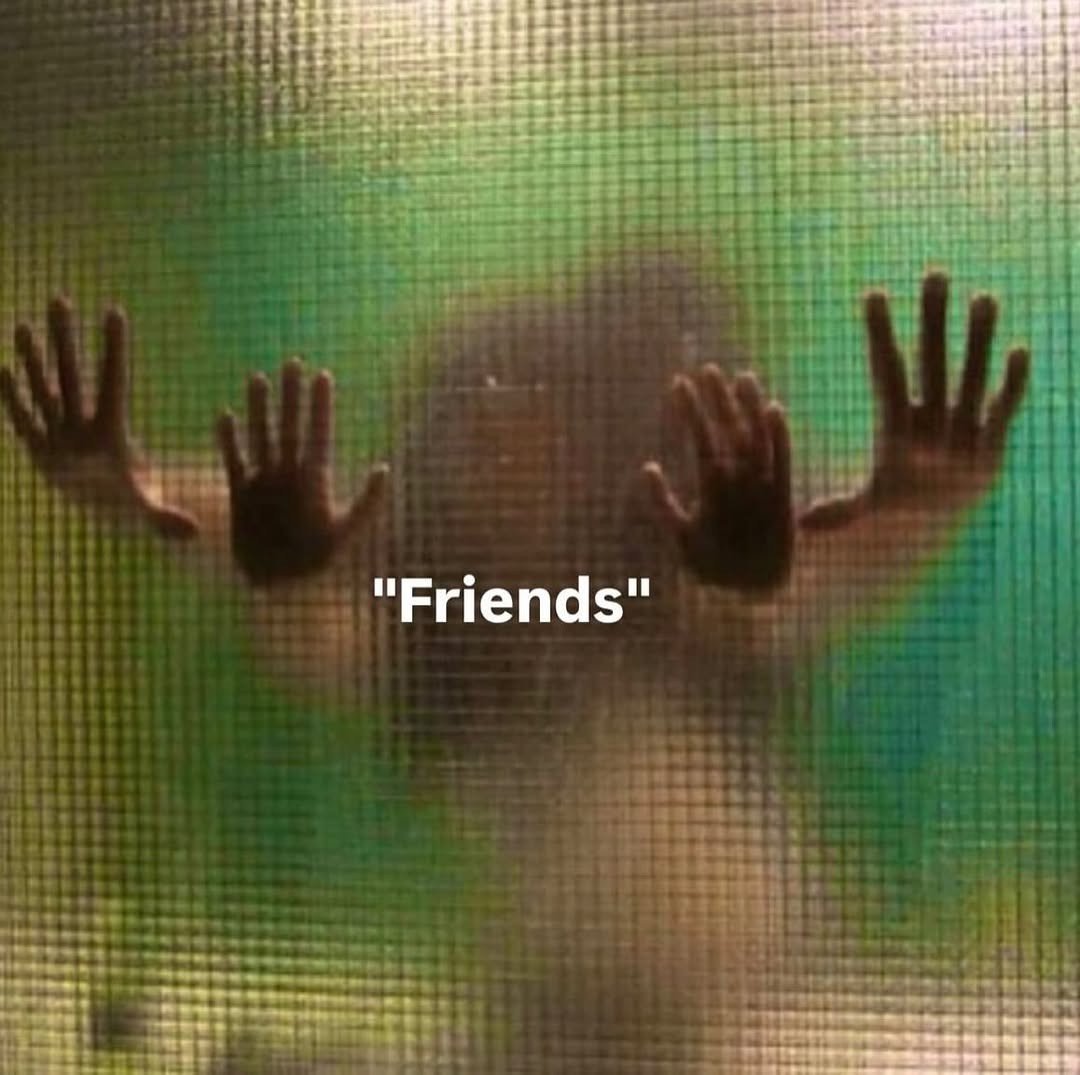
Sometimes it feels more transactional, and sometimes it feels a little more romantic.
This is why I no longer see sex work as purely work. I see it as a relationship, and these relationships vary depending on the person. Some clients I see every single week, some once a month, some once a year, and some I see once and never again.
I also consider myself a mirror.
I simply reflect back to the client what they need. Some clients want someone to talk to; some don't want to talk at all. Some want emotional support, some want a friend, and some do just want sex. Either way, I do my best to adapt to each situation as well as I can.
But sometimes my clients mirror back to me what my own needs are. I don't expect it, but it's nice when it happens.
The clients I've seen over the years span all races, ages, professions, and socioeconomic classes. I've had doctors, lawyers, and people from all kinds of occupations, and I'm always fascinated by what I learn from them — especially since I don't have a conventional professional background myself. It piques my curiosity to know what it's like to be a doctor, a lawyer, a construction worker, or someone from another country. Many of my clients are Indian — yes, I am down with the brown — engineers and employees in big tech and the sciences. Some are college professors. Young and old, divorced or married, and some who have never even kissed a girl. But we all need connection. Let's not let big tech wreck that — though we all know they'll try.
I've had clients who survived wars, tours of duty in Afghanistan, and clients who've told me what it was like to live in a war-torn country.
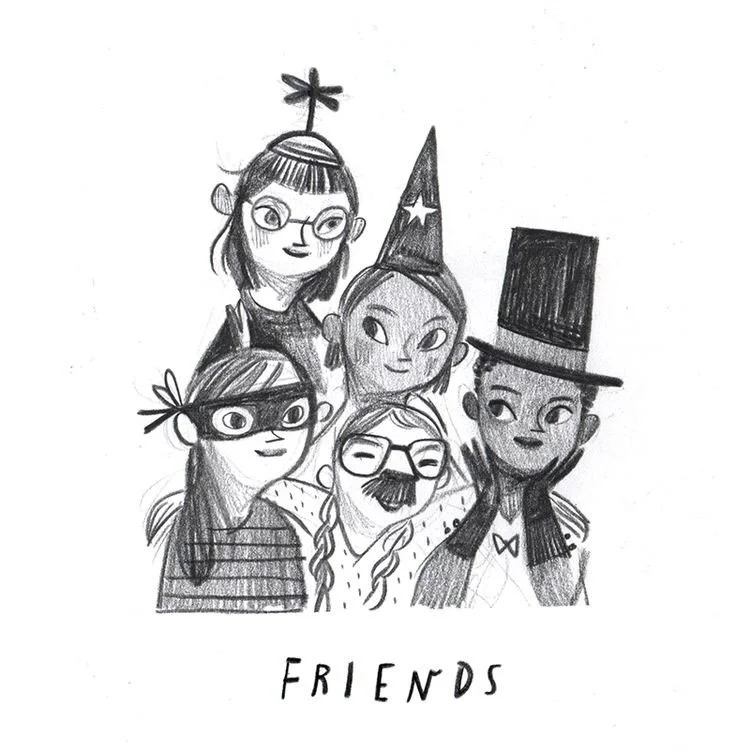
I love hearing my clients' stories. Each one gives me a little window into the world.
Victoria Woodhull — the first woman to run for President of the United States, in 1872 — used to receive stock trade tips from her clients, and that's how she made her money. She eventually opened her own brokerage firm.
It's not just my clients' backgrounds or experiences that affect me. Some clients make me feel like I have a little team of people helping and supporting me in some capacity, and I'm glad I can meet their needs as they help meet mine.
This is why I would love to build an app called Boston Bedroom Barter.
It's my dream to create a barter app where people can trade services. Need your living room painted — can you barter for that? Need someone to wash your dog? Clean your house? Fix your car? It doesn't always have to be about money. It can be about mutual support.
Let's bring sex to the barter table.
This is how I believe men and women were built to collaborate, long before money ever entered the equation. Imagine the world before money was invented — humanity survived a long time without it. During that time, men and women negotiated and cooperated together. Native American tribes did not want European money entering their villages because of how it changed the people within them. To many Native Americans, it was like a disease of the mind.
Then, somehow, the invention of money hijacked our needs.
Thinking back to years ago when I worked at a strip club — we had a strict rule that we were not allowed to see customers outside of the club. If management found out we were friends with or spending time with any customers, we would be fired. And indeed, one time I was.
It didn't completely stop people from seeing each other outside of work, but having that threat hanging over our heads was stressful.
Capitalism always creates a toxic middleman. Why can't they just let men and women collaborate and build a just world together? Because then we wouldn't have the patriarchy. They want to be in the middle of every transaction, to take their cut, to monitor everything we say online. Yuck. Is there a solution?
I would like to research and create a barter app where men and women can come together and decide what's fair. Men like sex — that's cool, and so do we. But we also have real-world things that need to get done. So why not work it out together? Sex is not just sex; it's a mutual, empathy-generating activity that bonds us together. It would be nice to imagine we could solve all the world's problems this way. But at the very least, a little local area — our neighborhood — could be improved through cooperation and communication. And then that could become the social contagion we all need.
So, does anybody out there want to help make an app?