

Love Bootcamp: What a Militant Stripper Taught Me About Respecting Myself

On my way home every day, I would hide my car keys and wallet in the parking garage for my apartment building, just in case I could make a quick getaway, in case my alcoholic boyfriend was in one of his moods again.
I was deep in it when I met Amber. The dramatic kind of deep — screaming fights, thrown dishes. It was a grinding kind, the kind where you've been with someone long enough that you've stopped being able to see the shape of it clearly. I was dating an alcoholic. A functional one, mostly, which is almost worse — functional enough that there was always an excuse, always a reason it wasn't quite time to go. We were on and off, and he had a terrible temper. Over five years of dating, the fights became bigger, more elaborate, slowly morphing into pushing and shoving. He loved and adored me one moment, wanted to get married, and in the next was throwing my clothes out the window, or throwing me against the wall. I wasn't just in a relationship. I was in a pattern, the way you're in water when you've forgotten what dry feels like.

It was a girlfriend of ours — also a stripper — who finally intervened. She sat me down and asked me, plainly, why I put up with it. I didn't have a good answer. Thank god for friends who help you get out of situations you can no longer see clearly. She's the one who helped me move in with Amber.
We worked at the same strip club, the three of us — mutual friends, parallel lives. Amber had a room to rent. That's the whole story of how we met. No cosmic intervention, no meaningful coincidence. Just logistics, and timing, and the particular grace of being offered a room when you need one.
Big fake boobs she wore like armor
She was blond, beautiful in that specific way that could stop a room and start a war. Big fake boobs she wore like armor, or maybe like a dare. She worked as a stripper, which she volunteered without apology or explanation, the same way someone might mention they were in finance. She had a collection of bikinis — one of which, I remember distinctly, was camouflage. Military print. It suited her more than she probably intended.
Amber had three boyfriends. This wasn't a secret, and it wasn't a negotiation. It simply was. All three were doctors, and all three relationships were monogamous on their end — cuckolds, in the truest sense, each man devoted entirely to her while she held court over all of them. She managed this the way a general manages a campaign: with total clarity of objective and zero tolerance for sentiment that didn't serve the mission. None of the men seemed confused about where they stood. She had a gift for that — for making the terms of engagement so clear that confusion became, somehow, the other person's fault. You always knew exactly where you stood with Amber, even if where you stood wasn't particularly comfortable.

Her philosophy about love, as near as I could translate it, was this: kill or be killed.




“Guys will say they Love you just so they can keep having Sex with you”
She told me once that when she was a teenager, someone told her that guys will say they love you just so they can keep having sex with you. That sentence had lodged itself in her like a splinter and become, over time, a compass. Just because somebody says they love you doesn't mean they actually care about you. She had organized her entire emotional life around that truth. Considering I was at that very moment dating someone who was, in every practical sense, using me to support his alcoholism — using my stability, my care, my refusal to leave — the lesson hit closer to home than I wanted to admit.
Completely, Unapologetically Sovereign
I don't mean she was cruel. She wasn't, particularly. What she was — and I'd never encountered this in another human being before or since — was completely, unapologetically sovereign. She did not care what people thought of her. Not in the defensive, protesting way that most of us mean when we say that. She genuinely, structurally did not factor it in. External judgment wasn't part of her operating system.
Part of that, I think, came from where she came from. Her mother was from Chicago — a working-class biker chick, a rebel, a woman who had built her life around a no-compromises spirit. That ethos had been handed down intact. Amber hadn't invented her self-sovereignty out of thin air. She'd inherited it, refined it, and made it entirely her own.
She would only date men who were good to her. Not in a romantic, flowers-and-candlelight way — in a concrete, non-negotiable way. Submissive to her needs and preferences. Men who showed up. Men who made her feel chosen. She didn't seem to think this was asking a lot. She didn't seem to think it required an explanation. Of course you only let people into your life who made it better. What other criterion could there possibly be?
I watched her the way you watch someone doing something you've always been told is impossible. You want to catch the trick, the hidden cost, the moment the whole thing falls apart. But it didn't fall apart. She just lived like that — fully, on her own terms, in her camouflage bikini — and the world, somewhat to my amazement, accommodated her.

Meanwhile, I was accommodating a man who drank too much and made me feel, somehow, like his drinking was a problem I was failing to solve. He loved and adored me one moment and in the next wanted to throw everything we had into chaos. I had a rocky childhood, the kind that leaves you poorly calibrated for your own needs — and I had let guys pick me who were using me for their own ends. My needs were not met. I was the classic cliché I never wanted to be, and I knew it, which somehow made it worse.
It's strange, the places where clarity finds you. I didn't expect to find it living with a woman who had three doctor boyfriends and answered to no one. I wasn't looking for a role model, and Amber wasn't trying to be one. She wasn't the type to offer unsolicited wisdom or pull you aside for a talk. But something about proximity to that level of self-possession began to work on me quietly, the way light works on a room you've been sitting in the dark for too long. You don't notice it happening. And then one day you can see things.
I started to notice the contrast. Here was a woman who considered her own comfort and happiness the baseline, the floor, the thing you started from — not something you earned or worked toward or hoped someone else might eventually offer you. And here I was, so deep in someone else's chaos that I'd made his needs the center of my entire world, and called it love.
The comparison wasn't flattering.
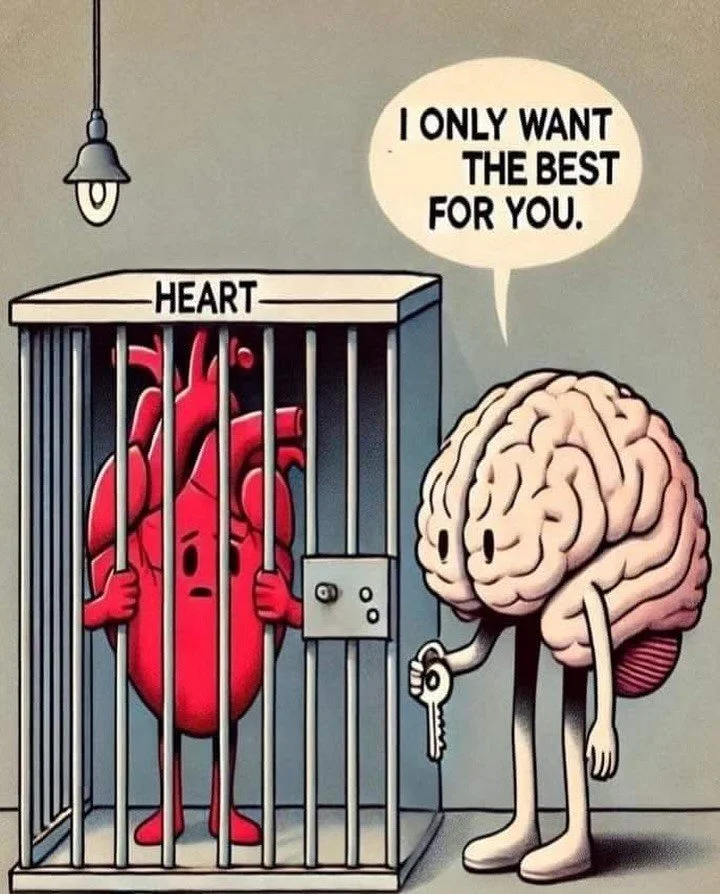
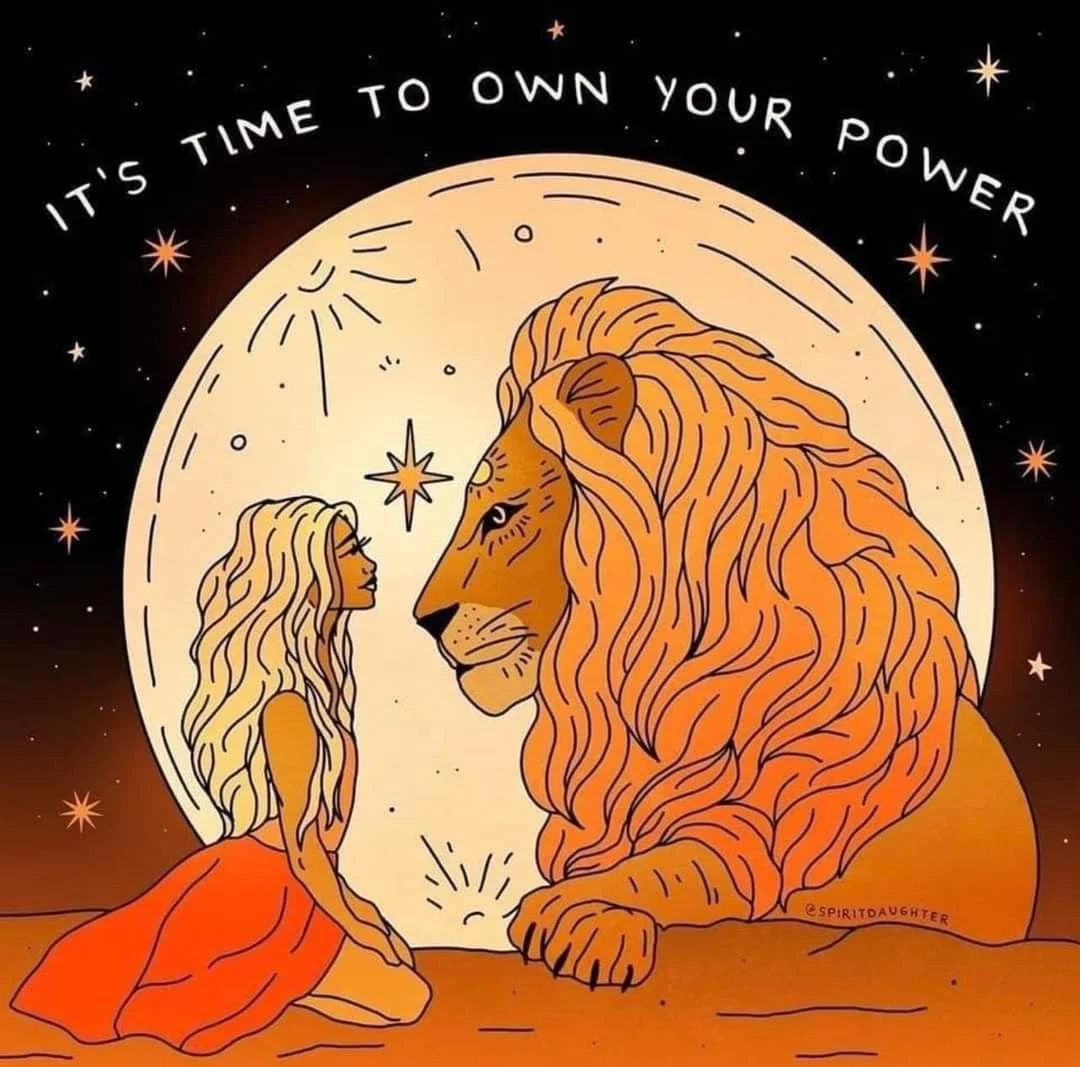
As a woman, you're taught to be very compliant, to believe that being a good person means conforming to what's expected of you, which means not owning your power.
I broke up with the alcoholic. Not in a moment of blazing self-actualization — it wasn't like that. It was quieter, more tired. Like finally setting something heavy down after carrying it for so long that you'd forgotten it wasn't supposed to be yours to carry. There was grief in it, real grief, because that's the thing about long relationships with difficult people: you love them, and the love is real, even when everything around it is wrong. I was caught in an addiction pattern — the highs of sex and love, the lows of sleeping in my car, the violence, the cycle repeating itself until I couldn't tell where it ended and I began. As a woman, you're taught to be very compliant, to believe that being a good person means conforming to what's expected of you, which means not owning your power. I had followed that script faithfully and it had nearly destroyed me. I knew, by the end, that I was going to die if I stayed — because he was insisting on drinking himself to death, and I was tethered to him. I wanted to thrive. Seven years later, I watched him die in a hospital. Alcoholism. I was already long gone by then, but the news still hit me somewhere deep and old.
What followed wasn't a sudden transformation. That's not how healing works, in my experience. It was slow — more like a recalibration than a revolution. I started noticing when I felt disrespected, which sounds obvious but had somehow stopped being obvious. I started factoring myself into my own decisions. I started, gradually, to become a person who expected to be treated well.
And eventually — not quickly, not without work — I found what that actually looks like. I met someone who leads a healthy life, and we built one together. We quit drinking and smoking. We meditate. We take long walks in the woods. He is not controlling. He does not make me small. It's the healthy lifestyle I always wanted and never let myself believe I deserved. I finally have a relationship that's on my terms.
That's a small thing, maybe. Or it sounds small. But if you've spent long enough without it, you know it's enormous.
Amber didn't teach me to live the way she lived. I wasn't built for that particular kind of radical self-sovereignty. Her code was her own, and it worked for her in ways I couldn't fully map. But she showed me something I hadn't seen up close before — what it looks like when someone decides, without drama or negotiation, that their own well being is simply non-negotiable. When they stop auditioning for other people's approval and just exist, fully and without apology, as themselves.
There's a version of that I could borrow from. There's a version of that that saved me.
I've thought about her a lot over the years. About how the most useful lessons so often come from people who aren't trying to teach you anything at all — who are just living so completely and unapologetically in accordance with their own nature that they hold up a mirror without meaning to. And what you see in that mirror, if you're honest, is everything you've been leaving on the floor.
She's probably somewhere right now in that camo bikini, completely unbothered, entirely on her own terms.
I hope she knows she changed mine. I’m not dating 3 doctors, but I am dating one lawyer.

How to Leave an Abusive Relationship https://youtu.be/lwNr0eQmmuI?si=M1D-1Iz5z8gWIszN
Domestic Violence Programs for Survivors
If you are a victim of abuse, you are not alone. Here you'll find resources from around the Commonwealth to help you. https://www.mass.gov/info-details/domestic-violence-programs-for-survivors
Why domestic violence victims don't leave | Leslie Morgan Steiner https://youtu.be/V1yW5IsnSjo?si=71Flh4F_II31pPGb
How to Safely Leave an Abusive Relationship in Boston, MA
Leaving an abusive relationship is a courageous step, and Boston offers many resources to help you plan and protect yourself.
1. Recognize the signs of abuse
Abuse can be emotional, physical, financial, or sexual. Acknowledging that you are in an abusive situation is the first step toward safety www.dv.support.
2. Create a safety plan
Identify safe places to go (e.g., friends’ homes, shelters).
Keep a list of trusted contacts and local domestic violence resources.
Plan safe transportation and timing for leaving when your partner is not around www.dv.support.
3. Gather important documents
Collect ID, financial records, medical records, legal documents, and important contact numbers before leaving www.dv.support.
4. Seek immediate help if in danger
Call 9-1-1 or contact a 24/7 crisis hotline:
SafeLink (Massachusetts): (877) 785-2020 or (877) 521-2601 (TTY) Mass.gov
National Domestic Violence Hotline: (800) 799-7233 Mass.gov
National Sexual Assault Hotline: (800) 656-4673 Mass.gov
5. Access local shelters and support services
Boston and surrounding areas have shelters and programs such as:
The Second Step: Free legal services, advocacy, and healing support. Call 617-965-2538 The Second Step
HAVEN Services at Mass General Hospital: Advocacy, counseling, safety planning, and court accompaniment. Boston: 617-724-0054 Massachusetts General Hospital
Asian Task Force Against Domestic Violence: Boston: (617) 338-2355 Mass.gov
Casa Myrna: Boston: (617) 409-5413 Mass.gov
6. Consider legal protection
If you have children, consult a family law attorney experienced in domestic violence cases. Massachusetts courts prioritize the safety of children and may order supervised visitation or protective orders www.familylawma.com. Document abuse (photos, police reports, medical records) to support your case www.familylawma.com.
7. Protect your privacy and safety after leaving
Change your phone number/email, use private browsing, and avoid returning to unsafe locations without professional guidance www.dv.support.
8. Stay connected to support
Join support groups, attend educational workshops, and keep in touch with advocates for ongoing help Massachusetts General Hospital.
Key takeaway: You are not alone. Boston has a robust network of shelters, hotlines, and legal advocates ready to help you leave safely and rebuild your life.