

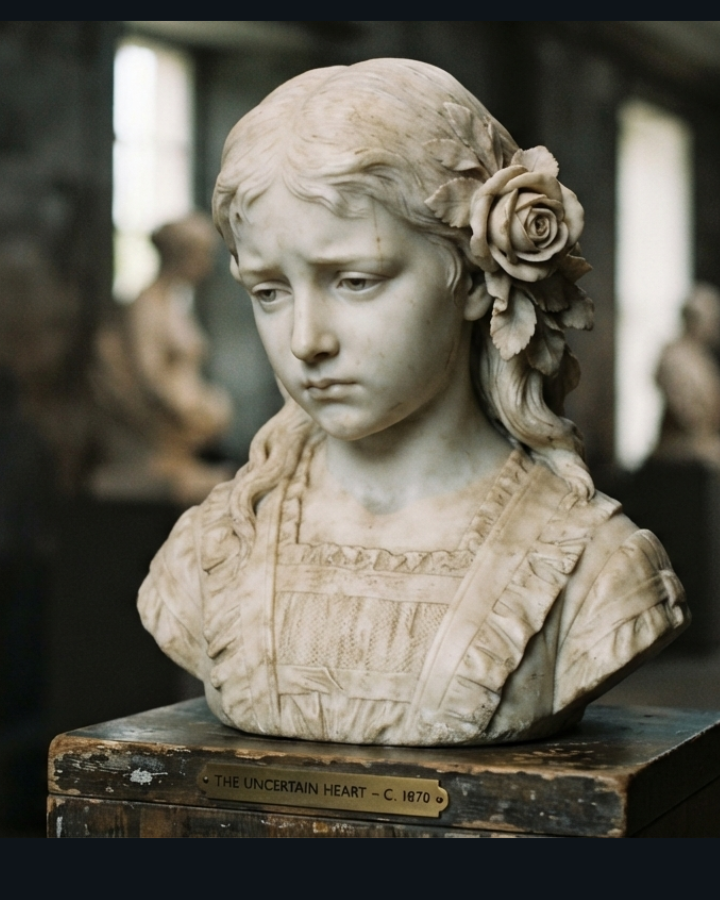
AI reproduction
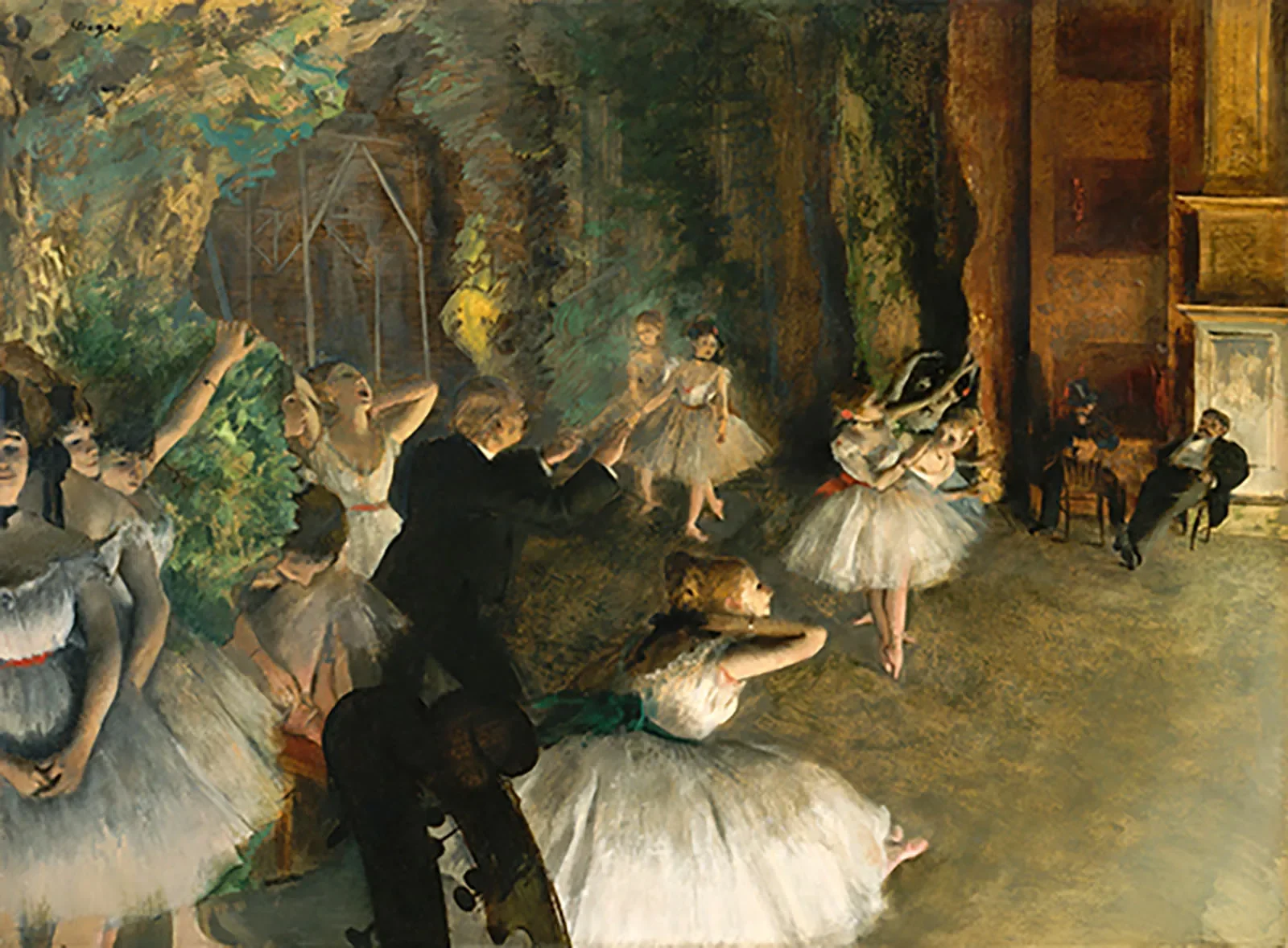
Look at the men in the corner
On Display: Girls, Art, and Who the Looking Is For
What a melancholy bust, a ballerina in wax, and a Neolithic queen can tell us about what is natural and what society imposes on us.
A Face I Couldn't Forget
Wandering through a museum, I came across a bust I have never been able to shake. It portrays a girl of about eleven. A large, blooming flower sits in her hair, and her expression is deeply melancholy. I almost cried.
Why does a carved face move us so much? Human beings are built to empathize. All it takes is a sculpture of a young girl's face, and we begin to feel the experience the artist wants us to feel. The sculptor is directing our attention to her, and to her sadness.
What is she sad about? I read her as a girl on the threshold of puberty. She knows it is coming, and she knows she has no control over it. She does not know what kind of world she is about to enter. The flower in her hair is the clue: her body is beginning to bloom, her reproductive powers are awakening, and she has very little power or experience to understand the circumstances of the life ahead of her. But she senses that something powerful is about to happen to her.
And here is the uncomfortable part. Culture, layered on top of evolution and married to capitalism, has made those reproductive powers into a kind of commodity, one that a girl this age and this inexperienced has no say over.
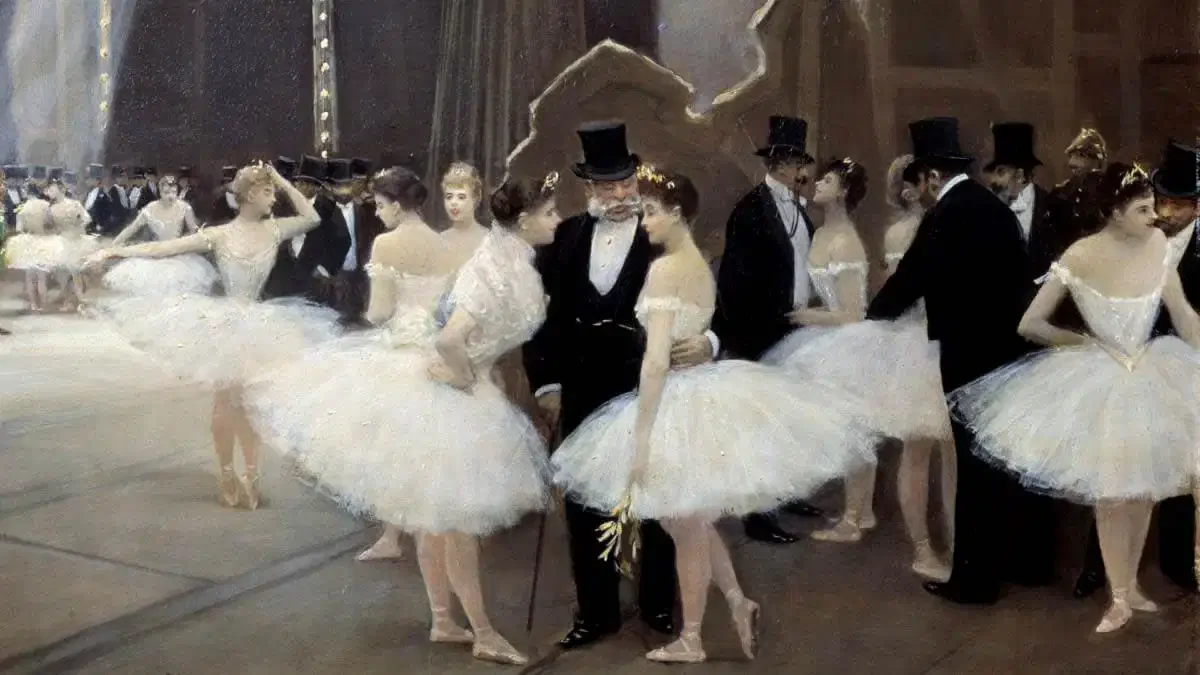
Behind the Curtain at the Paris Opera
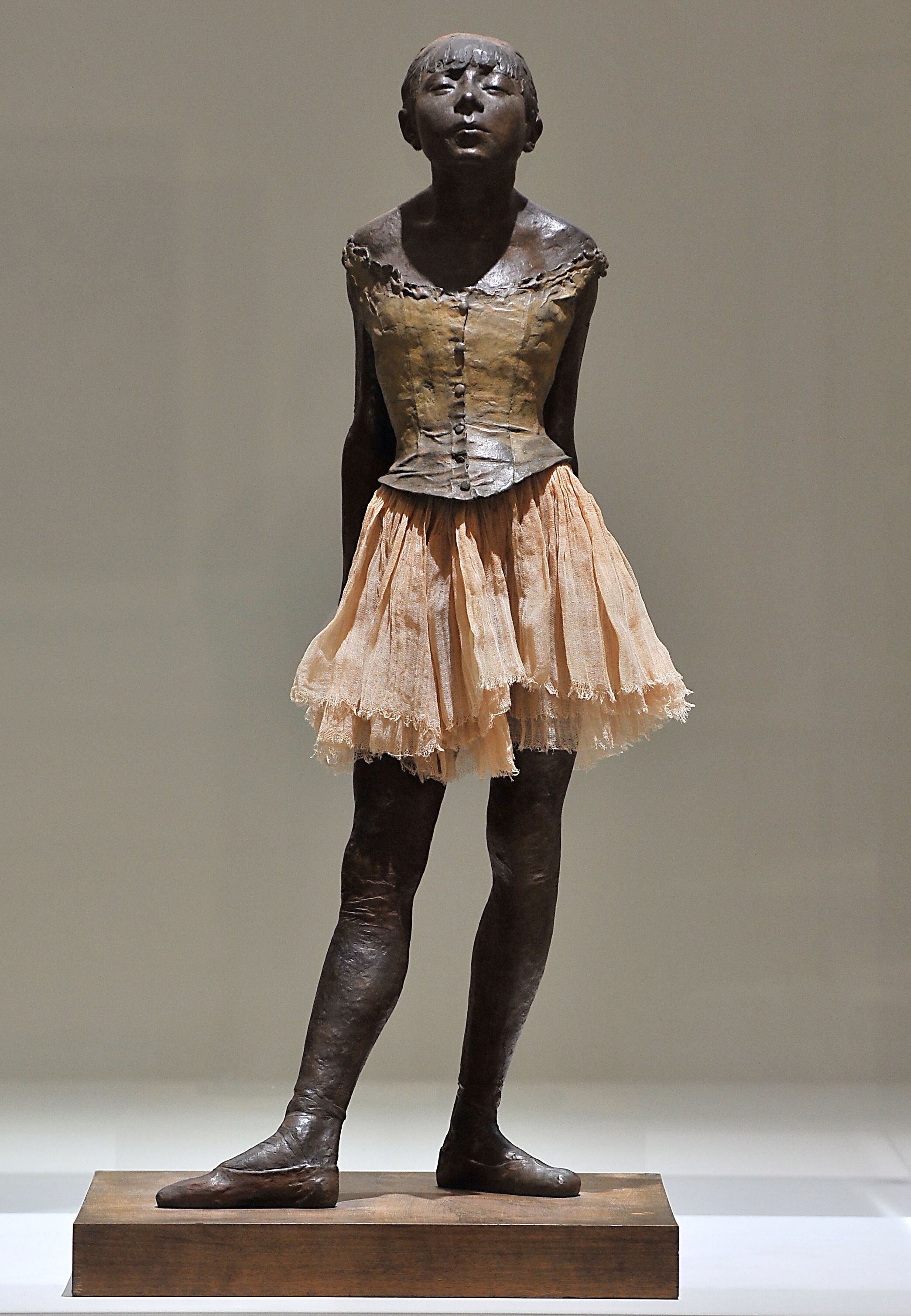
Edgar Degas painted young ballerinas, but rarely at the moment we expect. We usually picture a ballerina on stage, performing for the audience. Degas gives us the moments before and around the performance: dancers stretching, adjusting costumes, resting, waiting in the wings. These are private, intimate moments, the unglamorous work of preparation.
Why does he want us to see this?
Because of what the Paris Opera was in his day (the later nineteenth century). Wealthy, married aristocratic men attended the ballet, and they also held the privilege of going backstage. The backstage area worked as an informal meeting place where these men could approach poor teenage girls and begin a relationship. It was a known place to find a mistress. In effect, it was an informal brothel with a stage in front of it.
The arithmetic of the situation is stark. The men were married, so marriage to the dancers was never on the table. The future being arranged for these girls was a life as a mistress. Young women from the countryside and the city competed for the attention of men, and they were on display whether they knew it or not.
And the sad part is how young some of these girls were. They could be fourteen, or twelve, or even younger, while the men pursuing them were older, wealthy and powerful. Degas never had to say a word about it. He was asking the public to empathize with the girls. Just look at this girl's face: this is unfair.
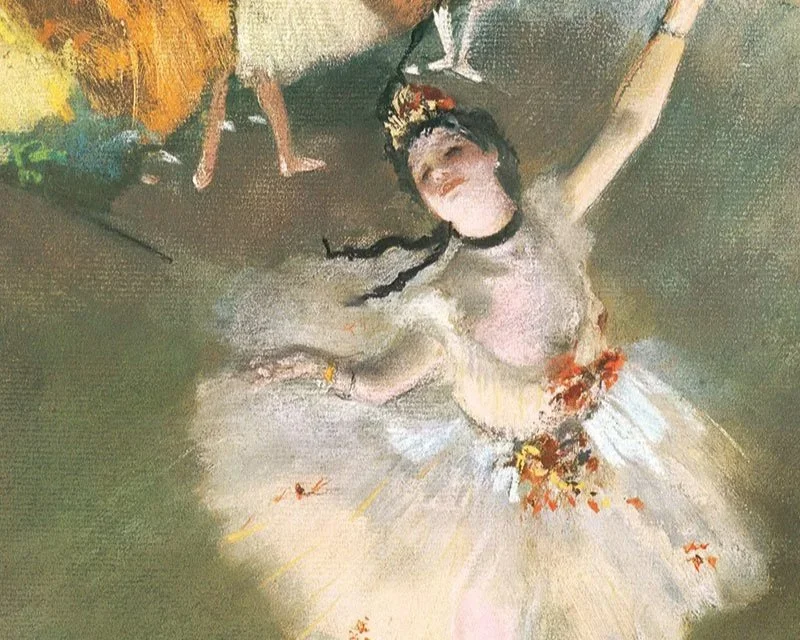
An Old Ritual
It would be easy to treat this as purely a story about nineteenth-century Paris, but display for the purpose of attracting a mate is far older than any opera house. It stretches back millions of years through evolution. The male peacock fans out his plumage for the females. Humans do it too, men and women alike, each putting different characteristics on display.
Degas wants us to see the scene behind the scenes. The piece that strikes me most is his sculpture of a ballerina of about fourteen, Little Dancer, groomed, dressed and ready to dance. She is, in effect, a meeting display: a night of theater that doubles as a night of courtship.
We are all born into these rituals. We enter a culture without knowing what we have been born into. As children we are rewarded for looking pretty and presenting well, and young people are designed to want to please others and belong to a community. That is not all bad. As we grow older, most of us care less and less what people think, a natural evolution.
But young people are eager to prove themselves, and they bend their behavior toward wherever the positive reinforcement is coming from: looking pretty, being on display, dancing. So the question hangs in the air: for whose benefit is it? Is it for the young girl, so that she might attract a high-ranking partner? Or is it for the man, so that he may enjoy a supply of gorgeous young mistresses?
Subject and Object
The philosopher Simone de Beauvoir gave us words for what is going on here. In The Second Sex she wrote, "One is not born, but rather becomes, a woman," arguing that womanhood is largely shaped by society rather than simply given by nature. She also described how men have positioned themselves as the subject, the one who acts, looks and decides, and women as the object, the one who is acted upon, looked at and decided about.
Objectification means turning a person into a thing. Slavery did this: enslaved people were treated as objects that could be owned, bought and sold, and racism was the ideology that made that treatment seem acceptable. Sexism did the same to women, turning them into objects of display, desire and exchange. A worker can be treated as an object too, valued only as a tool for someone else's purposes.
Seen this way, the girl in the bust and the ballerina behind the stage are not simply "pretty." They are on the edge of being made into objects.
The Park and the Second Family
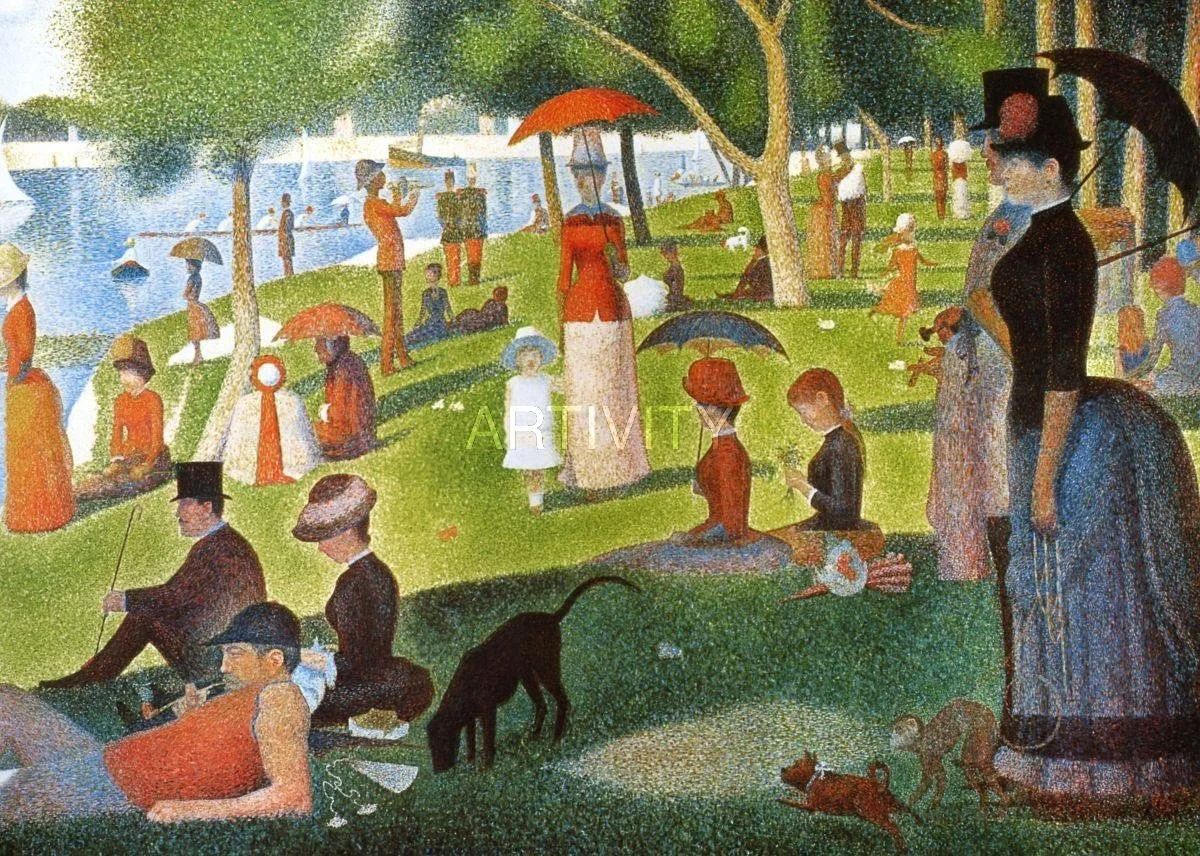
The same questions run through Georges Seurat's famous painting A Sunday Afternoon on the Island of La Grande Jatte. It depicts a park outside Paris, and part of its fame rests on a rather naughty reading. The island was said to be a place where, on Sundays, people brought their second families.
Remember the era's rules. Divorce was rare and frowned upon. Marriage was about property, and marriages were often arranged. Where does that leave the mistresses, their children, and the families that had to be kept out of sight?
Look closely at the canvas. In one corner, a woman seems to stand between an aristocratic companion and a working-class one. Near the working-class man, a dog sniffs about, and a little girl stands in the light. What is her life going to be? What becomes of these hidden second families?
Quiet Art
Notice how quietly these works speak. They don't grab you the way a car crash does, or the flicker of a phone screen, or an action movie. Their artists invite us to contemplate rather than to snap to judgment.
And the questions they raise are big ones. What do our bodies and lives, our biological behaviors and cultural rituals, actually mean? What does it mean to be on display? Is it good, bad, or neutral? Is it about social hierarchy? When a girl is made to paint her face and dance, is she being subjugated, or is she empowered?
Ultimately, you be the judge.
A Different Kind of Power
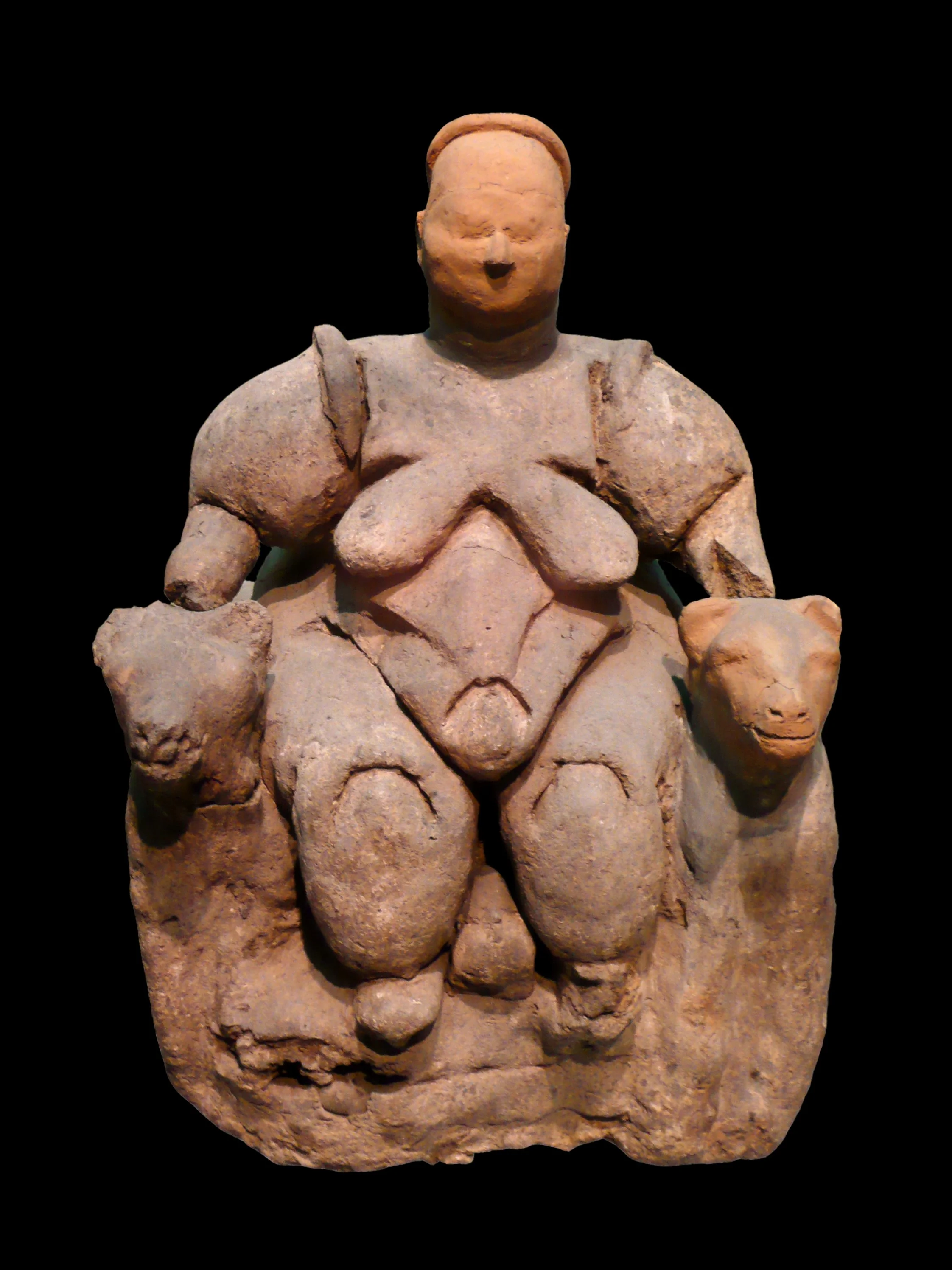
There is one more artwork that I find powerful, and it is the opposite of the pretty, innocent girl. It is an older woman, a mother or perhaps a grandmother, seated on a throne with a lion on either side. This is the Seated Woman of Çatalhöyük, a Neolithic clay figurine about 8,000 years old, discovered in Turkey.
What does this figure tell us about power, and about what a society values? And what happens when we set her beside Degas's ballerina? Where were we, and where are we now? Above all: what is natural, and what does society impose on us?
Who Gets to Make the Art, and Who Gets to Be It
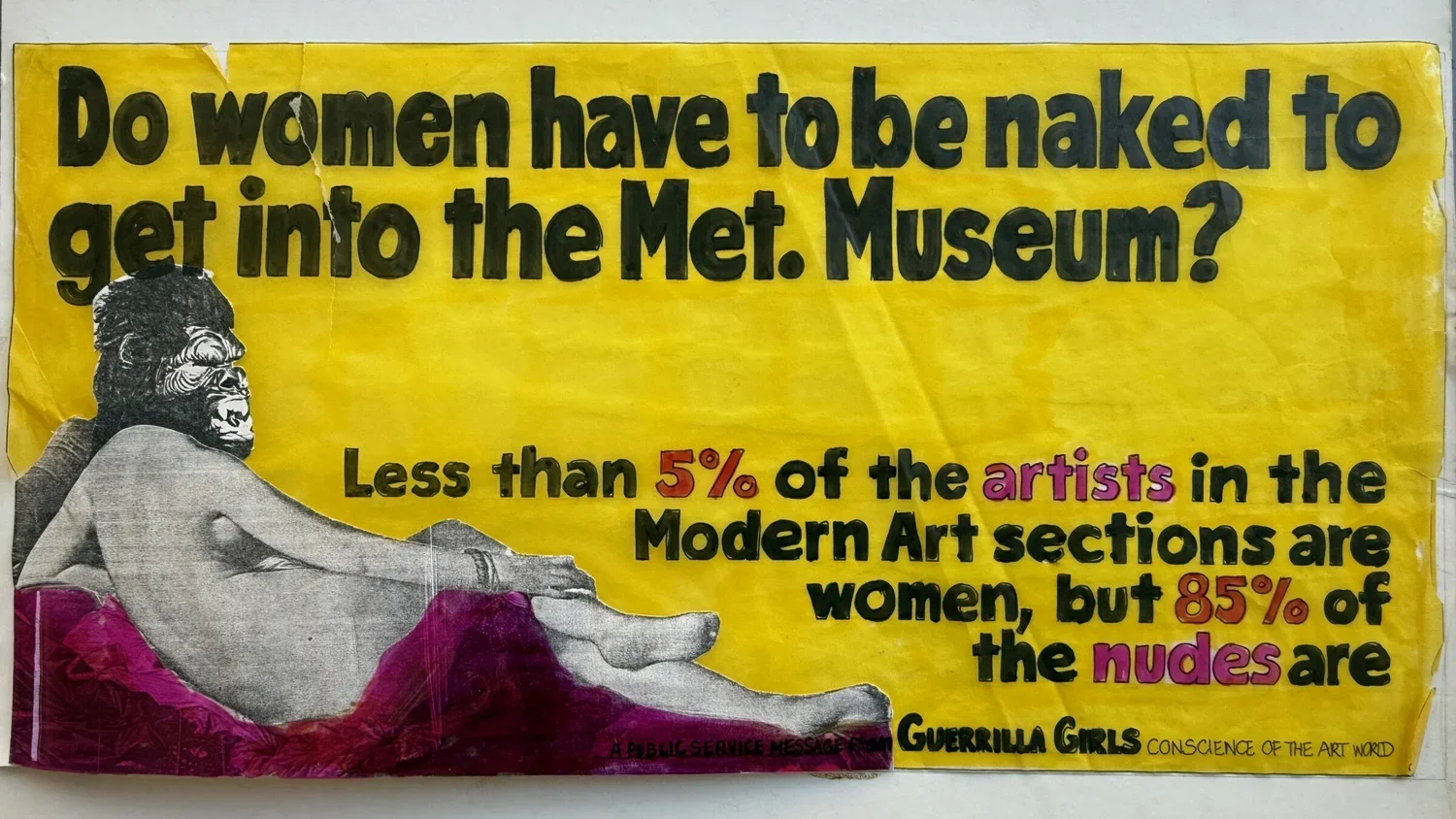
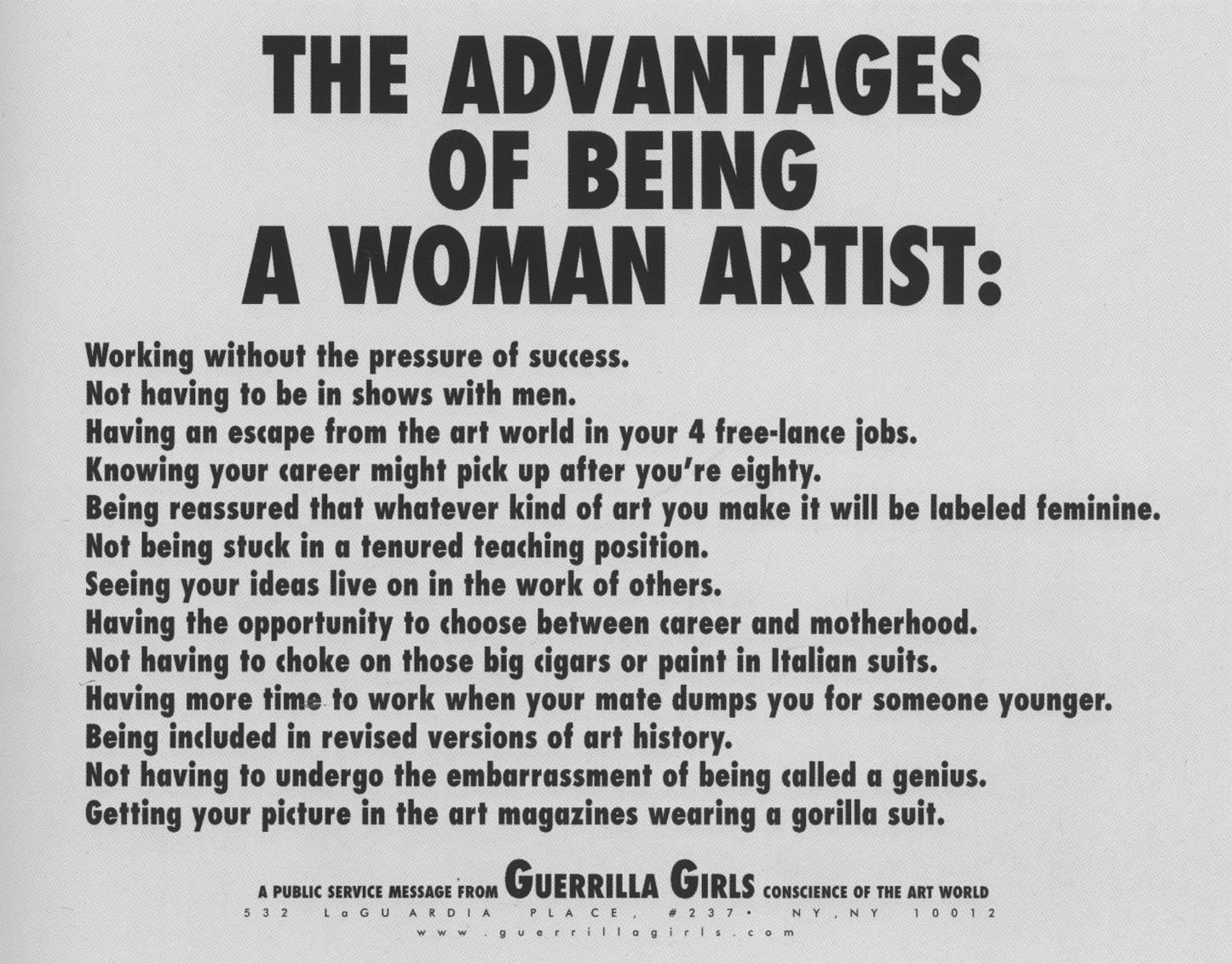
That last question brings us to the Guerrilla Girls, an anonymous group of female artists based in New York. They famously confronted the art world with a statistic: only about 11% of the artists in the museum were women, yet about 80% of the nudes were of women.
Sit with that for a moment. Across the centuries, women have been abundantly present in art as subjects, as bodies on display, while being largely absent as makers. The girl with the flower in her hair, the ballerina in wax, the woman in the park: nearly all were seen, shaped and framed by someone else's eyes. The Guerrilla Girls ask us to notice who has held the chisel and the brush, and who has only been looked at.
So return to the girl in the museum, and to the question that runs through all these works: when a young woman is put on display, who is the looking for?

References
Guerrilla Girls: Oscar Billboard https://actipedia.org/project/guerrilla-girls-oscar-billboard
No One Warned You About This Painting https://youtu.be/KbAlRIHMI-E?si=FFP7Xjm-E5REcvR6
In Focus: Guerrilla Girls https://youtu.be/NZ6TJbjVr3I?si=UGip4cSPY-l8ibST
The Seated Woman of Çatalhöyük https://youtube.com/shorts/VC40MZKL7Tg?si=cytGEa2TuZmoGvnb
The Seated Woman of Çatalhöyük https://en.wikipedia.org/wiki/Seated_Woman_of_%C3%87atalh%C3%B6y%C3%BCk