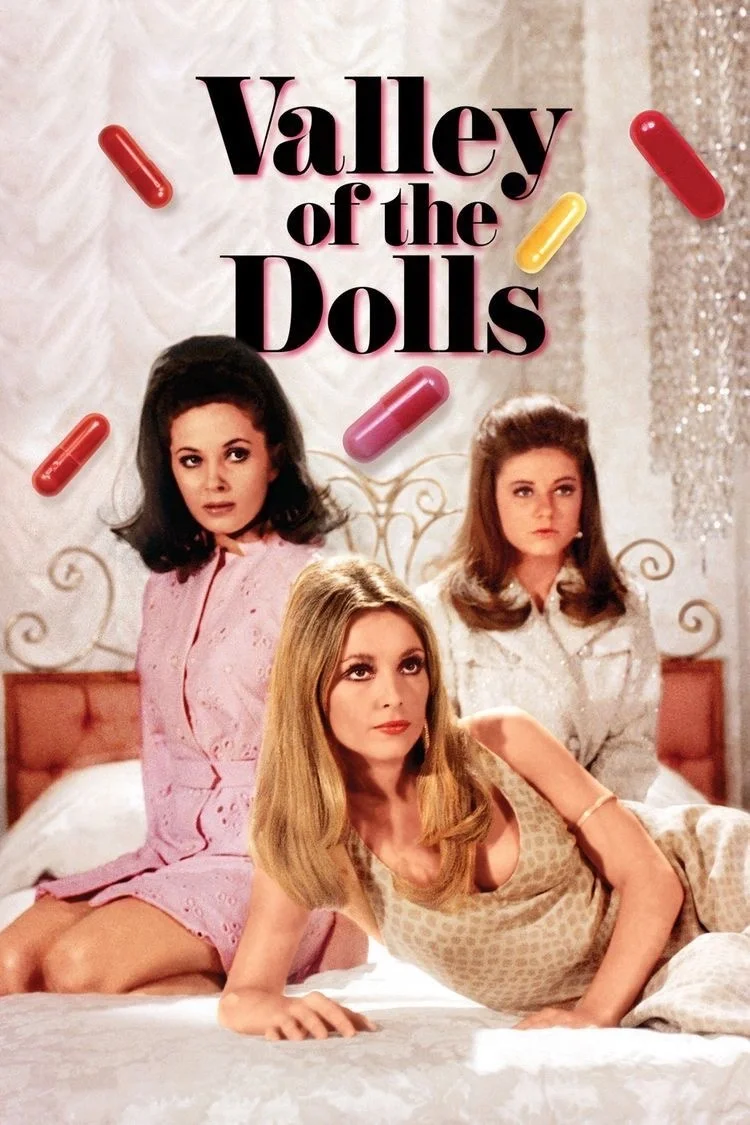
Valley of the Dolls, Marilyn Monroe: A Cultural Reflection ✨
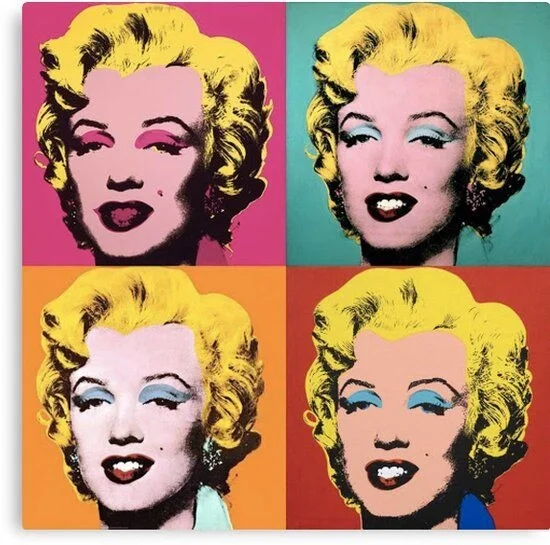
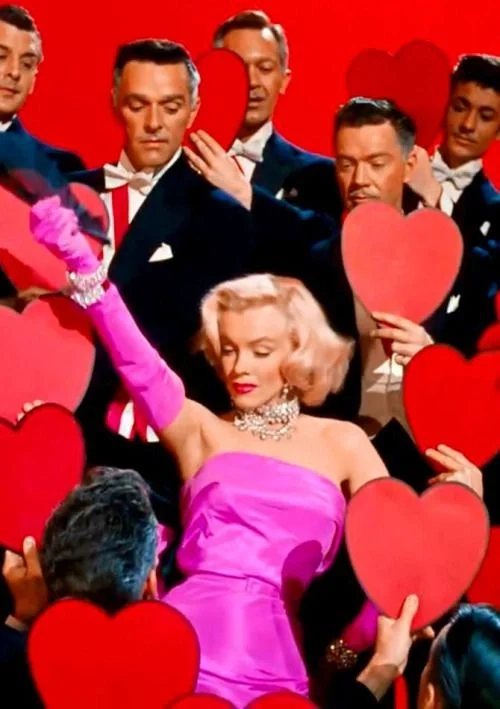

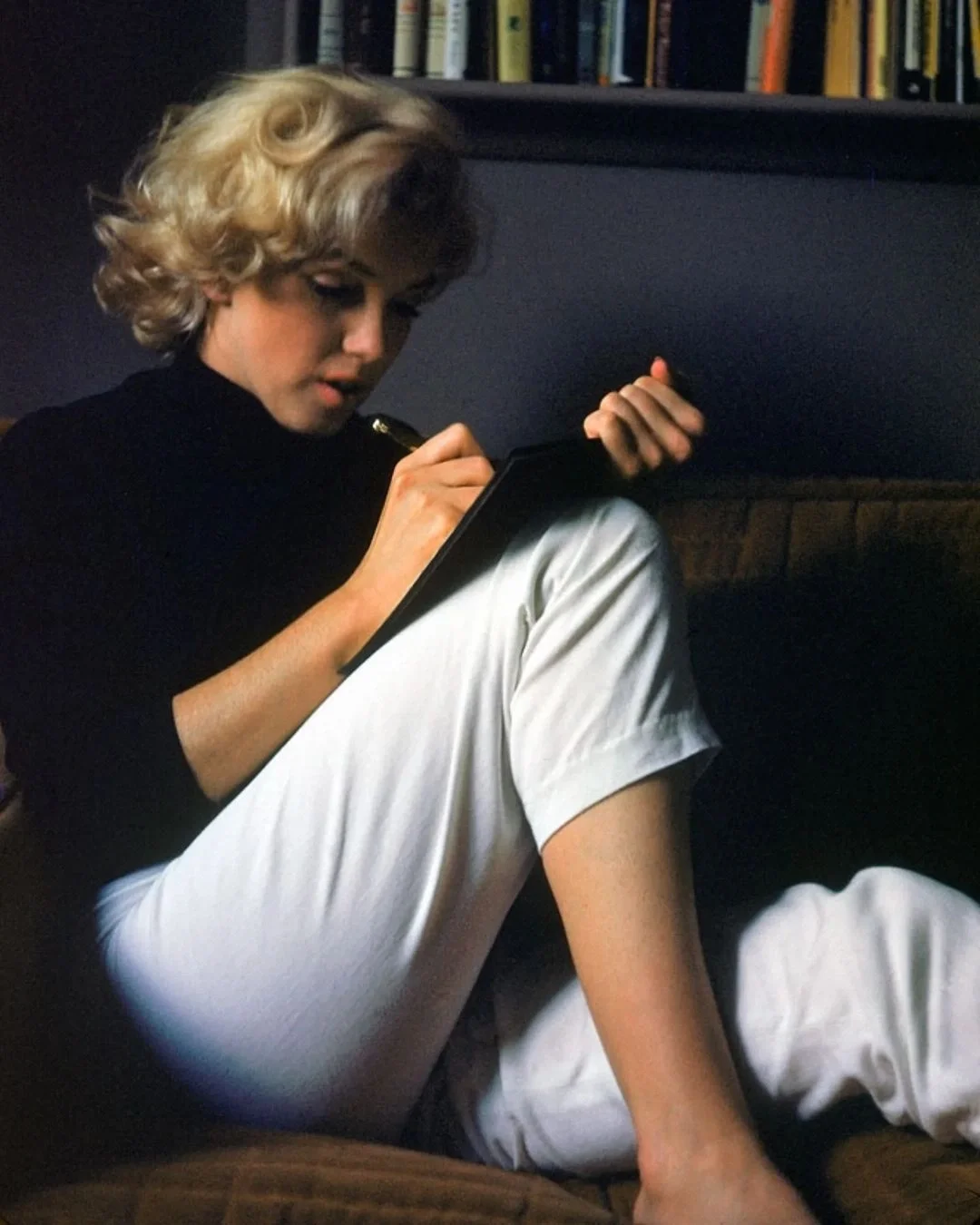
The Marilyn Monroe
Patriarchy is a strange thing to try to see from inside it. If you were raised in schools, fed by media, and employed in workplaces that all normalized the same hierarchy, the hierarchy doesn't look like an argument. It looks like the weather. Scholars who study this (Allan Johnson's The Gender Knot is a standard reference) usually define patriarchy fairly narrowly: a social system in which men hold disproportionate power in political, economic, and religious institutions, and in which traits coded "masculine" are valued over traits coded "feminine." That's a modest claim compared to how the word gets used in everyday argument, and the gap between the technical definition and the vernacular one is part of why conversations about it get heated fast.
Marilyn Monroe is a useful test case precisely because her story gets used to argue both sides, sometimes in the same sentence.
Two readings of one life
The bare biography is well documented: Norma Jeane Mortenson grew up in foster care and an orphanage with a mother who struggled with mental illness; she became a contract player at 20th Century Fox, built a career on comedic "dumb blonde" roles in films like Gentlemen Prefer Blondes and Some Like It Hot (instruction manuals on how to marry a millionaire, essentially marry within patriarchy), married baseball star Joe DiMaggio and then playwright Arthur Miller (who wrote The Misfits for her, hoping to showcase her as a serious dramatic actress), had affairs with President Kennedy and reportedly his brother Robert, and died in 1962 at 36 of a barbiturate overdose that the coroner ruled a probable suicide. Claims that she slept with a studio head at 21 to launch her career circulate widely in the popular biography literature, though, like much about her early life, they're difficult to verify independently and are treated with real caution by more careful biographers. <- find documentary (source needed).
One reading of this life, the one embedded in a lot of the Hollywood mythology, treats it as a morality tale: a woman used sex to rise, and the rise ended in death, so the moral writes itself. A second reading treats the same facts as a story about a woman with almost no institutional power (no family money, no formal education, no industry connections) who took the rules of a system built to consume her and turned them around. She used the one form of leverage a beautiful, funny, ambitious woman was permitted to use in that era, and did it about as skillfully as anyone could. On this reading Monroe is a proto-feminist figure who flipped the script on the men who expected to profit from her. She played the "dumb blonde" with enough craft that audiences missed the joke, founded her own production company in 1955 when studios didn't let actresses do that, and fought Fox for better terms and more control over her projects. Whatever she gained from powerful men, she gained on terms she was actively negotiating. There's even a version of this story Hollywood told on purpose: films like Gentlemen Prefer Blondes and How to Marry a Millionaire sold American audiences on the idea that, unlike the aristocracies of Europe, a poor girl here could marry up on charm alone, a very convenient myth for a country that liked to insist it had no fixed class system, even as it kept one.
Both readings are available in the same set of facts. Which one a culture prefers to tell is itself a political choice. Cautionary tales about ambitious women are a much older genre than Hollywood, but Hollywood is very good at manufacturing new ones. Monroe herself seemed to see the bind clearly enough to joke about it: "I don't mind living in a man's world, as long as I can be a woman in it."
The murder theories
It's worth being precise about what actually circulates in the historical record around Monroe's death, because the popular versions tend to drift. Starting in the early 1980s, private investigators and tabloid sources promoted the theory that Monroe was killed. The claim was not that she was peacemaking between world leaders, but that she knew about a CIA plot to assassinate Fidel Castro (via her relationship with Robert Kennedy) and was silenced before she could expose it. Declassified CIA reading-room files show the agency was aware of and tracking these claims at the time, mostly circling a supposed missing diary that the investigator pushing the theory, Milo Speriglio, said he could never actually produce. None of this is established fact; the official finding remains probable suicide, and a widely shared 2018 "deathbed confession" version of the murder story was confirmed by fact-checkers to be an invented internet hoax built around a fabricated identity. It's worth separating the instinct from the specific claim here: that powerful men have long used a famous woman's death as raw material for narrative is a well-founded pattern, even when a particular version of the story turns out not to be documented.
The studio system and the pills
The murder theories also distract from a less sensational explanation that has much firmer support: Monroe died inside a culture of pill dependence that the studios helped create. Judy Garland is the best-documented example. By her own account and those of her biographers, MGM put her on amphetamines to keep her working through punishing schedules and barbiturates to get her to sleep, starting when she was a teenager. She would spend the rest of her life struggling with that dependence and died of an accidental barbiturate overdose in 1969. The era's pill culture was widespread enough to become material for fiction. Jacqueline Susann's 1966 novel Valley of the Dolls, filmed the next year, took its title from the slang for the pills that pervaded show business, and it is often said to draw on the lives of Monroe, Garland, and other stars. Garland was in fact cast in the film and then dismissed from it.
The case for Monroe is more circumstantial. Her barbiturates were prescribed by her own physicians, and there is no documentary evidence that the studio supplied them. But the argument doesn't require that. A system that ran actresses on grueling schedules, treated their insomnia and exhaustion as problems to be medicated instead of conditions to be fixed, and made their bodies and reliability its chief assets created the demand that doctors and dealers then filled. On this view, whether Monroe's final overdose was accidental or intentional, the responsibility lies substantially with an industry that used chemical dependence, deliberately or through willful neglect, as a tool for managing the women it depended on. That is an argument about institutional responsibility, not a finding of fact about her death, and the coroner's ruling and the roles of individual doctors and of Monroe herself complicate any single-cause account. But it is a well-founded pattern, and a better-supported one than any of the murder theories.
#MeToo and its actual critics
Whether #MeToo was a reckoning for patriarchy or, in some readings, functioned in ways that cut against the women it aimed to protect, is a real and contested question, and not everyone who identifies as a feminist landed in the same place on it. In January 2018, roughly 100 French women, including Catherine Deneuve, along with writers, academics, and performers, signed an open letter in Le Monde defending men's "freedom to importune" (to pester or hit on someone) as, in their view, inseparable from sexual freedom, and warning that #MeToo was curdling into a "puritanical" and "vigilante" climate. The letter distinguished rape as a crime from clumsy flirtation, arguing the two shouldn't carry the same social penalty, and cautioned against permanently casting women as victims. It produced an immediate counter-letter from French feminists, and Deneuve herself partially walked it back days later, apologizing to victims who felt hurt by the letter while maintaining she didn't agree with all of #MeToo's tactics.
A week after that, French actress Brigitte Bardot, who hadn't signed the original letter, went further in an interview with Paris Match, calling most #MeToo allegations from actresses "hypocritical" and "ridiculous," arguing that many actresses flirt with producers to get roles and only later reframe the encounter as harassment for attention. It's worth noting Bardot explicitly limited her comment to actresses in the industry, not women generally, and that her remarks drew sharp criticism even within France. None of this was a wholesale rejection of feminism by the women involved (several of the letter's signatories described themselves as feminists), but a dispute within feminism over where the line sits between predation and clumsy human courtship, and over whether public denunciation is a fair or effective enforcement mechanism. It's a real fault line, not a settled question, and thoughtful people land in different places on it.
Casting couches, blackmail, and the difference between them
There's an important distinction buried inside a lot of loose talk about women "sleeping their way to the top": the difference between a woman choosing to use attraction or charm as one tool among others, and a woman being coerced, explicitly or through implied threat to her career, into sex she wouldn't otherwise choose. Harvey Weinstein's decades at Miramax are the clearest recent illustration of the second category: multiple investigations and dozens of women's accounts, which led to his criminal conviction, described a pattern in which access to roles was conditioned on submission, backed by an infrastructure of lawyers, NDAs, and industry silence that made refusal costly. The moral problem in a case like that isn't that a transaction involving sex took place; it's that consent was manufactured under threat, and an entire industry structure protected the person making the threat for years. Conflating that with a woman choosing a wealthy or powerful partner for her own reasons collapses two very different things into one, and that collapse tends to serve whichever party benefits from the ambiguity.
Some of this ambiguity is what has pushed employers toward oddly bureaucratic solutions. In American workplaces, "consensual relationship agreements," informally called love contracts, have become common enough that HR and employment-law associations publish templates for them. The logic is defensive: if two coworkers date, especially across a power difference, a signed acknowledgment that the relationship was voluntary offers the employer some protection if it later sours and one party claims coercion. Whatever one thinks of formalizing romance this way, it's a fairly direct institutional admission that workplaces don't trust themselves to sort consensual attraction from exploited power on their own, which is itself a kind of evidence that the two get confused often enough to need paperwork.
Nepotism, capital, and who gets to skip the ladder
The distinction above, between individual choice and institutional constraint, shows up just as clearly in questions of who inherits opportunity without needing anyone's permission at all. Consider Coco Chanel, herself an orphan who built an independent fashion house through talent, charm, and a network of well-placed relationships, reportedly including a long relationship with the Duke of Westminster. When she tried to license Chanel No. 5 in the American market, the financing deal she struck with the Wertheimer family reportedly left her with a small single-digit percentage of profits on a fragrance built entirely on her name and design, a dispute she spent decades trying to renegotiate. That's a cleaner illustration of institutional constraint than a simple "she used her charm to rise" story allows for: social capital could get a woman into the room, but contract law and capital ownership decided what she actually kept once she was there.
The same logic runs through the broader question of industry nepotism. Entertainment, like most industries, disproportionately routes its best opportunities toward the children of people who already have access, a structural fact about how networks and financing work that's independent of any individual's talent, misconduct, or virtue, and one that applies across gender. It's worth sitting with the tension this creates for any claim of meritocracy: a system can simultaneously tell outsiders (as those Marilyn Monroe films did) that anyone can rise on charm or talent alone, while quietly running most of its real opportunity through inherited relationships. Those two stories can coexist because they're aimed at different audiences.
Hollywood, sexualization, and where the story starts
It's worth remembering that the sexualization of women in the entertainment industry doesn't start in adulthood. Shirley Temple, in her 1988 autobiography, described being called at age 12 into a meeting with MGM producer Arthur Freed to discuss a contract, reportedly the first film assignment she was considered for after leaving Fox, and wrote that Freed unzipped his trousers and exposed himself to her; she said she responded with nervous laughter, not understanding what she'd seen, and was thrown out of his office. It's a documented, publicly reported incident, and a stark reminder that the industry's habit of treating women's bodies as leverage long predates any single star's adult choices, and that children have been caught in that same dynamic. It complicates any narrative that frames "using sex to advance" as purely something adult women decide to do. The environment that produces that calculus starts shaping people well before they're in any position to consent to anything.
Culture industries as amplifiers, not sole authors
There's a comparison that gets made between a dominant national culture industry and something closer to colonization, and it's been argued with more precision by people close to the mechanics of modern influence than by casual analogy. Christopher Wylie, the Cambridge Analytica whistleblower, told UK Parliament in 2018 that the firm's work in fragile democracies was "an example of what modern day colonialism looks like," a wealthy firm from a developed country entering a country with weaker civic institutions and profiting from that imbalance. Critics of the framing have pointed out that local politicians actively hired and enabled these firms, which complicates a pure colonialism analogy but doesn't erase the asymmetry Wylie was describing. A similar shape applies to Hollywood, and later to the platforms that inherited its cultural reach: they don't invent values from nothing, but they do have an unusually large ability to amplify certain narratives (about sex, marriage, ambition, who deserves what) over others, across borders, which is a different kind of power than any single actor's individual choices, and one other countries with much older cultures of their own have understandably resisted being on the receiving end of.
Bodily autonomy as an economic question
Underneath a lot of this sits a more basic claim, one that predates #MeToo, Hollywood, and modern feminism by a long way: that decisions about sex, marriage, and childbirth are, among other things, economic decisions, and that women have historically had less control over the terms on which those decisions get made than the stakes would justify. Pregnancy and childbirth carry real physical risk and cost real years of a person's life and labor; historically, women have often needed a way to convert their bodies' most consequential biological capacities into economic security, because few other channels were open to them. Different traditions (religious, legal, cultural) have drawn very different lines about how much say a woman should have over her own reproductive choices, and that remains one of the more genuinely contested questions in modern political life, not something with a single settled answer. What's less contested is the observation that reproductive labor without economic power attached to it tends to leave the people doing it dependent on whoever holds the power instead.
Interpersonal versus institutional harm
The sharpest distinction running through all of this may be the one between interpersonal and institutional harm. Most public conversation about sexual harm focuses on interpersonal acts (an assault, a coercive boss, a bad actor), while institutional patterns (who gets funded, who gets cast, who inherits a network, whose profits get diverted by contract, which industries quietly sexualize children on set, which studios medicate their stars into compliance) get much less sustained attention, partly because they're harder to narrate as a single villain and a single victim, and partly because naming an institution as the problem doesn't produce the same catharsis as naming a person. A #MeToo-style reckoning is well suited to identifying individual predators; it's much less well suited to redistributing capital, rewriting who inherits opportunity, or changing how an industry that has always sexualized young performers actually operates. Both kinds of harm are real, but they call for different remedies, legal accountability for the first and structural reform for the second, and treating them as the same problem tends to produce the feeling that something has changed when the underlying architecture hasn't moved much at all.
None of which resolves what Marilyn Monroe would have made of any of it. But the fact that her story can be told convincingly as both a cautionary tale and a story of resourceful survival, sixty years after her death, probably says more about the culture doing the telling than it does about her.
Sources
Allan G. Johnson, The Gender Knot: Unraveling Our Patriarchal Legacy
CNN, NPR, CBS News, ABC News, and The Conversation — coverage of the January 2018 Le Monde letter and its feminist critics
Fox News, NME, Scroll.in, Associated Press — coverage of Brigitte Bardot's January 2018 remarks on #MeToo
CIA Reading Room, declassified clippings on Marilyn Monroe investigation theories (1982)
PolitiFact, fact-check of the fabricated "CIA agent confession" hoax (2018)
CNBC, coverage of Christopher Wylie's UK parliamentary testimony (2018)
Reporting on Coco Chanel's Chanel No. 5 licensing dispute with the Wertheimer family
Shirley Temple Black, Child Star: An Autobiography (1988); Wikipedia and TCM biographical entries on Arthur Freed and Shirley Temple corroborating the account
SHRM and multiple employment-law firms (Bodman Law, Fisher Phillips) on "consensual relationship agreements" / "love contracts"
Goodreads/Stylist compilations of documented Marilyn Monroe quotations from Marilyn: Her Life in Her Own Words