

The Purge A Pattern You Can’t Ignore

Over the past several years, a pattern has begun to emerge in American public life. Government officials have been abruptly dismissed, military leaders fired, celebrities publicly “canceled,” and professors removed from elite universities after waves of public accusation. Each incident is debated fiercely in the media. Some describe these moments as long-overdue accountability. Others call them examples of cancel culture.
But when you watch the cycle repeat often enough, it begins to resemble something more systematic than isolated controversies. Accusations emerge, institutions fracture, leadership collapses, and communities divide internally. The process moves quickly and often leaves behind a vacuum where organizations once stood.
I did not fully recognize the pattern until it appeared inside my own community.
Let me be clear about who I am. I am a liberal. I live in Boston. I vote Democratic and support causes like civil rights, LGBTQ+ equality, and protections for women from abuse. Precisely because I share those values, what I have witnessed is troubling. Increasingly, the forces destabilizing institutions are not directed at ideological enemies alone. They are appearing within communities that once considered themselves allies.
Recognition Through Experience
For many observers, this pattern remains abstract until it becomes personal. It is one thing to watch institutional collapse unfold in headlines; it is another to witness it inside a community you know intimately. The shift from observer to participant changes the stakes. What once appeared as ideological conflict begins to feel like something more disorienting—less about politics than about the fragility of trust itself. For those who identify strongly with progressive values—supporting civil rights, LGBTQ+ equality, and protections against abuse—the experience can be particularly unsettling. The destabilizing forces do not always arrive from outside opposition; increasingly, they emerge within communities that once understood themselves as aligned. That internal tension raises a more difficult question: what happens when the mechanisms designed to enforce justice begin to erode the very institutions they were meant to protect?
A Historical Blueprint for Internal Disruption
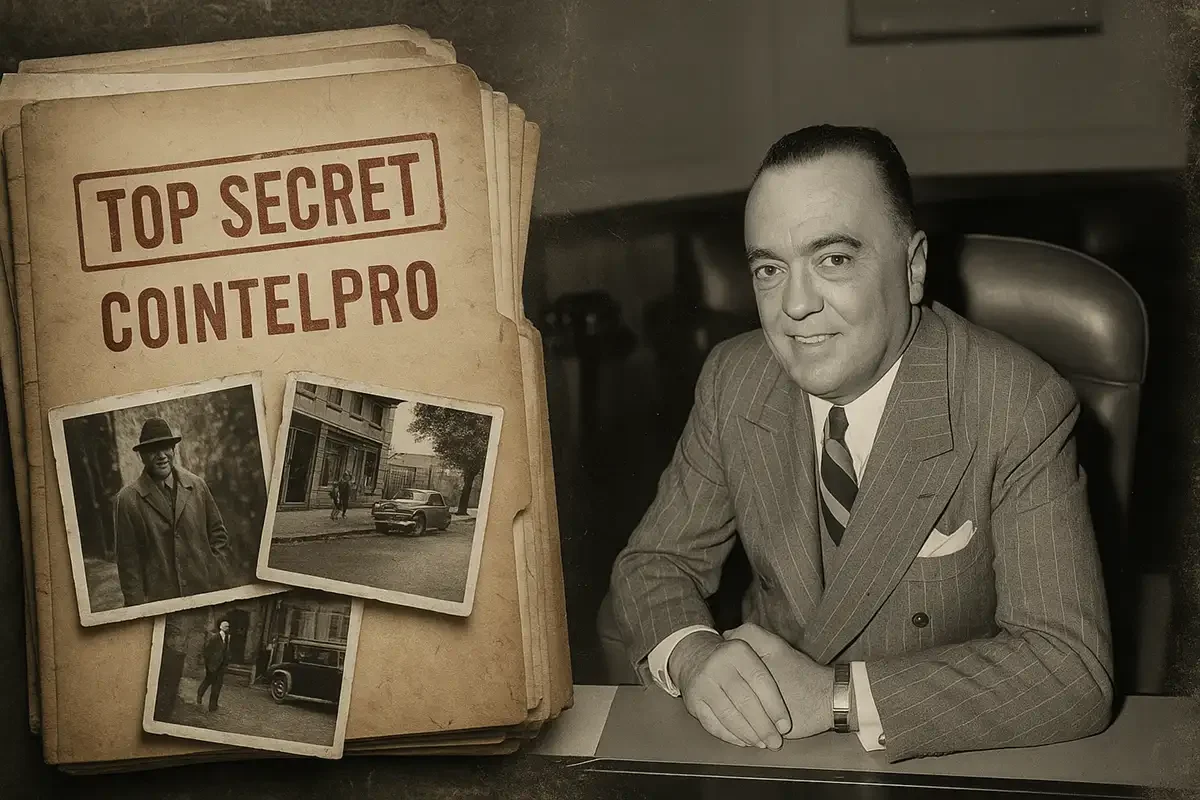
The idea that institutions can be weakened from within is not new. During the Cold War, the COINTELPRO program, directed under J. Edgar Hoover, systematically targeted civil rights groups, anti-war movements, and student organizations. Operating between 1956 and 1971, the program relied not on overt force, but on psychological disruption: infiltrating organizations, spreading misinformation, forging anonymous communications, and fostering internal suspicion. Its stated goal—to “disrupt, discredit, and neutralize”—was achieved not by confronting movements externally, but by turning them inward against themselves. When the Church Committee exposed these tactics in 1975, it revealed how vulnerable even principled organizations can be to internal fracture when trust is systematically undermined. While it would be simplistic to claim that modern conflicts are centrally orchestrated in the same way, the existence of such a playbook makes contemporary parallels difficult to dismiss outright.
The Collapse of Boston Pride
For fifty years, Boston Pride served as a central institution for the city’s LGBTQ+ community. It organized annual marches, celebrations, and advocacy efforts in a city that had not always welcomed queer residents. Like many grassroots organizations, it was volunteer-driven and imperfect, but it represented decades of collective effort.
In 2021, internal tensions escalated when activists accused the organization’s leadership of lacking diversity and failing to represent transgender and non-white members adequately. The board responded by attempting to restructure leadership and include more diverse representation.
But the conflict did not resolve. Instead, the organization quickly unraveled. Board members stepped down, internal documents and mailing lists were reportedly taken, and corporate sponsors were contacted and urged to withdraw support. Within months, sponsors left and the organization collapsed. Boston Pride, a half-century institution, ceased operations for several years before a different organizing structure eventually replaced it.
Similar conflicts have occurred in other cities, where longstanding institutions fractured after internal accusations about representation or ideology. In many cases the breakdown followed a recognizable sequence: criticism of existing leadership, escalating accusations, internal division, and finally the loss of organizational infrastructure and funding.
In Boston’s case, the collapse created a vacuum. The city’s LGBTQ+ community eventually rebuilt Pride celebrations under new leadership, but the original institution—and decades of continuity—had already been erased.
When Conflict Becomes Personal
For many years, I belonged to a small non-denominational spiritual community center in the Boston area. It was the kind of place that is increasingly rare in modern American life. There was no rigid doctrine and no single religious authority. Jews, Christians, Muslims, agnostics, and spiritual seekers gathered together for meditation, music, and social events.
The founder had spent fifteen years building that community. He had previously served as a Baptist minister but left that tradition partly because of disagreements with its views on gender and LGBTQ+ issues. The community he created was meant to be inclusive and open-ended.
Then an accusation surfaced. A woman who had briefly interacted with the community alleged that the minister had behaved inappropriately. According to people familiar with the police report, the claim was considered unsubstantiated. Yet the accusation alone was enough to ignite internal conflict.
Soon additional complaints appeared—many vague or based on personal discomfort rather than specific allegations. But as they circulated through emails and conversations, the language escalated. Within weeks the spiritual leader was being labeled a predator by some members of the community.
Outside consultants who specialize in investigating clergy misconduct became involved. They had told us that patriarchy had been institutionalized, and that men had been abusing their power, and if we disagreed, our membership could be revoked—it felt like a hostile takeover; a witch hunt. Religious organizations with no formal connection to the community weighed in. What had once been a peaceful spiritual gathering place suddenly found itself consumed by suspicion and internal fighting.
People who had gathered for shared social events and formed friendships for years were now exchanging hostile emails and accusations.
Accountability in the Age of Acceleration
None of this diminishes the importance of accountability. Movements like #MeToo exposed profound abuses of power, bringing figures such as Harvey Weinstein, Bill Cosby, and Jeffrey Epstein into public scrutiny and, in many cases, legal consequence. These cases demonstrated the necessity of collective action in confronting systemic wrongdoing. Yet the mechanisms that enable accountability can also accelerate beyond their capacity for careful judgment. In a digital environment where information spreads instantly and emotional reaction is rewarded, accusations can achieve widespread visibility before verification occurs. Social consequences—loss of reputation, employment, or community standing—can unfold in real time, often preceding formal investigation. This creates a tension at the heart of modern public life: how to uphold the imperative to take allegations seriously while preserving principles of evidence, proportionality, and due process.
The Moment of Decision
For communities caught in such conflicts, there often comes a moment when uncertainty must give way to decision. In the spiritual community described, that moment arrived in the form of a collective vote. Over Zoom, 177 members participated in a decision about whether the founder should remain in his role. After weeks of debate, emotional strain, and fractured trust, the majority voted to reinstate him following administrative leave. The margin was not unanimous, but it was clear enough to carry legitimacy within a community built on shared voice rather than hierarchy. The aftermath was less triumphant than it was relieving—a collective exhale after prolonged tension. Yet even in resolution, the cost of the conflict remained visible in strained relationships and lingering division.
Noah Levine:
A striking parallel can be found in the controversy surrounding Noah Levine, a well-known Buddhist teacher and founder of the Against the Stream Buddhist Meditation Society. In 2018, Levine was accused of sexual misconduct, allegations that spread rapidly and led to the immediate collapse of his organization’s leadership structure. Much like what I witnessed in my own community, the institutional response moved swiftly—centers closed, affiliations were severed, and his reputation was effectively dismantled before any formal legal finding. Levine denied the allegations, and no criminal charges were ultimately filed, yet the social and organizational consequences were devastating. The speed of that unraveling mirrors the dynamics I experienced firsthand: accusation preceding investigation, community division hardening into moral certainty, and long-standing institutions dissolving under the weight of narrative rather than verified fact. In both cases, the deeper tragedy is not only the harm to the accused or the accuser, but the fragmentation of communities that once provided meaning, trust, and connection—structures that, once broken, are extraordinarily difficult to rebuild. Fortunately, after some time, Levine was welcomed back after the community realized that the claims were unsubstantiated.
What Conflict Reveals About Community
Crises of this kind do not leave communities unchanged. Before conflict, cohesion can feel effortless, grounded in shared values and routine interaction. But when trust is tested, its foundations are revealed. In this case, the outcome depended not solely on arguments or narratives, but on lived relationships—years of shared experience that provided a counterweight to rapidly circulating claims. That reliance on personal knowledge over abstract accusation proved decisive for many members. At the same time, not everyone remained. Some left permanently; others may return over time. The community survived, but in a transformed state—more aware of its vulnerabilities, but also, for some, more deeply bonded through the experience of having endured them.
Control the Channels, Control the Narrative
One of the clearest lessons to emerge from these events concerns the role of communication infrastructure. In modern communities, email lists, messaging platforms, and digital forums are not peripheral tools—they are the connective tissue that holds groups together. Across multiple cases, including Boston Pride and smaller community organizations, moments of escalation often coincided with shifts in control over these channels. Once a particular narrative gains dominance within shared communication spaces, it can rapidly reshape collective perception. Information flows unevenly, dissenting voices may be marginalized, and the internal balance of power can shift almost overnight. For organizers, safeguarding these systems is not merely a logistical concern but a structural necessity, as critical to stability as any physical space or formal leadership role.
The Digital Amplifier
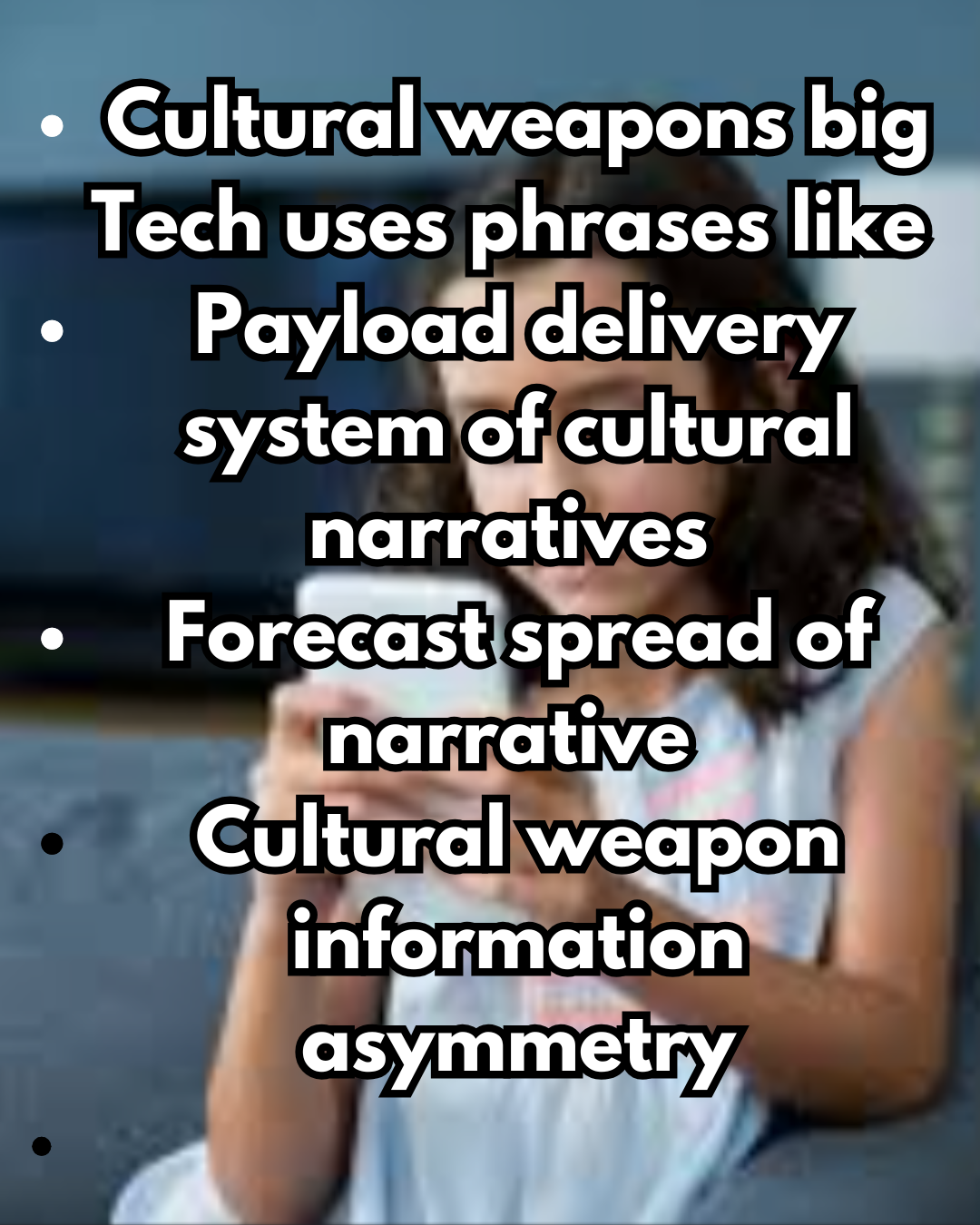
The speed and intensity of modern conflict cannot be understood without accounting for the role of digital platforms. Social media environments are designed to prioritize engagement, often amplifying emotionally charged content that drives reaction and sharing. Platforms like Meta Platforms, ByteDance, Snap Inc., and Alphabet Inc. have become central arenas in which public perception is formed and contested. At the same time, these companies face increasing legal and cultural scrutiny over the effects of their platforms, particularly on younger users. As media consumption shifts toward constant, mobile engagement, digital spaces begin to displace traditional forms of community—churches, civic groups, and local gatherings—altering not just how information spreads, but how relationships are formed and maintained. In this environment, conflict is not only more visible; it is structurally intensified.
The Trojan Horse Revisited
The ancient story of the Trojan Horse offers a useful metaphor for understanding these dynamics. In the legend, a seemingly benign gift concealed the mechanism of destruction within it. Modern conflict operates less dramatically, but with similar subtlety. Narratives—about identity, justice, power, and harm—circulate through digital networks, often appearing as organic expressions of concern or solidarity. Yet once internalized, they can reshape how communities interpret events, sometimes accelerating division before facts are fully established. This is not necessarily the result of coordinated intent; it can emerge from the interaction of algorithms, incentives, and human psychology. Still, the effect is comparable: disruption that originates from within, carried by the very channels that once connected the community.
Trauma, Algorithms, and the Radicalization Loop
These dynamics intersect with a broader pattern linking psychological vulnerability to digital amplification. Trauma—whether personal, social, or economic—creates a heightened need for meaning, belonging, and resolution. Social media systems, through micro-targeting and engagement-based algorithms, are adept at identifying and responding to these emotional states. Users who express frustration or alienation may be guided toward increasingly polarized content, forming what researchers describe as radicalization pathways. Within these digital environments, echo chambers reinforce existing beliefs while offering social validation and a sense of belonging. The result is a self-reinforcing cycle: vulnerability attracts targeted content, algorithms amplify emotional engagement, and communities form around increasingly rigid narratives. While often discussed in the context of political extremism, similar mechanisms can shape conflicts within local communities, intensifying division and accelerating breakdown.
After the Vote: Division and the Possibility of Repair
Even after resolution, communities rarely return to their previous state. In this case, a significant minority—roughly sixty members—found themselves on the losing side of the vote. Some may form new institutions; others may disengage entirely, and some stayed and went with the flow. The fragmentation is both personal and structural, reflecting not only disagreement over a specific decision but deeper differences in how trust, authority, and justice are understood. Yet within that fragmentation lies the possibility of repair. Forgiveness, though often difficult, becomes a necessary condition for any future cohesion. So too does a renewed commitment to communication—clearer, more transparent, and less susceptible to distortion. If conflict reveals the fault lines within a community, it also clarifies what must be strengthened to prevent future fracture.
Has This Happened to You?
It is difficult to identify a single cause behind these patterns. They may reflect the destabilizing effects of rapid technological change, the concentration of influence within a small number of powerful platforms, or simply the strain of a society navigating profound cultural shifts. What is clear is that division is being amplified—daily, persistently, and often invisibly—through the systems that mediate modern life. Against that backdrop, one of the few reliable anchors remains direct human relationship. In moments of uncertainty, people often turn not to abstract narratives but to their lived experience of one another. Choosing to trust someone known over many years rather than an unverified story circulating online is not merely a personal decision; it is, in a sense, an act of resistance against a system that privileges speed over understanding.
A Final Warning
A line often attributed to historian Will Durant captures the broader implication of these dynamics: “A great civilization is not conquered from without until it has destroyed itself within.” Whether or not the attribution is exact, the insight resonates. Internal fragmentation—driven by mistrust, accelerated by technology, and reinforced by competing narratives—can erode institutions more effectively than external opposition. The challenge, then, is not only to defend against external threats, but to cultivate the resilience, discernment, and mutual trust necessary to withstand the pressures that arise from within.
Possible Solutions is Community Dispute Settlement Center (CDSC) is a private, not-for-profit mediation and training center dedicated to providing an alternative and affordable forum for resolving conflict.
Sources and Solutions down below
Solutions:
Community Dispute Settlement Center (CDSC) is a private, not-for-profit mediation and training center dedicated to providing an alternative and affordable forum for resolving conflict. https://communitydispute.org/
Sources:
The Burglary That Exposed COINTELPRO: Activists Mark 50th Anniversary of Daring FBI Break-in https://youtu.be/CQH9I-aUNa0?si=wJQxGu17ABz94vWO
Noam Chomsky on COINTELPRO https://youtu.be/KS27iafQwrw?si=VRDwqPtEMX3gUhjN
With no annual parade, how will Boston celebrate Pride?https://youtu.be/9UoSk5U8WcM?si=e2fWA3woQBtr75cH
REFUGE RECOVERY AND FOUNDER NOAH LEVINE