

Craigslist: The Internet's Closest Thing to a Digital Town Square Craig
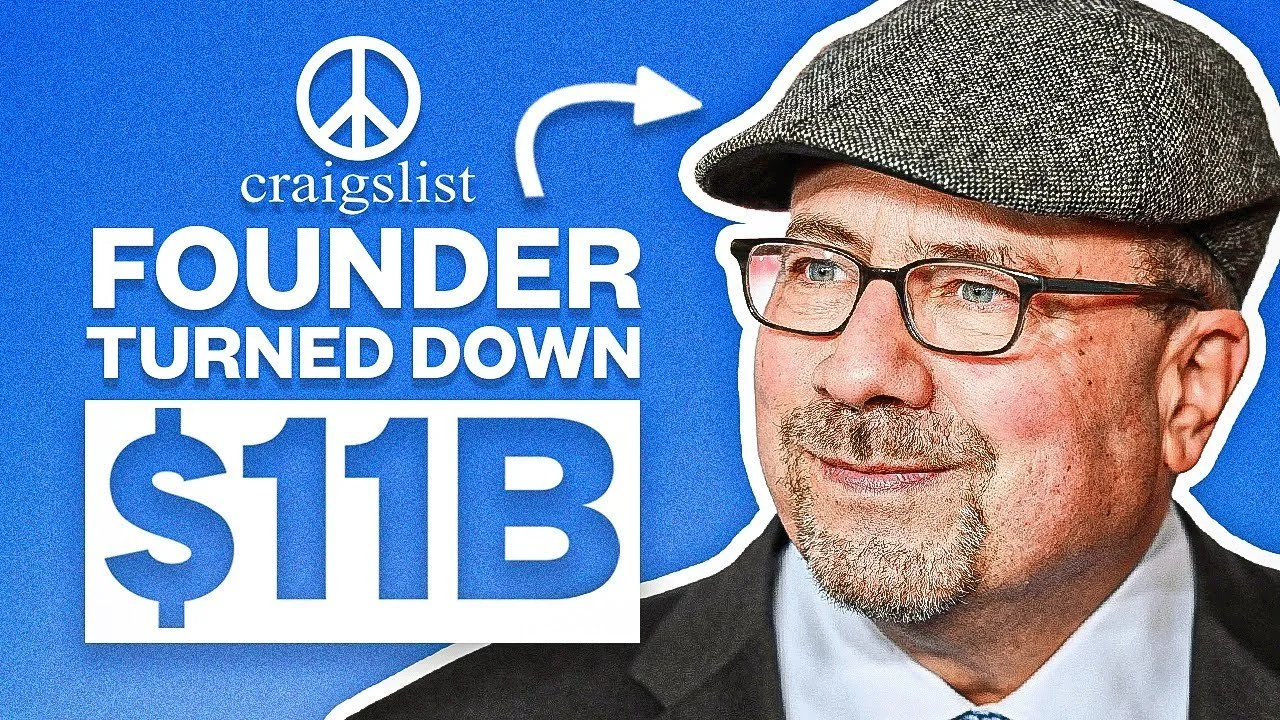
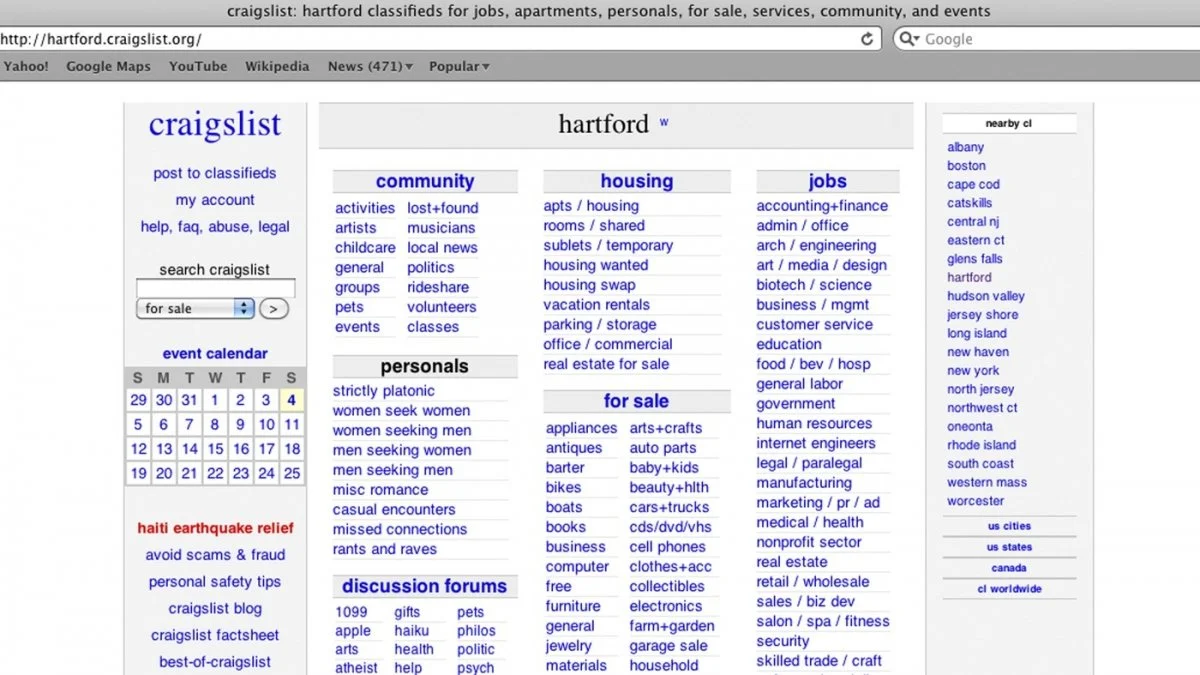
When people imagine what the early internet was supposed to become, many picture a digital town square: a place where people could speak freely, buy and sell goods, find jobs, connect with their communities, and exchange ideas without being constantly exploited for profit.
Craigslist is one of the few major websites that still resembles that original vision.
Unlike most large technology companies, Craigslist has never been publicly traded. Because it does not answer to public shareholders, it has never been under the same pressure to maximize profits at all costs. Craig Newmark, the company's founder, has retained control of the business, while eBay owns a minority stake. That ownership structure has allowed Craigslist to focus on providing a useful public service instead of squeezing every possible dollar out of its users.
Many publicly traded corporations are legally and financially pressured to prioritize shareholder returns. Their executives are often rewarded for increasing profits quarter after quarter, even when that comes at the expense of users, employees, or society. Craigslist has largely avoided that cycle.
The site still earns hundreds of millions of dollars each year, but it does so without aggressively monetizing every interaction. Many listings remain free, while others—such as certain job postings—cost only a small fee. Craig Newmark could likely have made far more money by filling the site with advertisements, collecting massive amounts of user data, or introducing expensive premium services. Instead, he chose a simpler model that keeps the platform accessible.
In many ways, Craigslist represents an idealized version of capitalism: a profitable business that exists primarily to serve its community rather than maximize wealth for investors.
Disrupting Newspaper Monopolies
Before Craigslist, newspapers controlled local classified advertising.
If you wanted to sell a bicycle, rent an apartment, hire an employee, or advertise a service, you usually had to pay the local newspaper. Because newspapers had an effective monopoly over classified ads, they could charge high prices. Craigslist changed that almost overnight.
Instead of paying large fees to place classified ads, people could often post for free or for just a few dollars. This dramatically reduced the cost of buying and selling locally while weakening newspapers' monopoly over classified advertising.
The internet eventually fragmented that market even further. Facebook Marketplace, OfferUp, Mercari, Zillow, and many other specialized platforms now compete for different kinds of listings. Craigslist itself has lost market share, but that competition has also prevented any single company from dominating local classifieds the way newspapers once did. Competition has generally benefited consumers by lowering prices and increasing choice.
A Different Kind of Billionaire
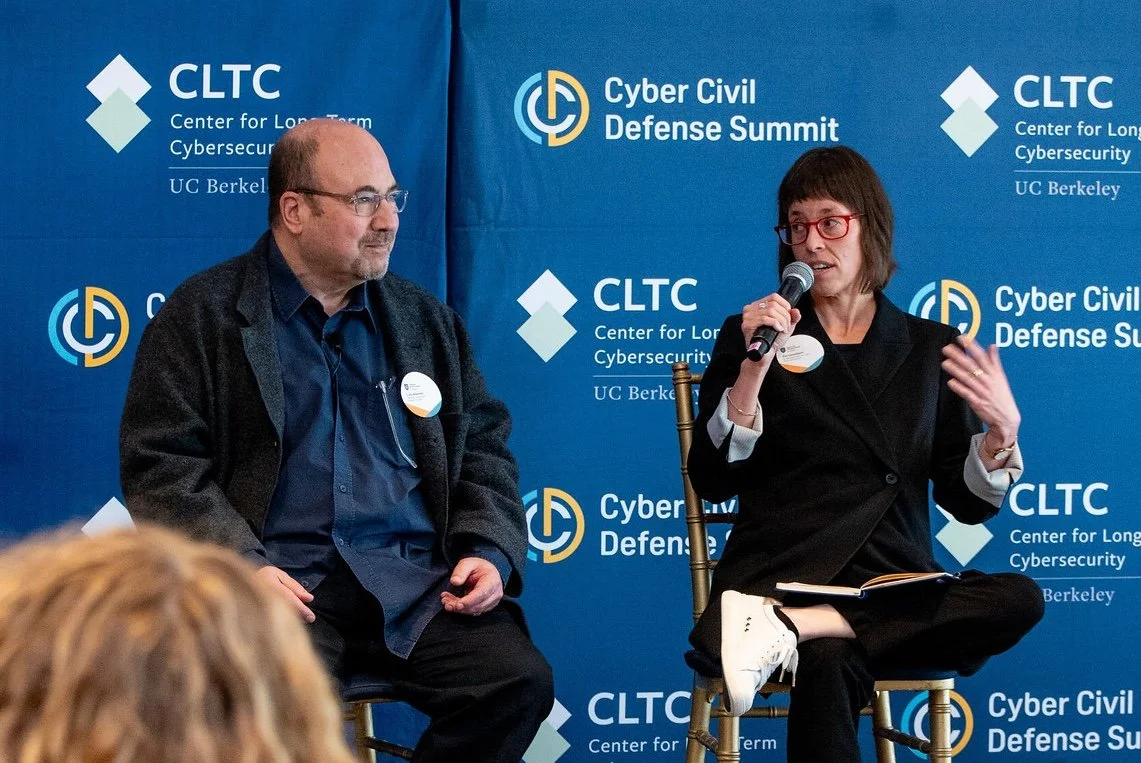
Craig Newmark has often said that once someone has accumulated more wealth than they could ever reasonably spend, making even more money becomes less meaningful. Rather than pursuing endless accumulation, he has devoted much of his time and fortune to philanthropy.
His philosophy appears to be rooted in a simple principle he says he learned in Sunday school:
"Do unto others as you would have them do unto you."
That ethic has shaped both Craigslist and his charitable work. He has donated to journalism organizations, cybersecurity initiatives, veterans' causes, election security efforts, and organizations that promote women in technology and media. He has supported the Geena Davis Institute, which works to improve the representation of women in film and television, as well as organizations that defend journalists from harassment and legal intimidation.
Independent journalism is one of his major priorities. Reporters are increasingly targeted with lawsuits intended to intimidate them, even when the reporting is accurate. Defending those lawsuits can be financially devastating. Supporting organizations that help journalists withstand those pressures helps protect a free press.
He has also spoken publicly about increasing opportunities for women in technology, noting that while progress has been made, advancement has slowed in some areas. Although he has acknowledged that the causes are complex, he continues to support efforts that encourage greater participation and leadership by women in tech.
Another issue he has emphasized is combating online disinformation. As digital platforms have become more influential, misinformation has become one of the internet's greatest challenges. Newmark has invested both time and resources into organizations working to improve information integrity.

The Craigslist Killer Controversy
However, Craigslist has not been without controversy. In the late 2000s, a serial killer used Craigslist to contact victims through the site's adult services section. Following public pressure and criticism from government officials, Craigslist eventually shut down its adult services category.
Craig Newmark and Craigslist argued that they had been singled out unfairly because similar adult advertising existed on many other websites and in newspaper classified sections, yet those businesses received far less scrutiny.
Whether one agrees with that argument or not, the episode highlighted the difficult balance online platforms face between providing open services and preventing criminal misuse.
An Ethical Technology Company
Craigslist is not a nonprofit organization. It is a successful private business that earns substantial revenue. The difference is that it has chosen not to pursue the aggressive growth strategies common throughout Silicon Valley. It does not aggressively monetize user attention, flood the site with advertisements, or build its business around extensive surveillance of its users. That doesn't make Craigslist perfect, but it does make it unusual.
Its continued existence demonstrates that it is possible to run a profitable company while keeping public service at the center of the business model.
A Reminder That Good People Exist in Tech
It's easy to become cynical about the technology industry. The headlines usually focus on billionaires building ever-larger fortunes, collecting personal data, dominating markets, or chasing endless growth. Those stories deserve scrutiny, but they are not the whole story.
Craig Newmark offers a different example. He built one of the internet's most influential websites, became wealthy, and then chose to spend much of his time supporting journalism, civic institutions, election security, and charitable causes rather than pursuing unlimited personal wealth.
Whether or not one agrees with every decision he has made, he demonstrates that success in business does not have to come at the expense of ethics.

One of my favorite quotes from Craig Newmark is:
"We need to get rid of this liberal-conservative bullshit and think about what's best for this country."
I think that sentiment captures much of what has guided both Craigslist and his philanthropy. In an era when outrage often dominates public attention, it's worth remembering that there are people in technology who genuinely try to build useful institutions and give back to society. Craig Newmark may never receive as much attention as more controversial billionaires, but his career is a reminder that quiet integrity rarely makes headlines—even when it deserves to.
Sources and References
Founder Philosophy: Craig Newmark Philanthropies (Official Site). Documentation on "The Golden Rule" as a business model and Newmark's "1 Billion is Enough" stance.
Corporate Structure: eBay vs. Newmark (Delaware Court of Chancery, 2010). Legal filings detailing the 85/15 ownership split and the clash between Newmark’s "public service" model and eBay’s "shareholder value" model.
Economic Impact: The "Craigslist Effect" on Local News Revenue. (Project for Excellence in Journalism). Analysis of how the $5 fee model disrupted the newspaper monopoly.
Philanthropic Ties: The Geena Davis Institute on Gender in Media. Records of Newmark’s support for female visibility in tech and film.
Legal/Controversy: The "Adult Services" Controversy and Section 230. (Electronic Frontier Foundation). Background on the legal targeting of Craigslist compared to traditional print media.
Journalistic Integrity: Craig Newmark Center for Ethics and Leadership at the Poynter Institute. Documentation on Newmark’s funding for reporter insurance and disinformation defense.